
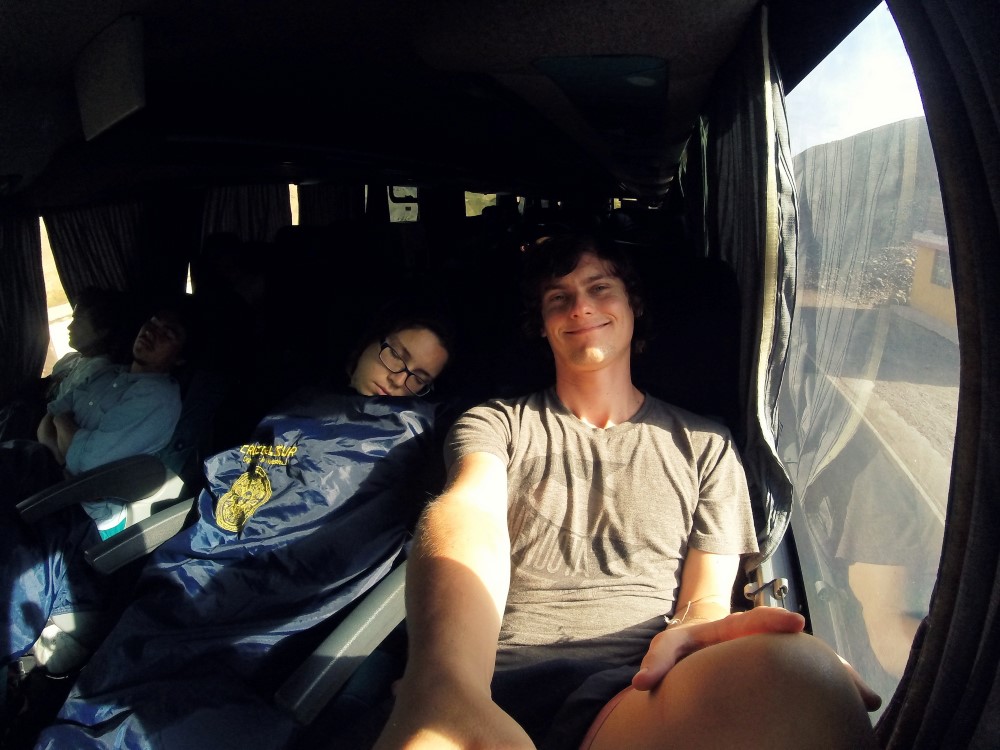
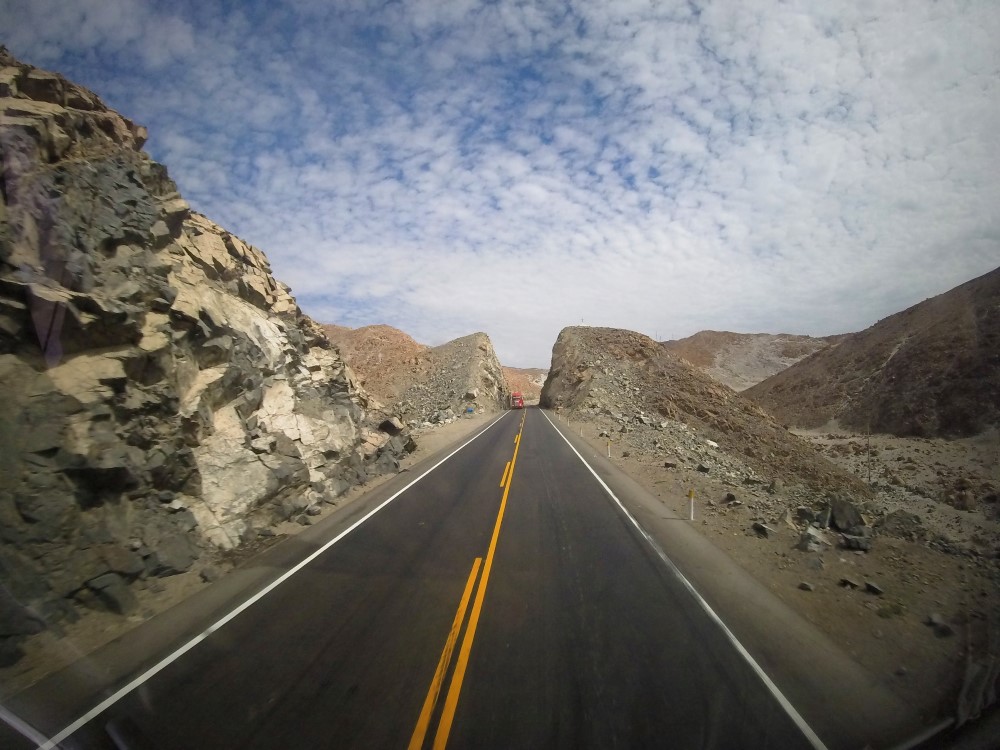
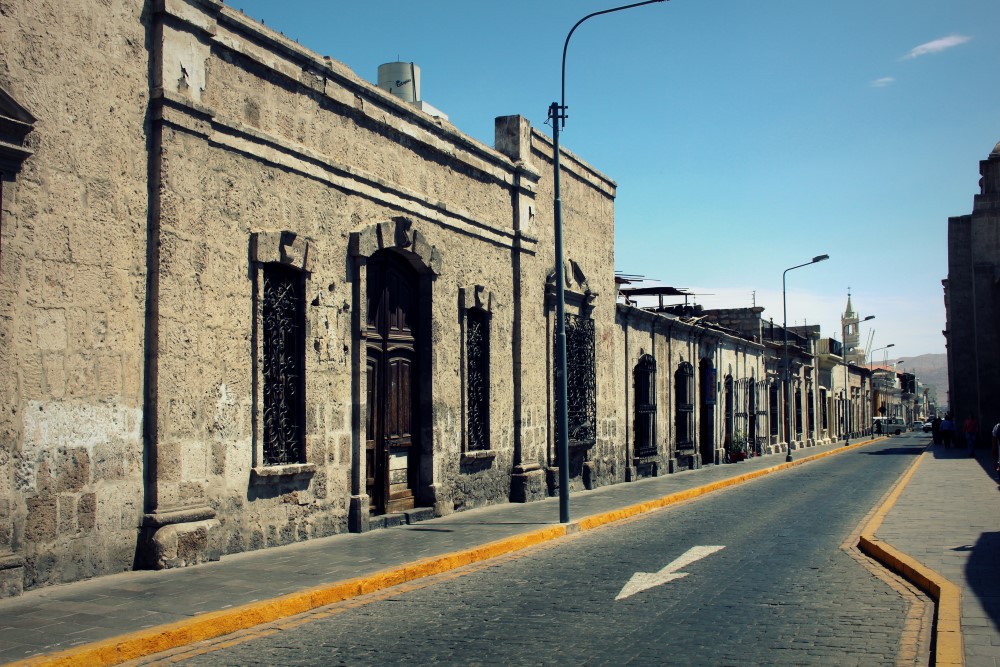
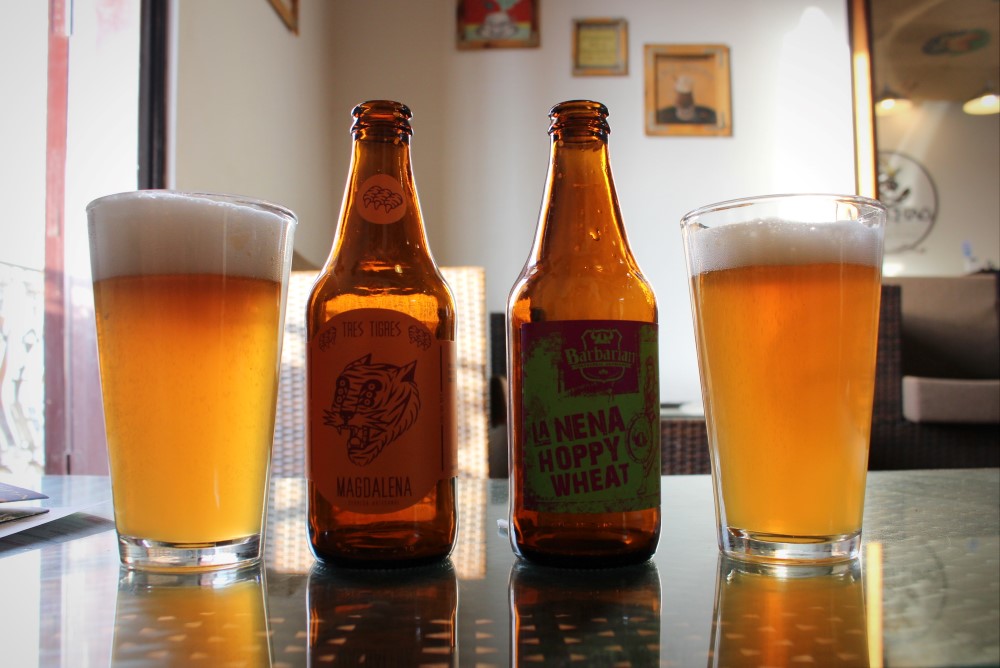
We said goodbye to the sand dunes of Ica and headed eastward on an overnight bus to the colonial city Arequipa. We had our usual top-floor, front-row, panoramic-view bus seats, and the hot morning sun greeted us to our home the next week. Arequipa was good to us. Every day, on the rooftop terrace of our hotel, we were served a hearty breakfast of eggs, bread and fresh fruit-juice by a most enthusiastic woman who always lauded our decisions on how we wanted our eggs cooked; and if all this were not enough, we had the Volcán Misti providing a beautiful backdrop. With unfailing blue skies, temperatures at a constant and appreciable 80°F, and the craft beer a-flowing, Arequipa won us over immediately.

 A favorite llama of Julien
 Our first evening out to eat, the group at the table next to us offered us each a piece quinoa cake (the quinoa from their own farm) from the birthday party being celebrated; cake and a friendly “bienvenidos a Arequipa”, welcome to Arequipa. How could we not love this place?!
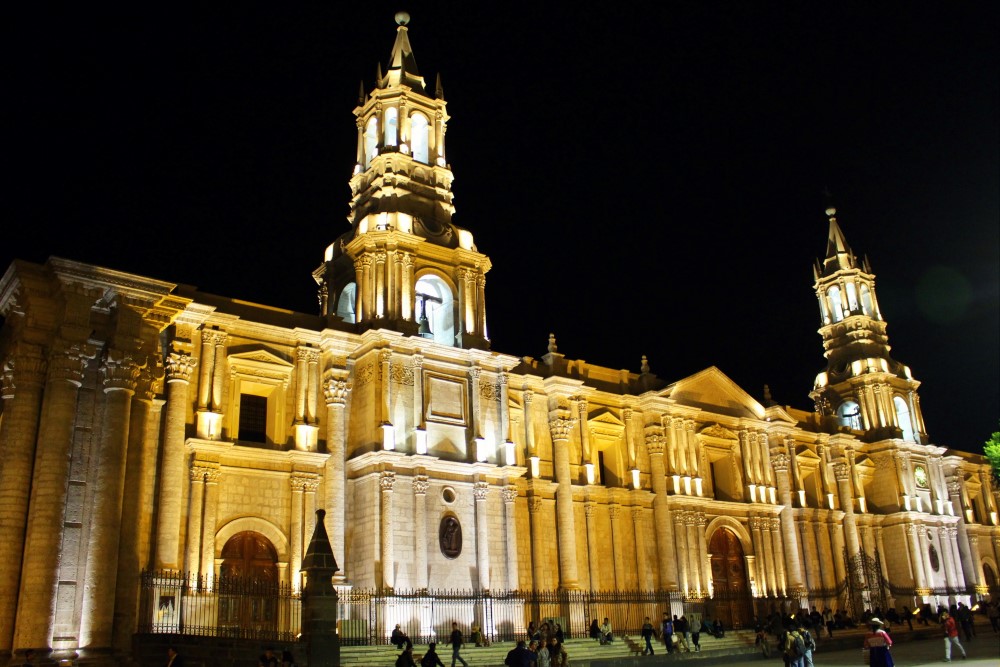 The Cathedral; when we eventually entered, we realized this is the right side of the cathedral, the building oriented with the altar to the far right, and the back of the cathedral to the left.
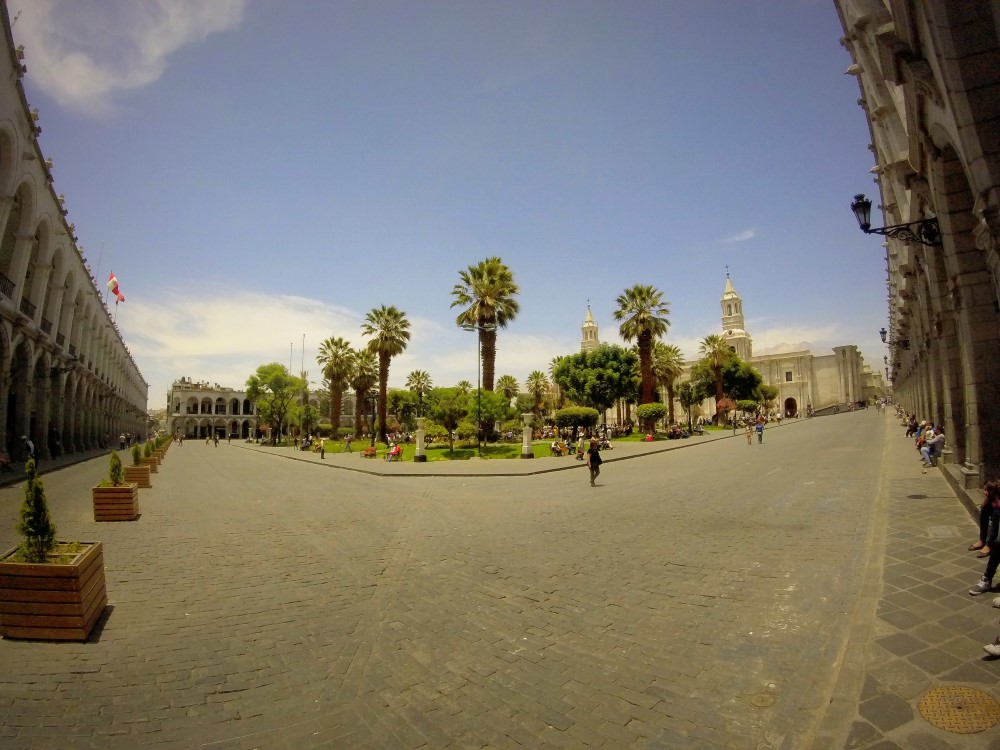 Plaza de Armas and arches
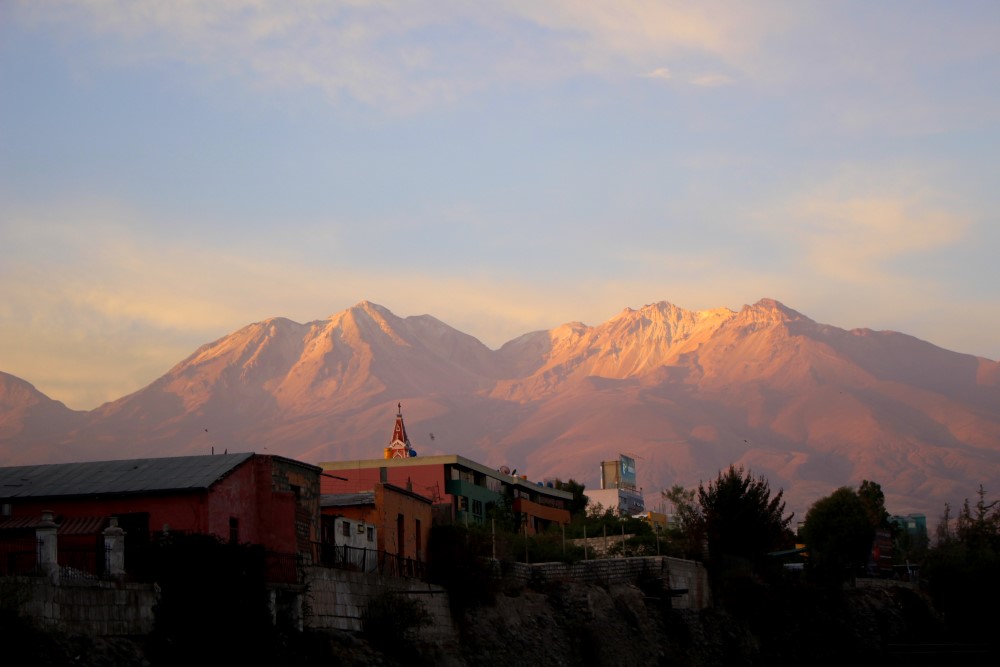 The extinct volcanic group Chachani
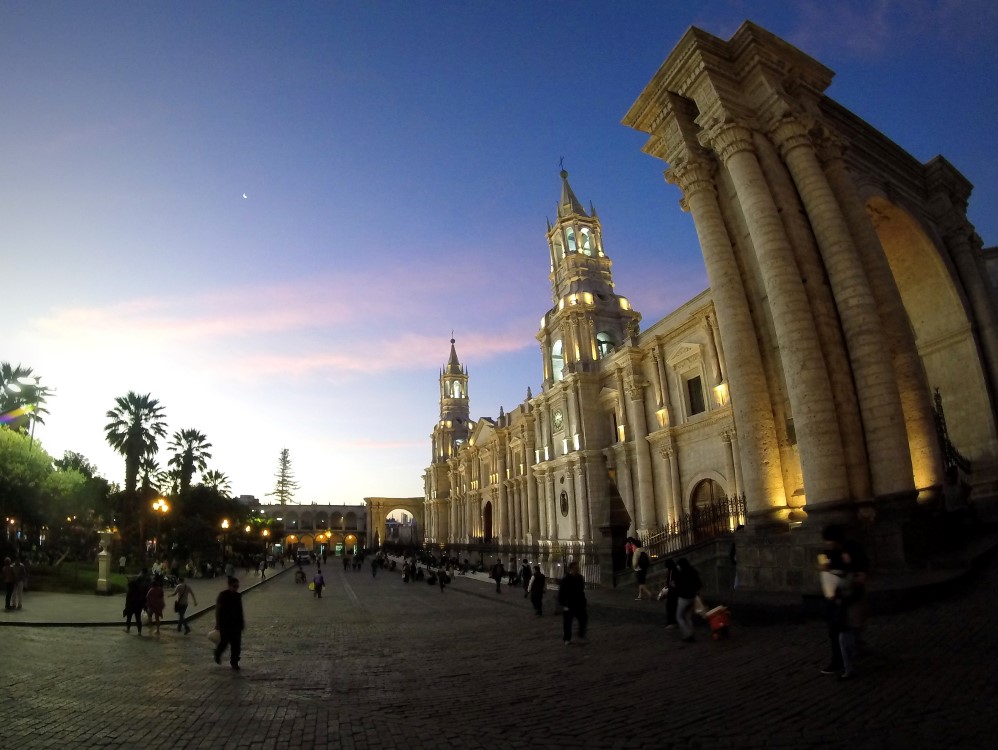 Cathedral with the moon
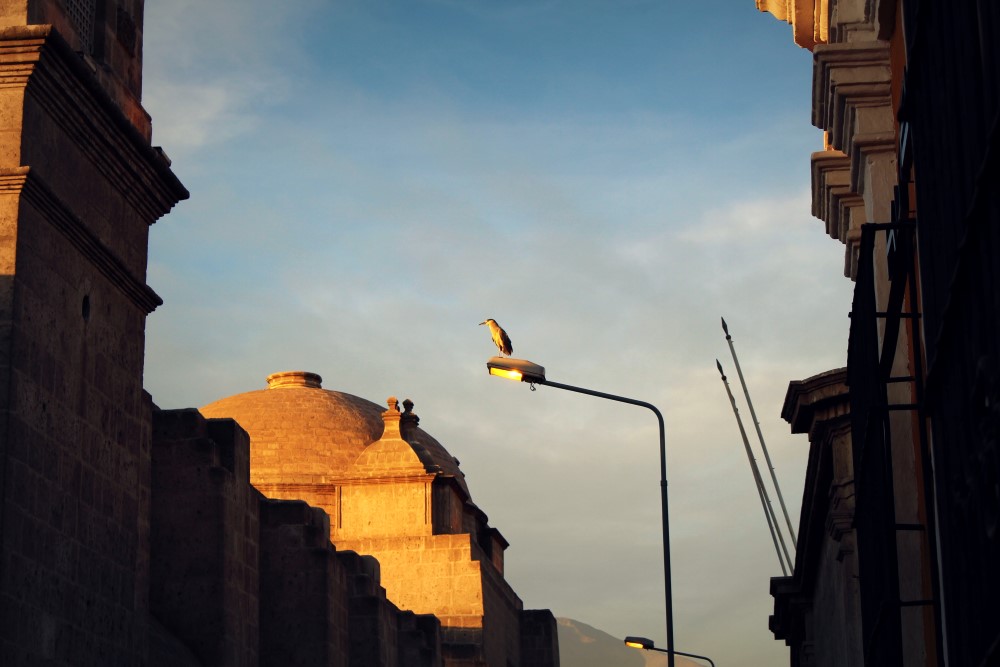
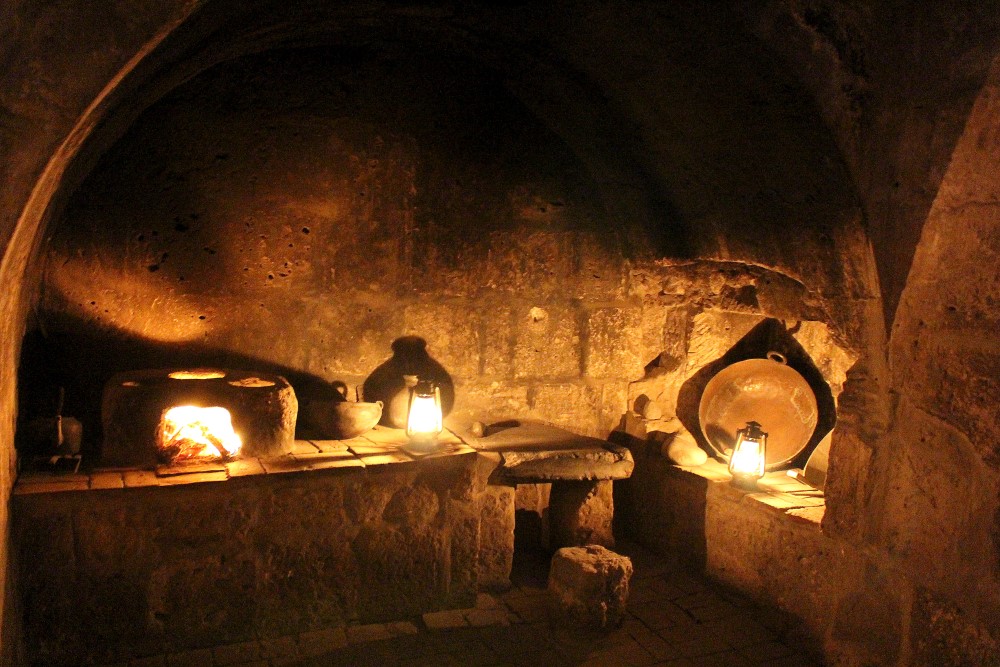
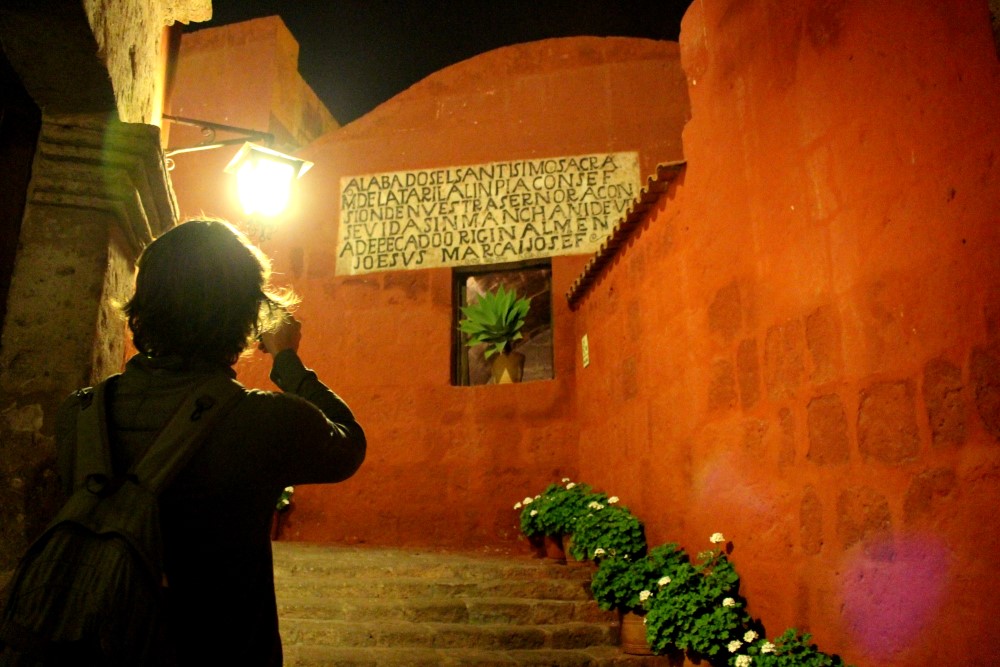
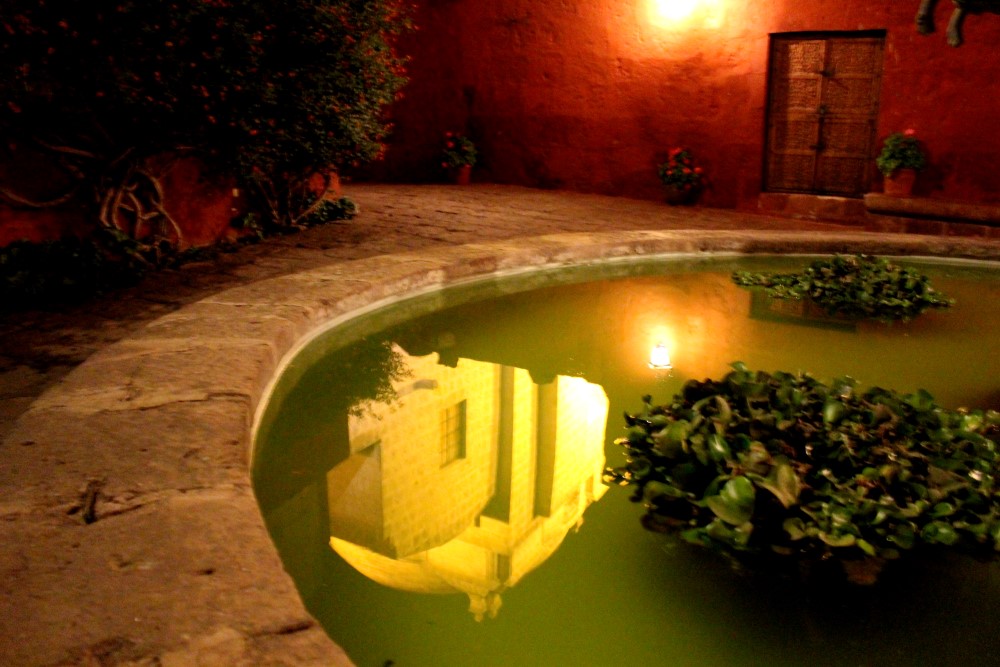
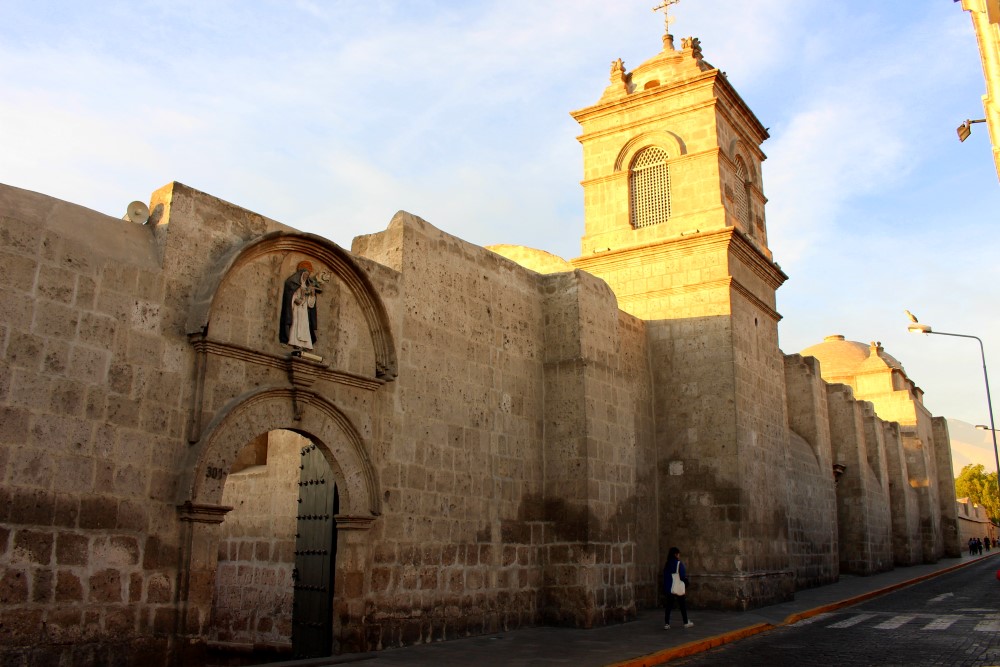 Monasterio de Santa Catalina, a XVI century monastery: a “citadel within a city.” We were able to visit the monastery on a Tuesday when it is open late, and we enjoyed seeing the setting sun give way to lantern-lit passageways and mysterious rooms and courtyards. At its start, the monastery sheltered almost two hundred secluded nuns – daughters of wealthy Spanish families – and three hundred servants until it opened to the public in 1970. Thirty nuns still live here today.
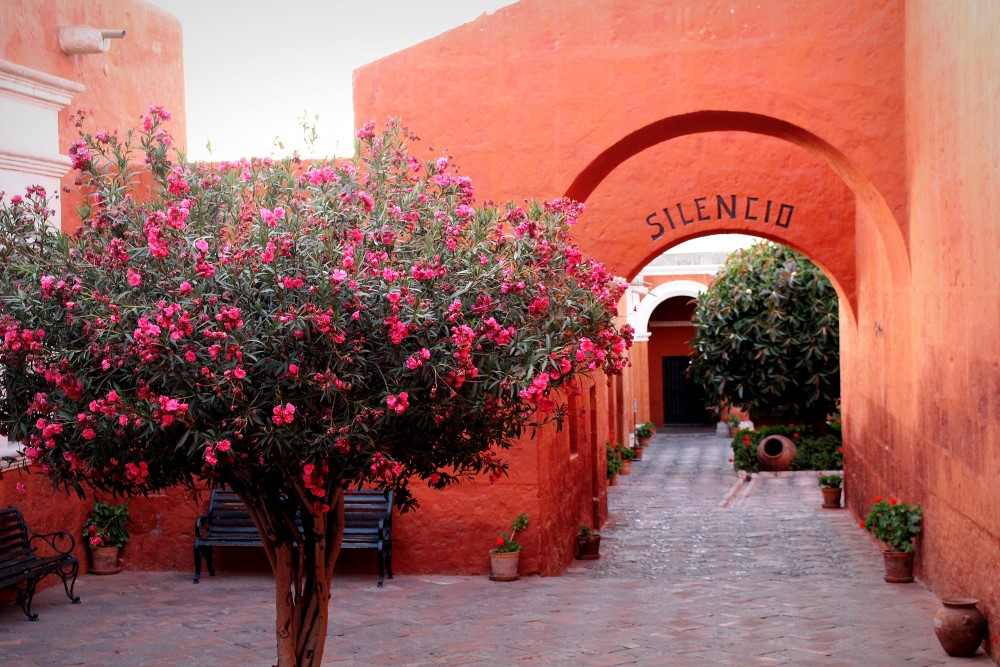 This silence arch leads to the Novice Cloister; after passing under this arch, novice nuns were required to zip their lips in a vow of silence, resolving to a life of work and prayer for four years. Their wealthy families were expected to pay a dowry of 100 gold coins per year, and at the end of the four years nuns could choose between taking their vows and entering into religious service or leaving the convent. Leaving would surely bring shame upon their family.
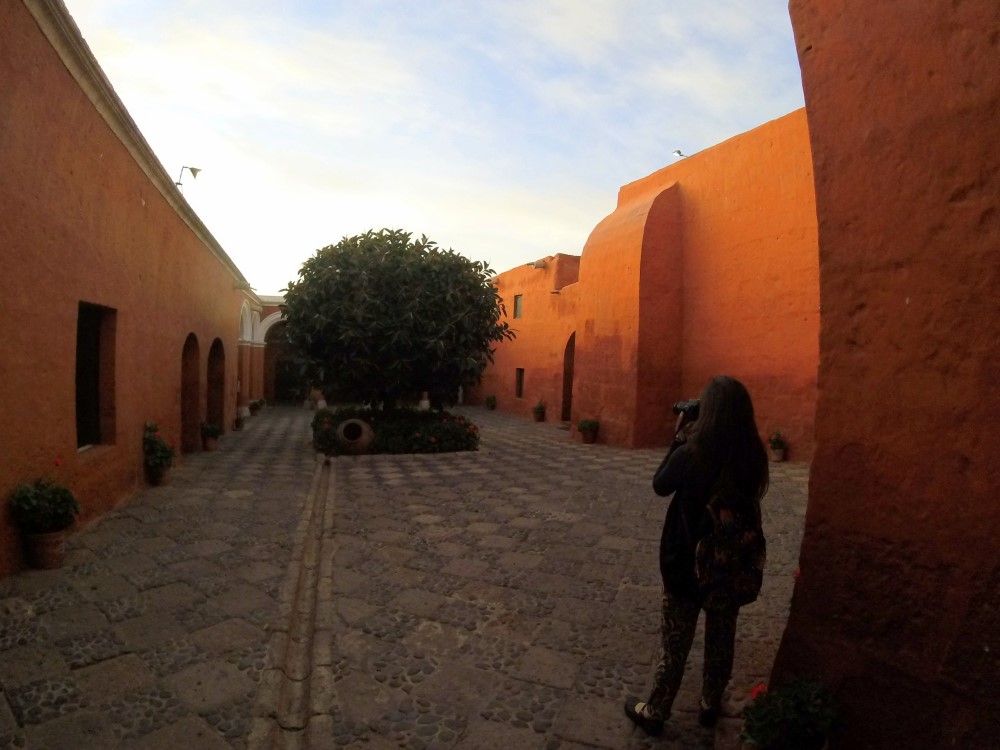 Photographer being photographed

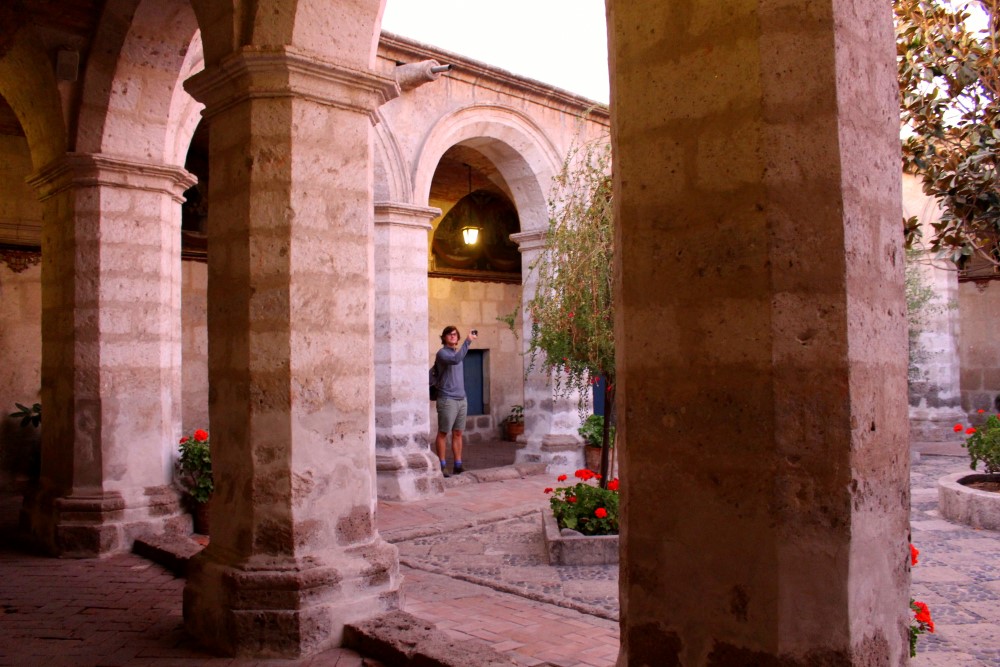 Photographer being photographed, Novice Cloister
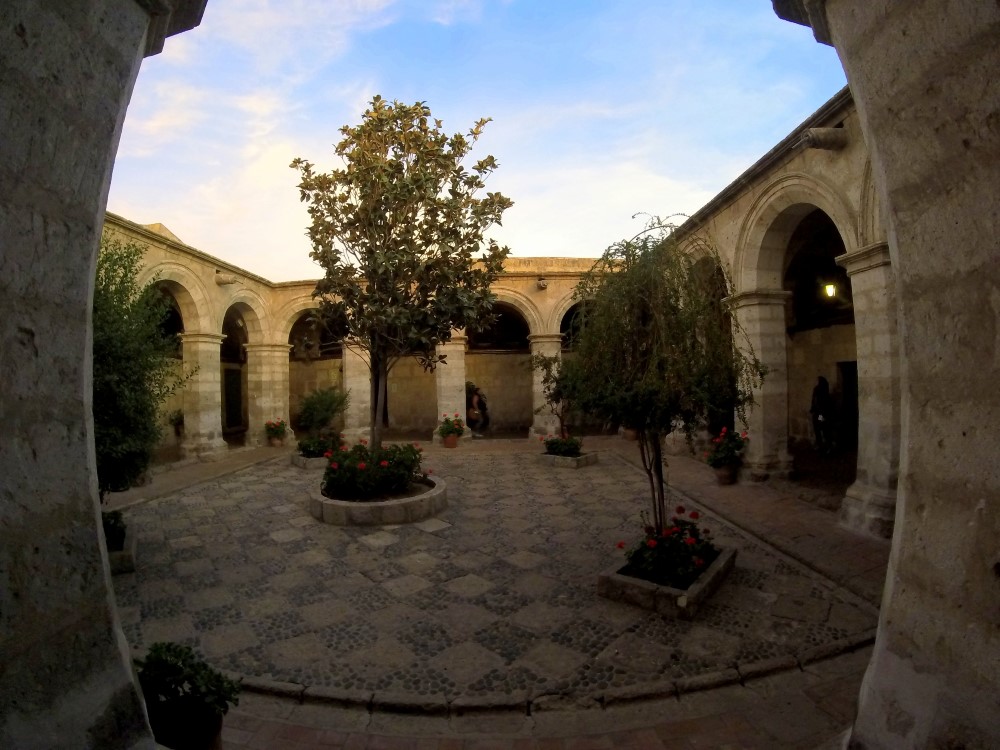
 Orange Cloister, so named for the orange trees at the center
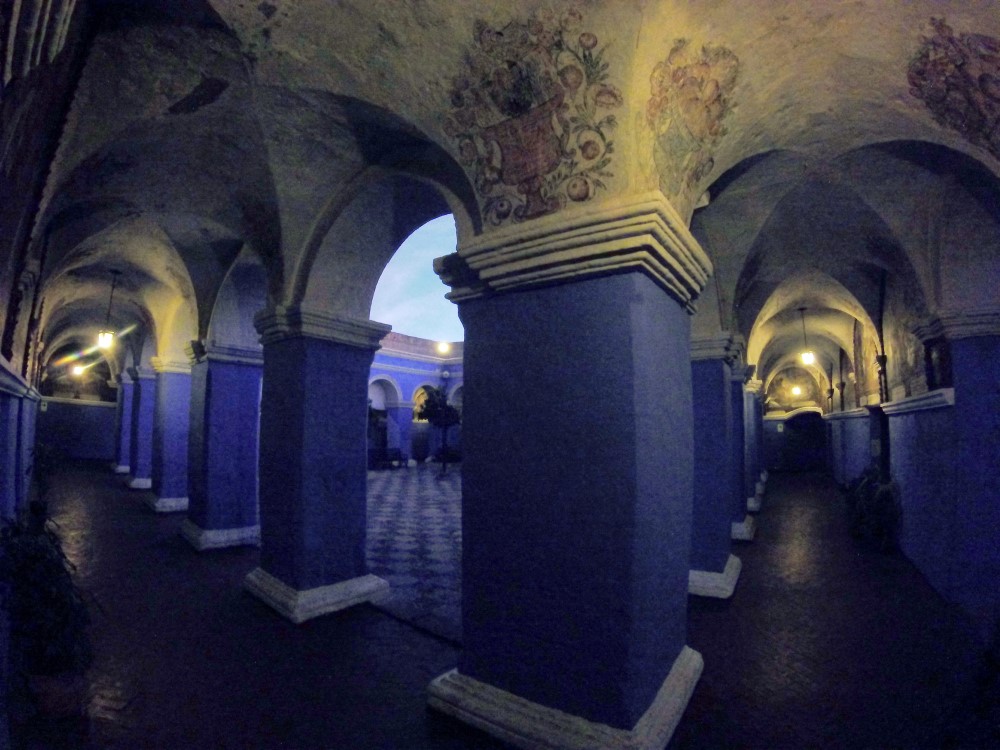
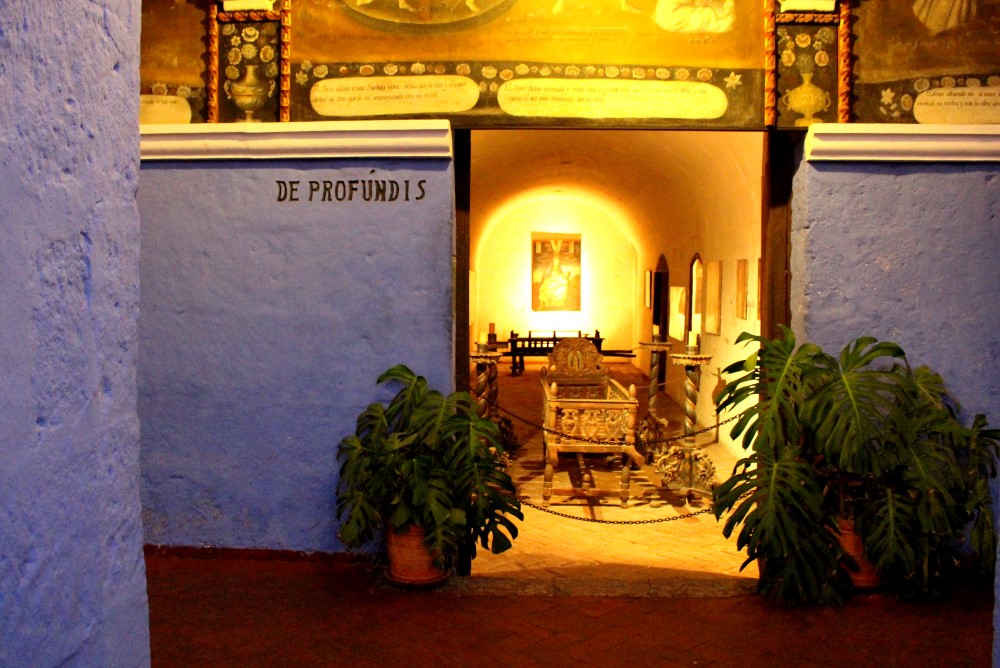 De profundis, a mortuary where dead nuns were mourned
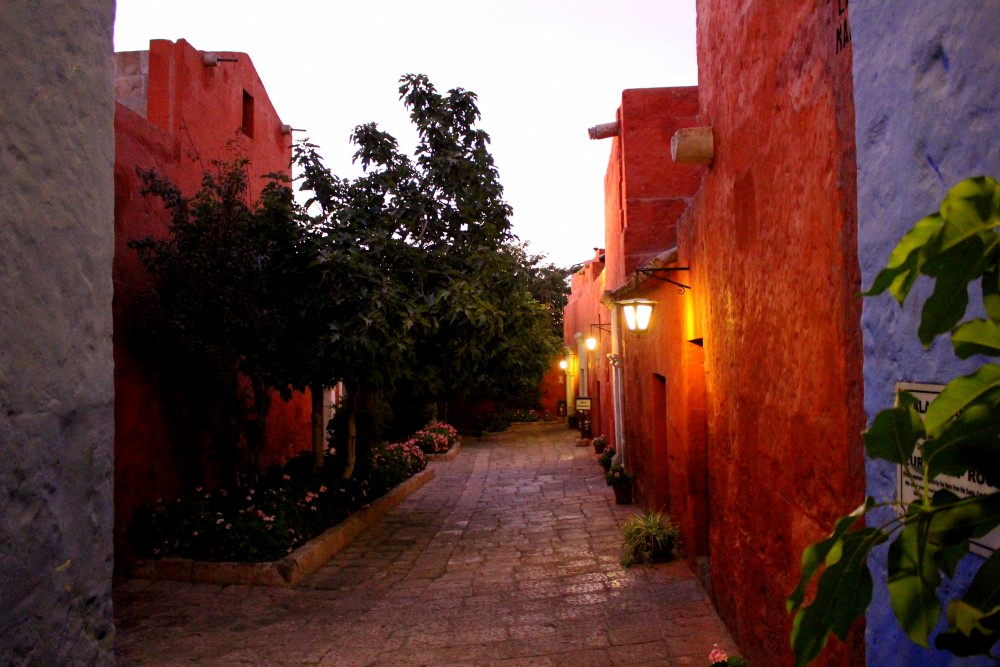
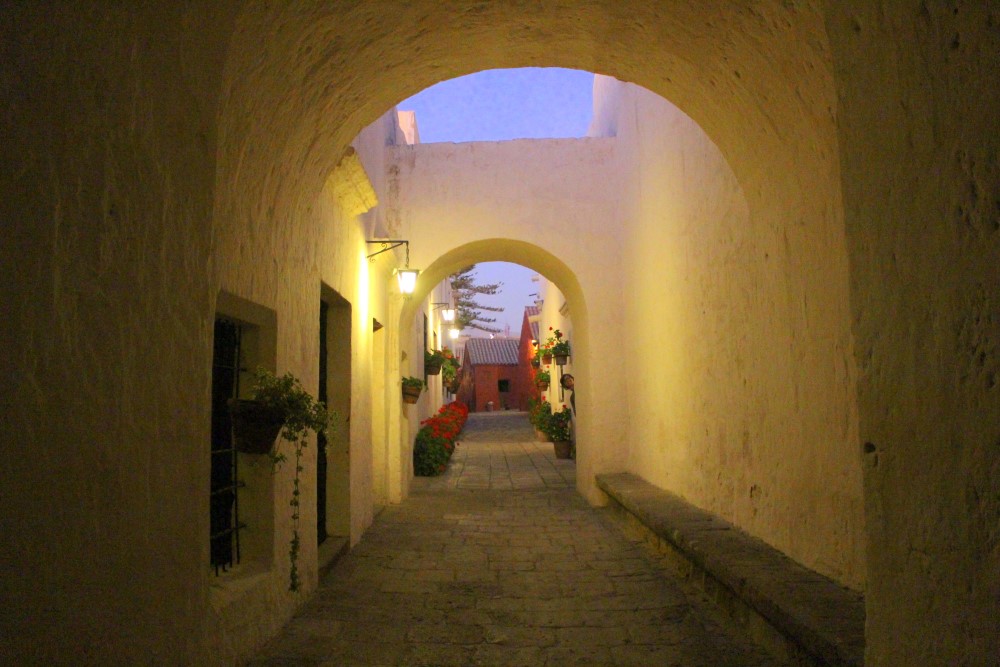 Toledo Street – find Julien.
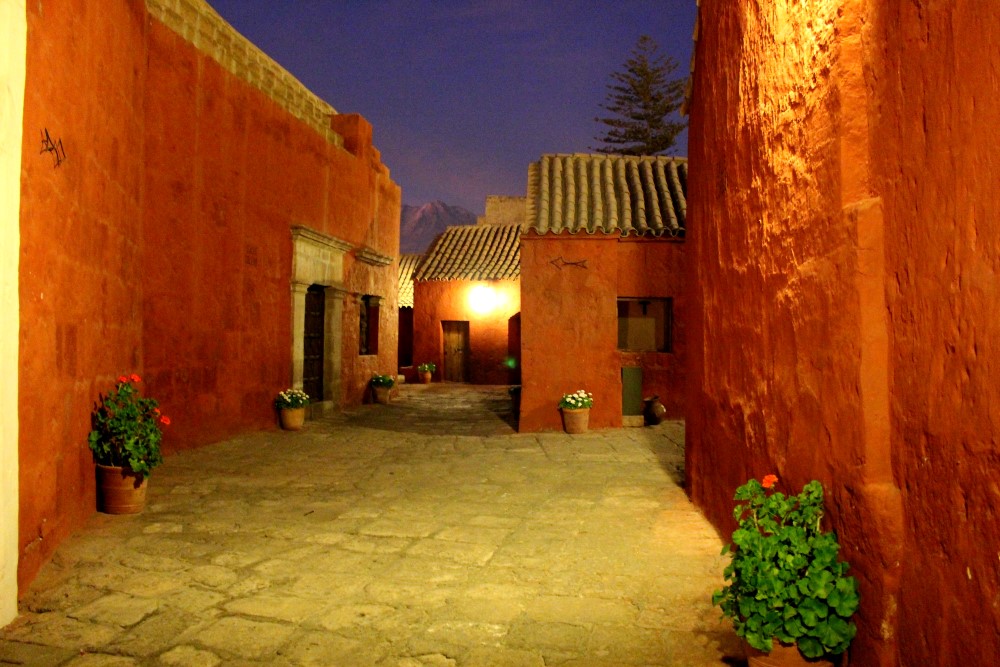
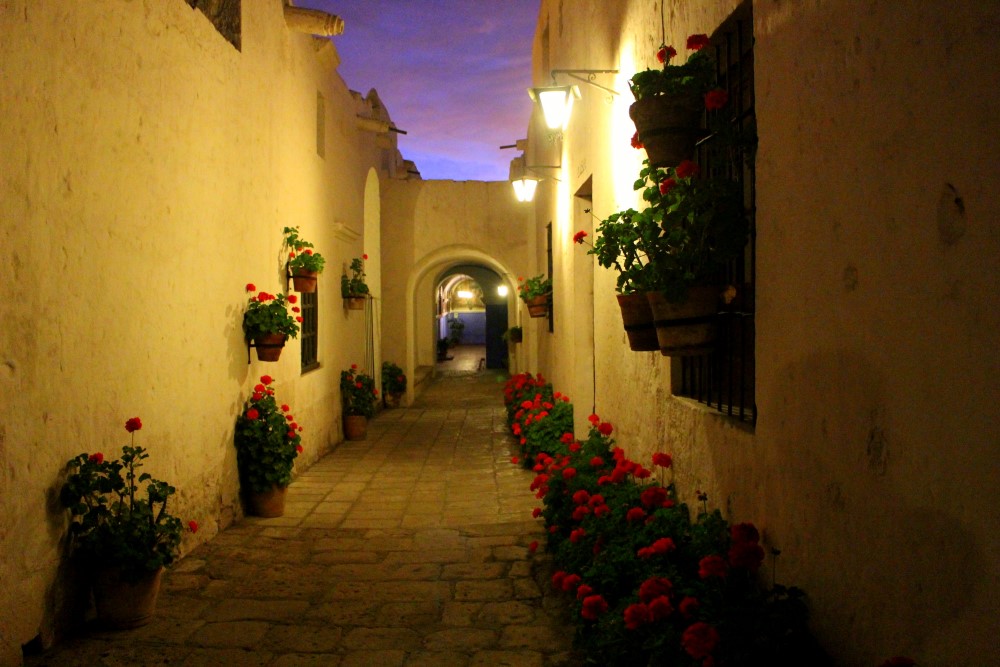
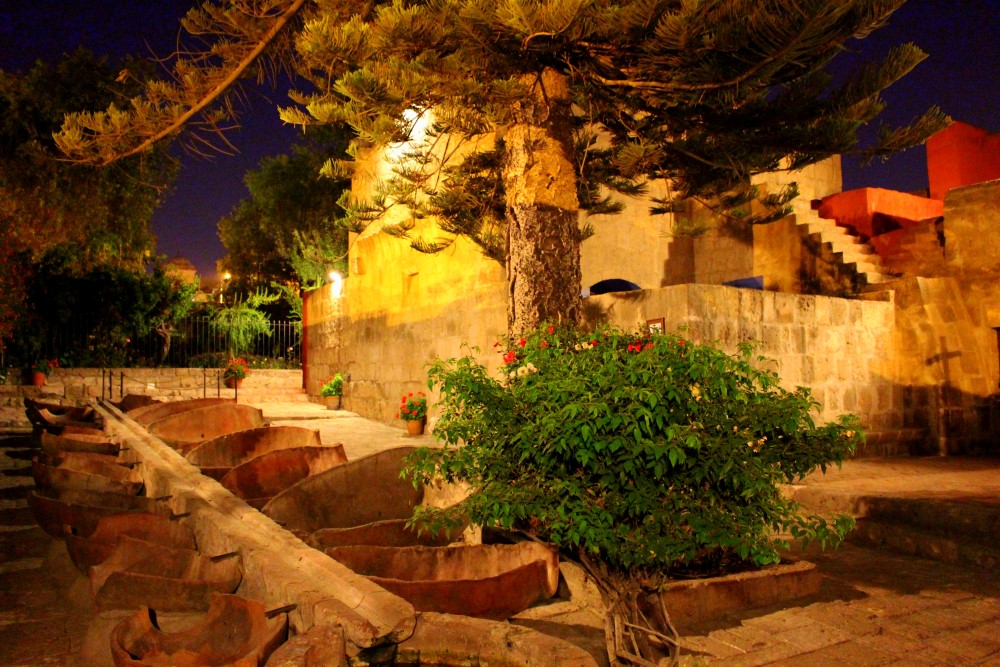 Laundry basins we recognized as the clay receptacles used to store wine in Ica, cut in half.
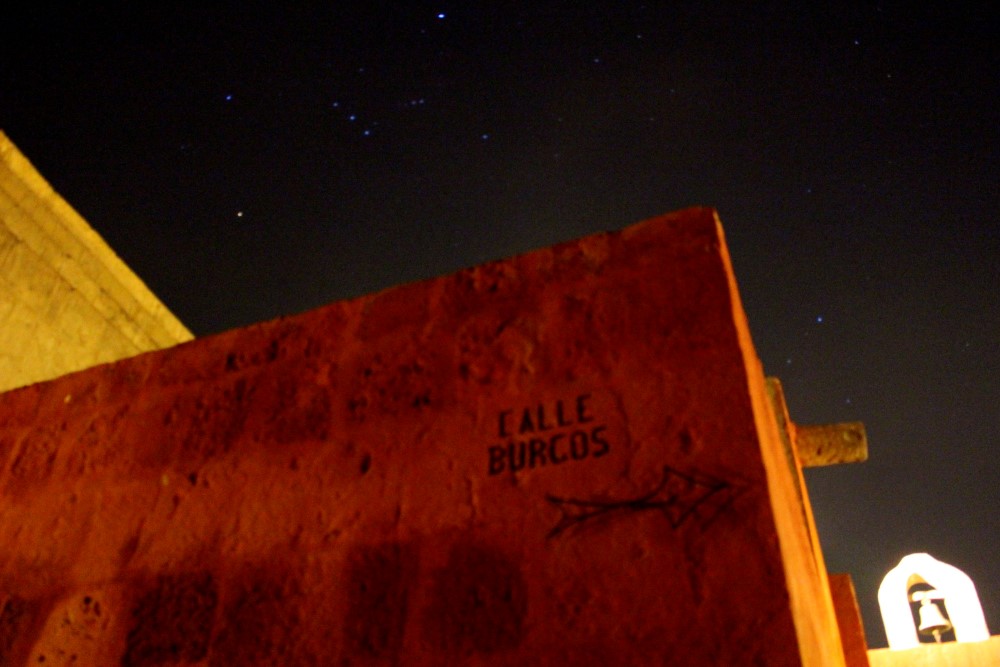 Orion on the Calle Burgos
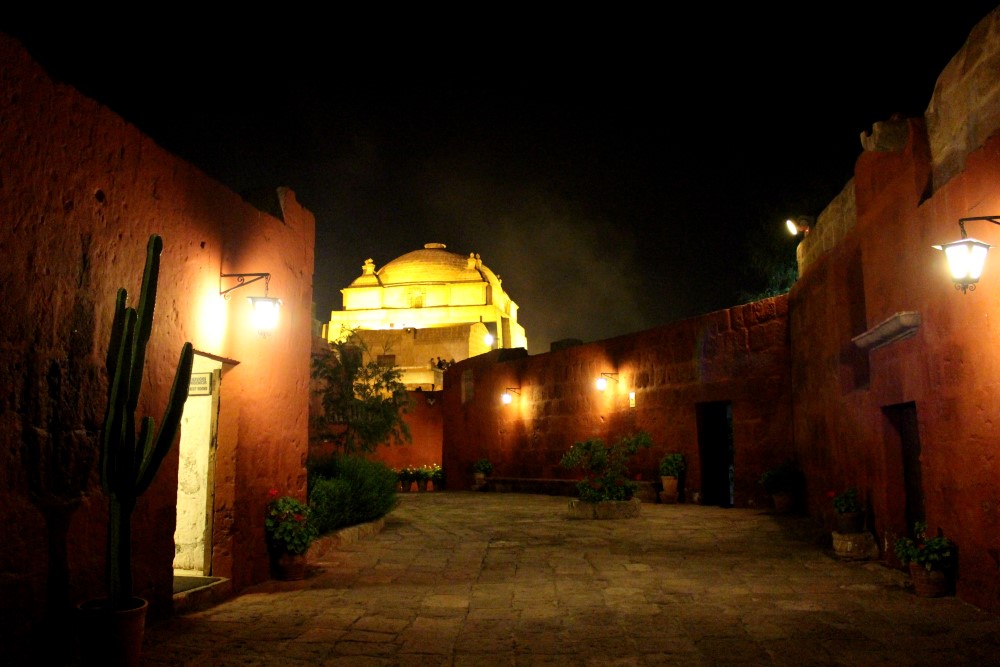
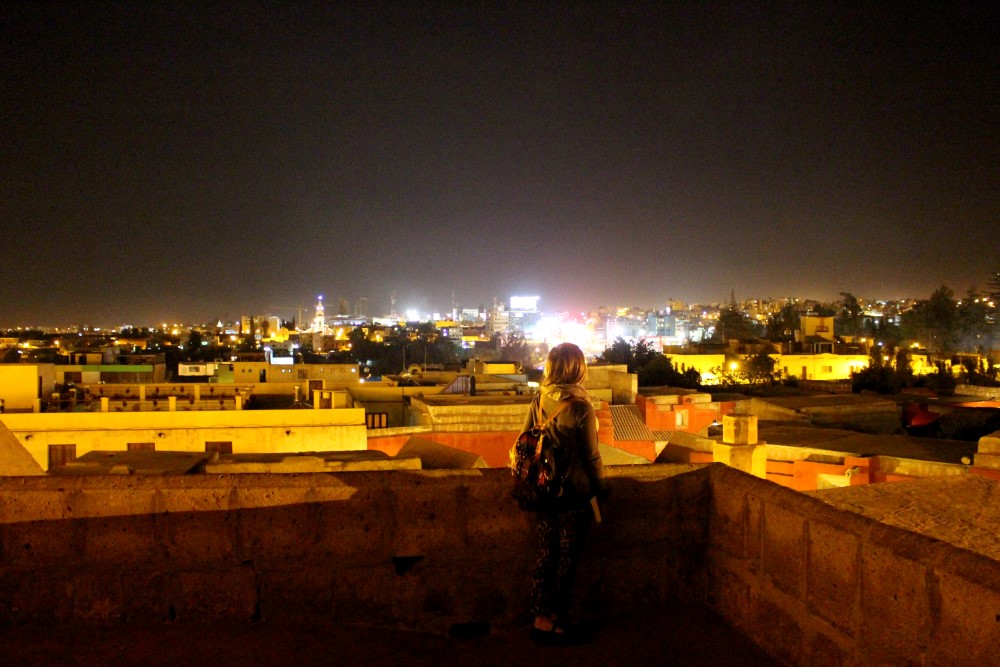
Looking over Arequipa
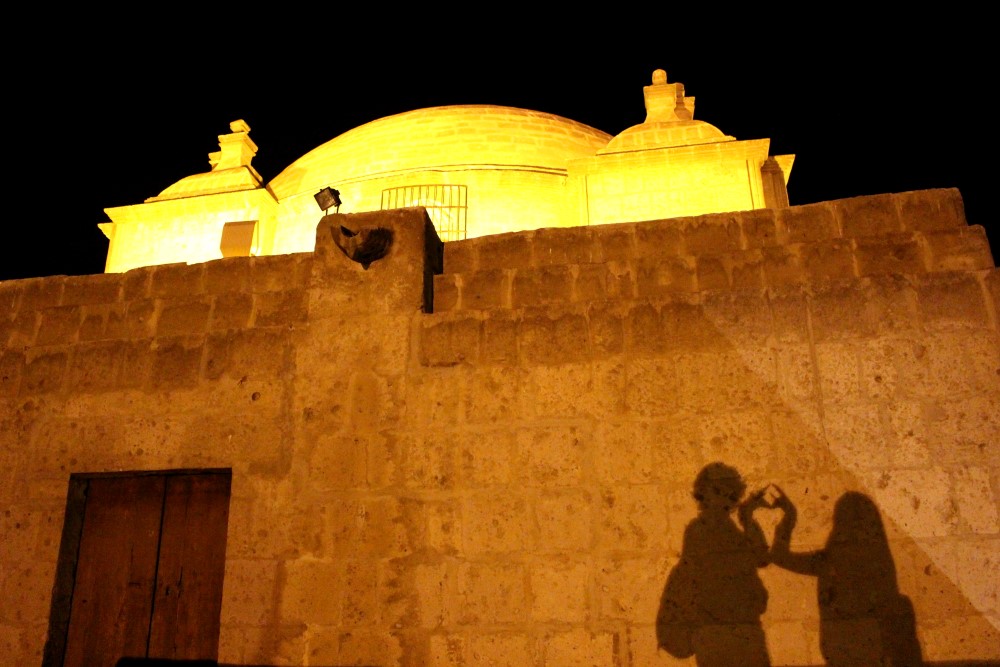 Llama love
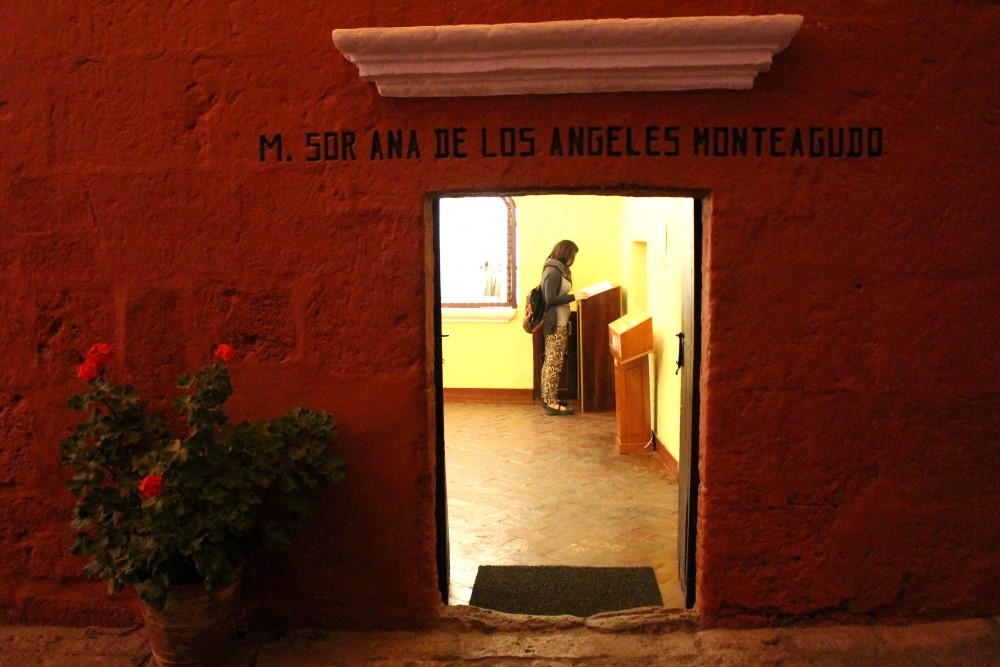
 Bishop relics, including a heart!
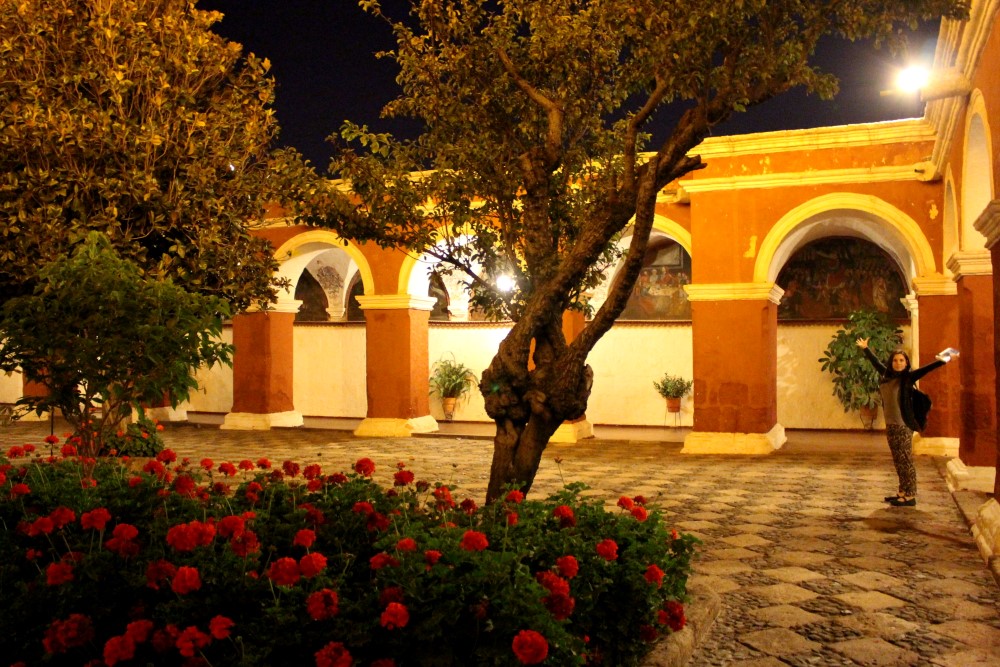
 This Framerican Life
Magnifiques photos d’Arequipa ! Le Popy trouve très belle celle d’une rue (ton ocre) faite de nuit. J’adore aussi la photo du lama (il a oublié d’aller chez l’orthodontiste). Quant au cloitre, il est superbe et apparemment en très bon état.
Bisous.
LikeLiked by 1 person
Le couvent était effectivement magnifique, coloré, et en excellent état. Un régal de s’y promener à la nuit tombante. Bisous
LikeLike