Four years ago we arrived in Bogotá, Colombia, and it was impossible to miss the incredible street art scene. Murals extended across mom-&-pop shops, hostels commissioned unique pieces to stand out from the competition, abandoned building facades were revived as outdoor galleries. We booked a street art tour the following day and our eyes were opened to the world of street art, to the unwritten rules as to when and where and how to graffiti, stencil, and tag. And like anything, once you learn about a subject, you start to see it everywhere. Since Colombia, we have enjoyed seeing repeat artists throughout South America – one of our favorites from Chile even coming to Paris – and we’ve sought out street art tours in new places we travel.
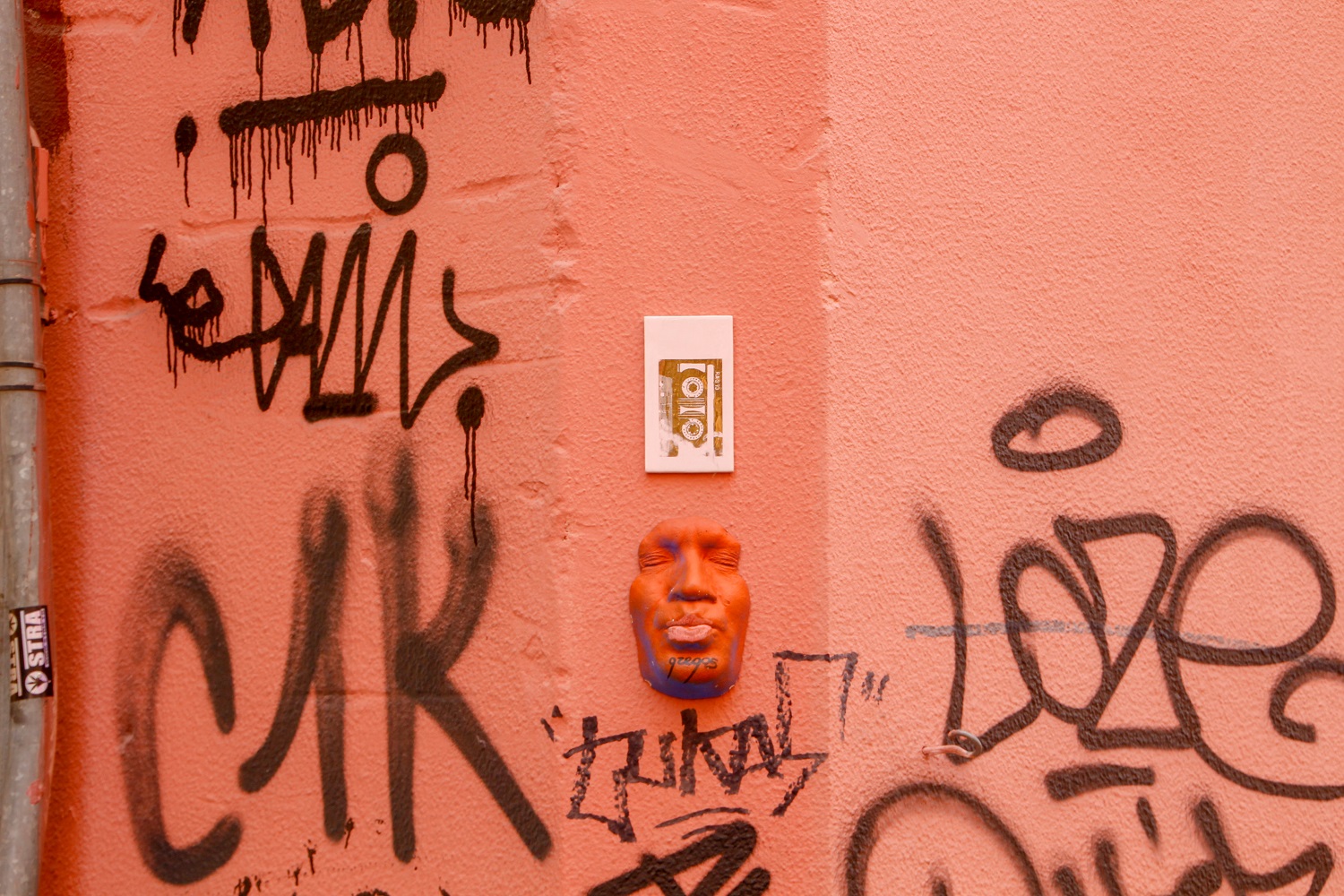
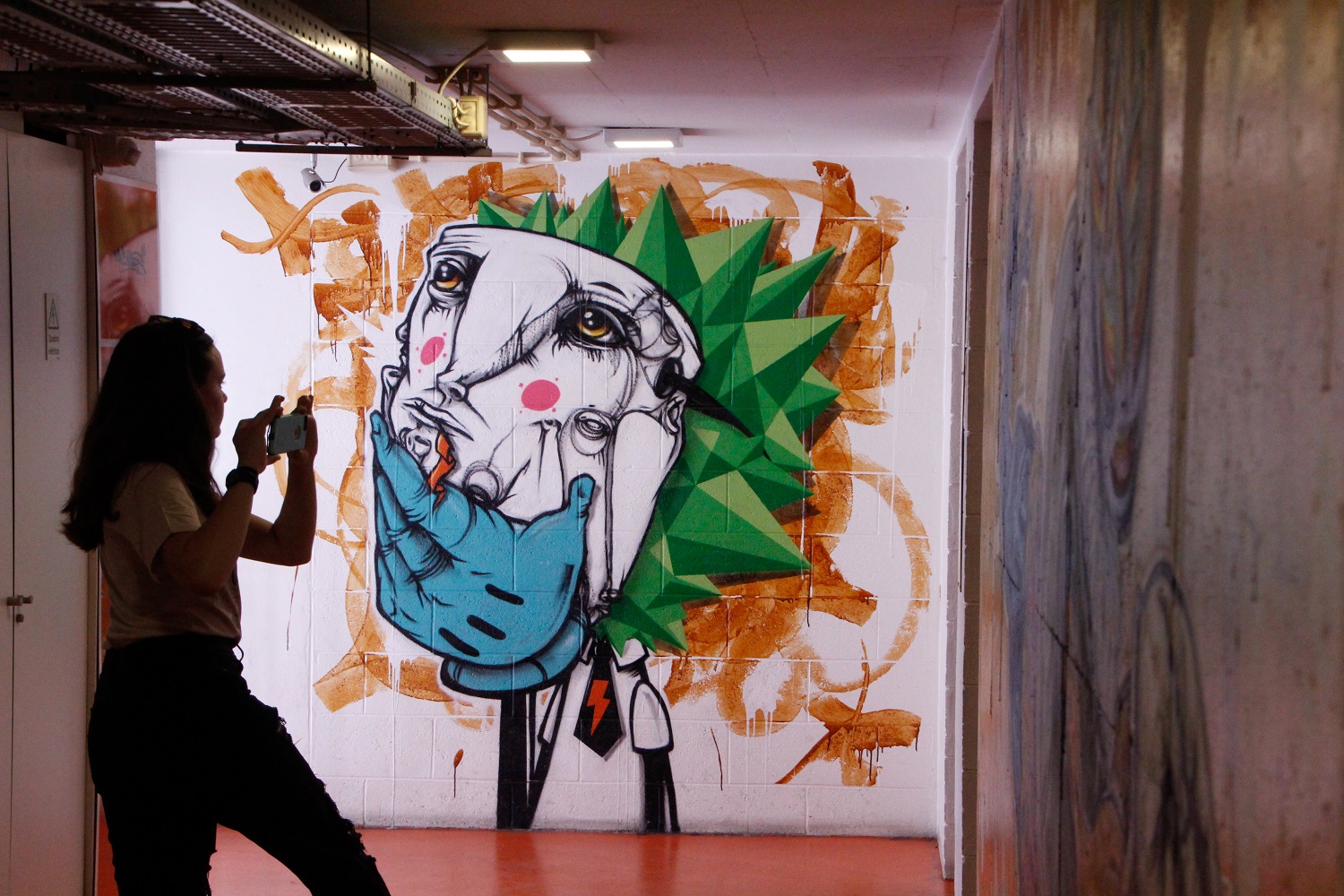
Paris-based artist Gregos, his face mold – Lisbon
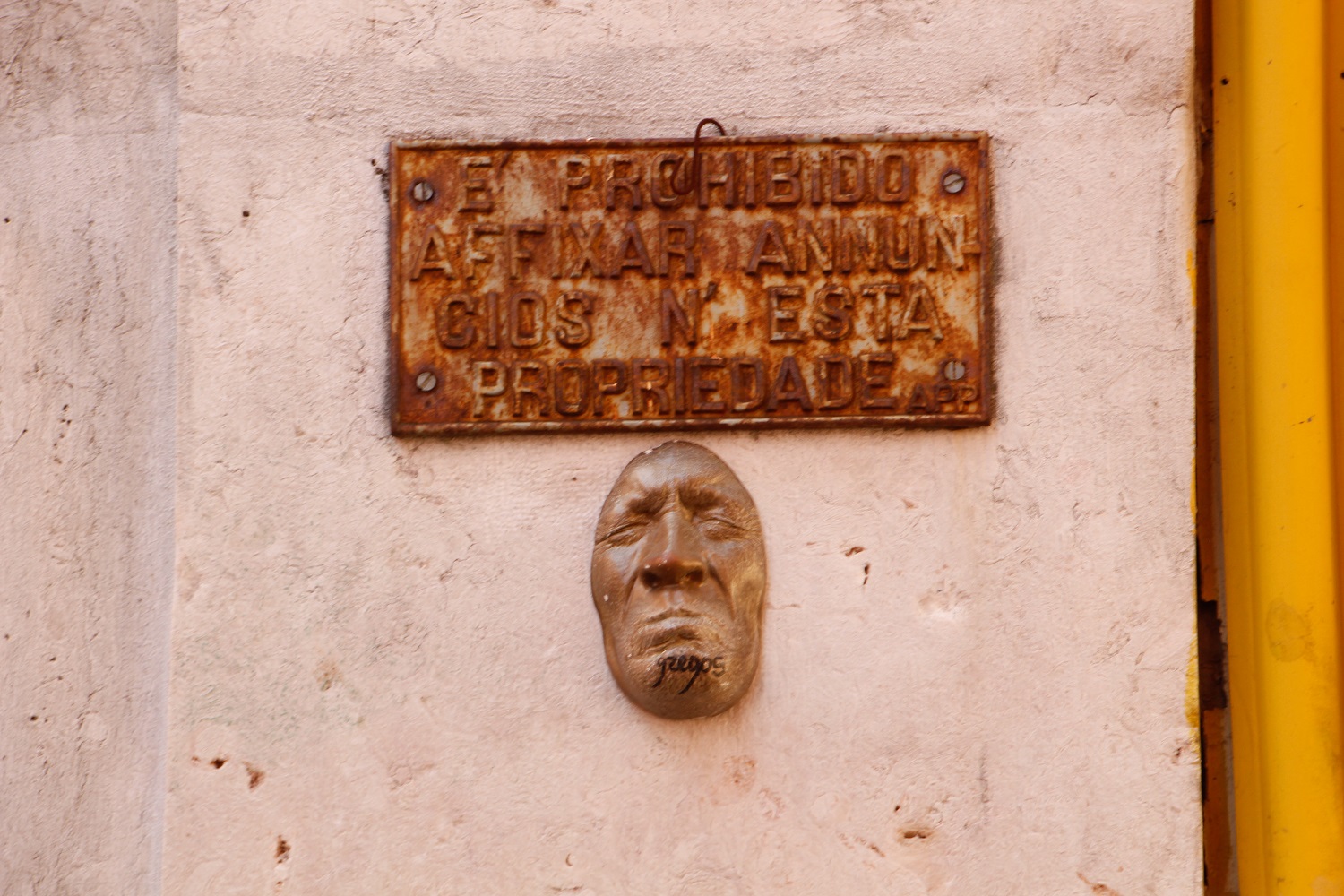
Facing the other Gregos face mold, this mask reacts to the sign above prohibiting affixing ads to this property – Lisbon
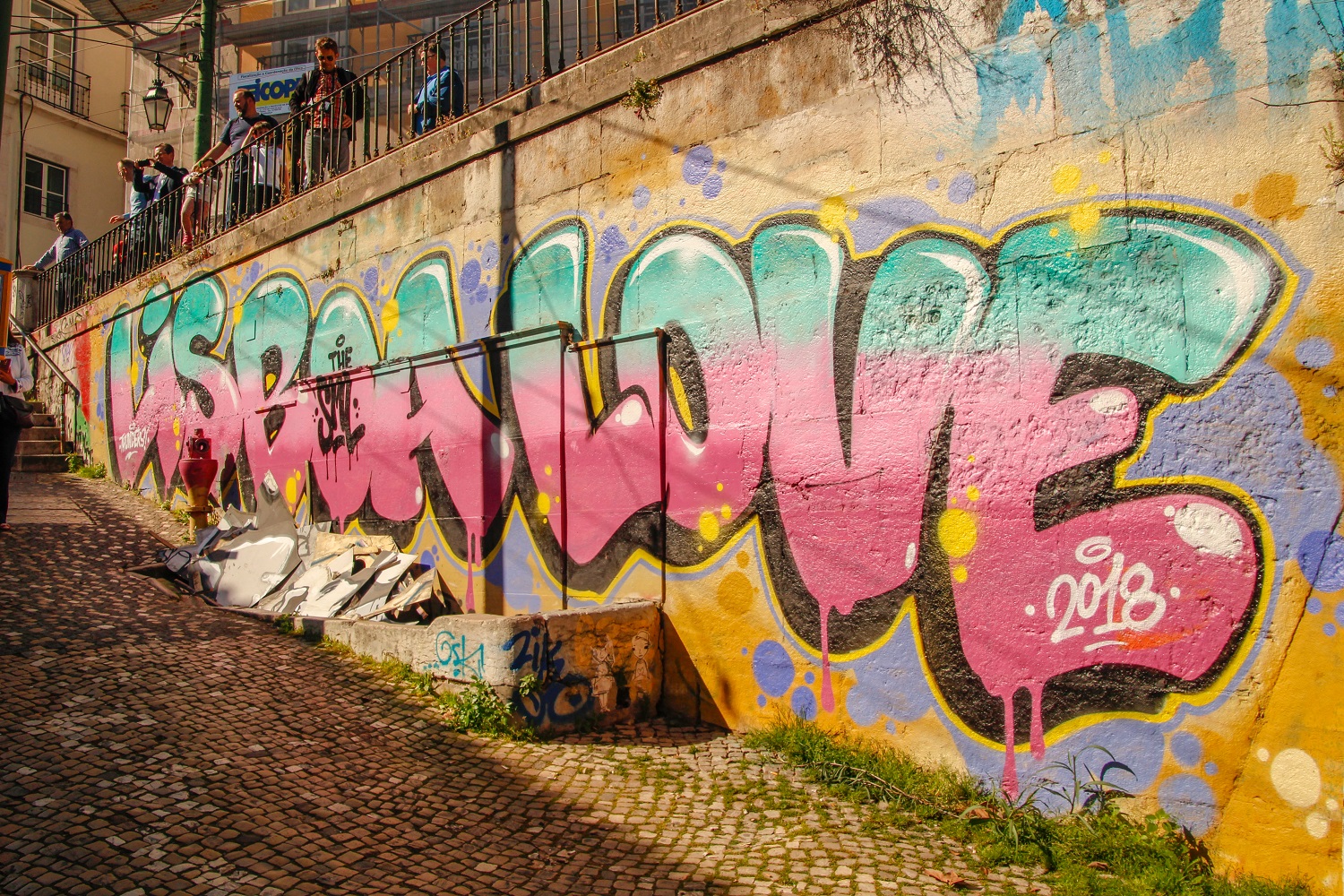
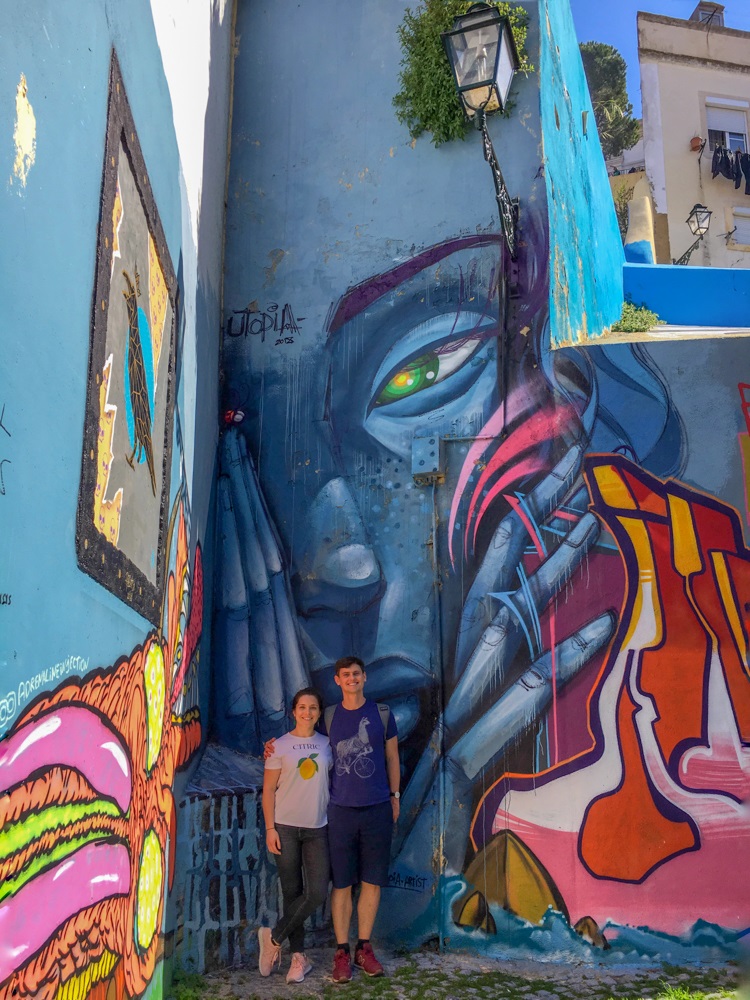
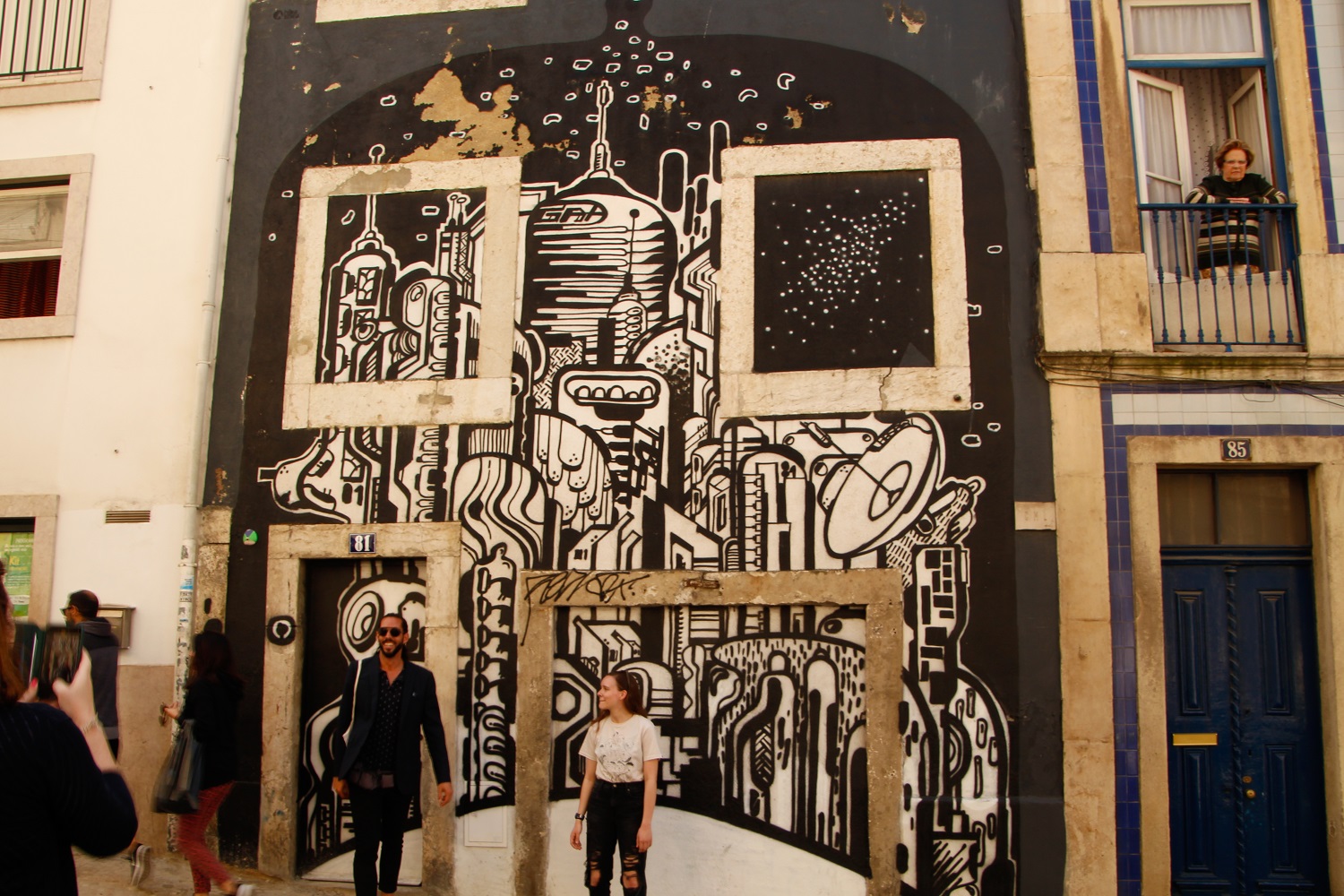
Lisbon proved a rich canvas for street art. With encouragement from the city to focus on certain areas, urban artists are free to work in broad daylight and given time to do impressive work. We easily found a tour and ended up spending the better part of a Saturday meeting artists through their work. Many are from Europe, including France, and we saw a lot of familiar tags, face molds, and mini-mosaics that were familiar from Paris.
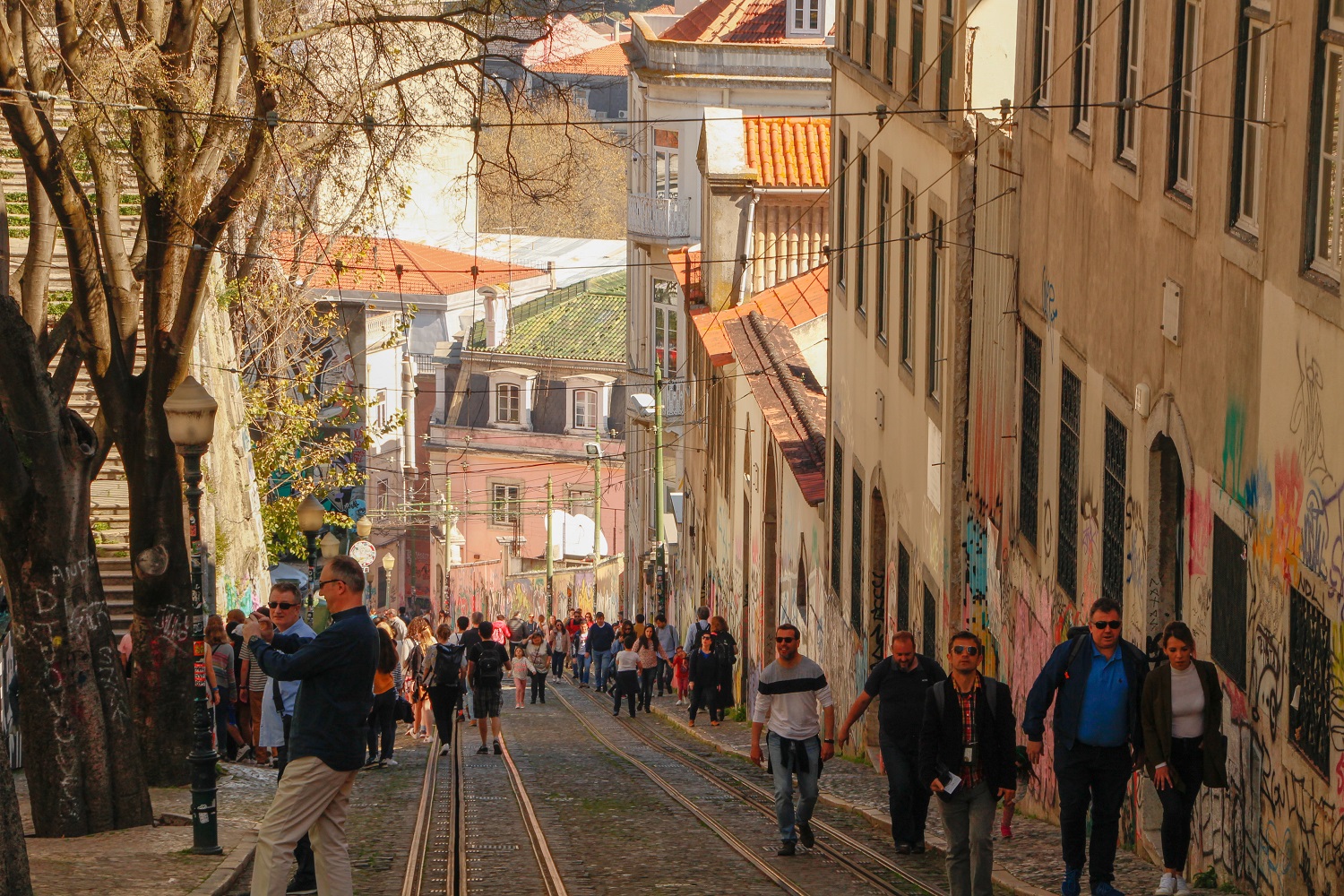
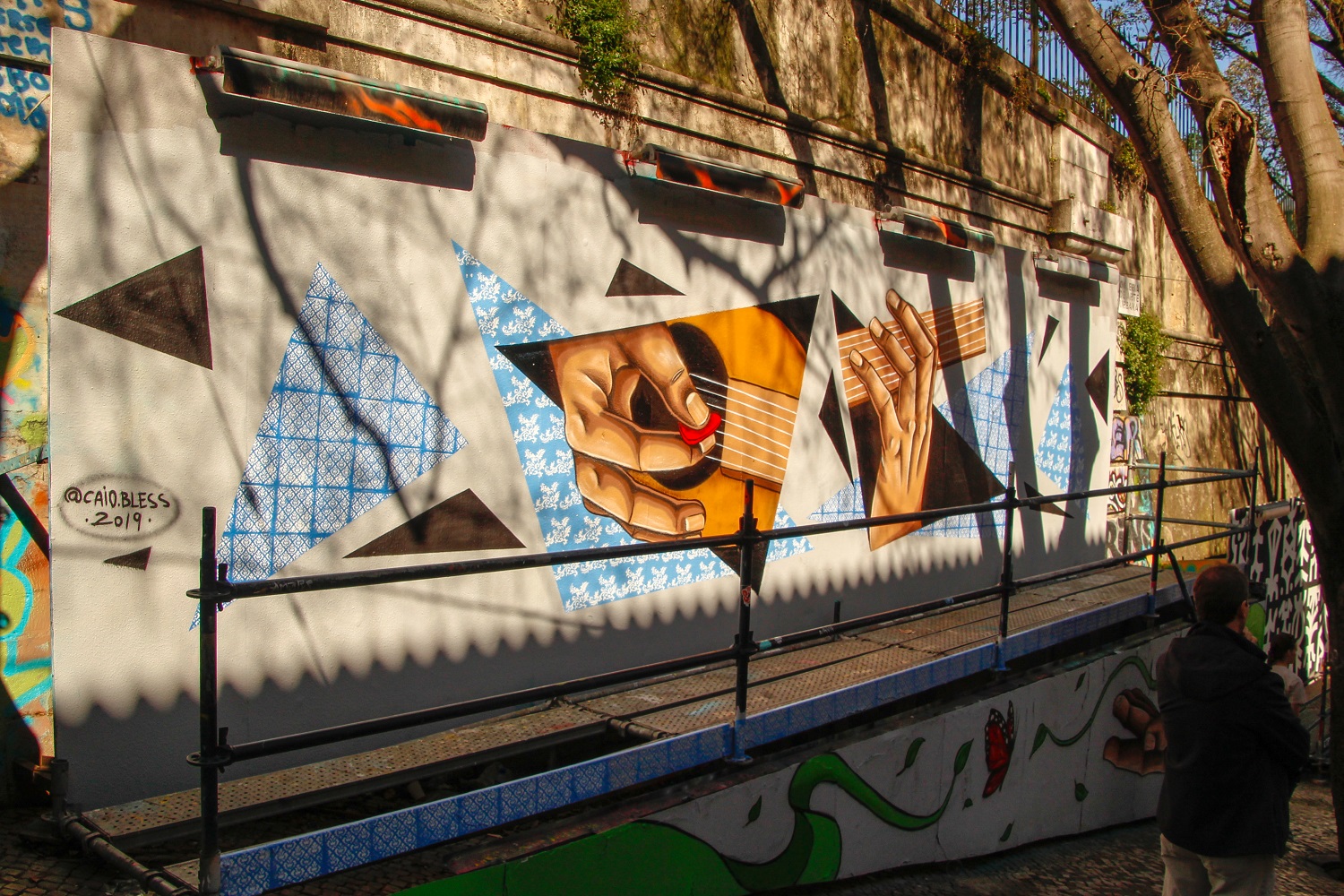
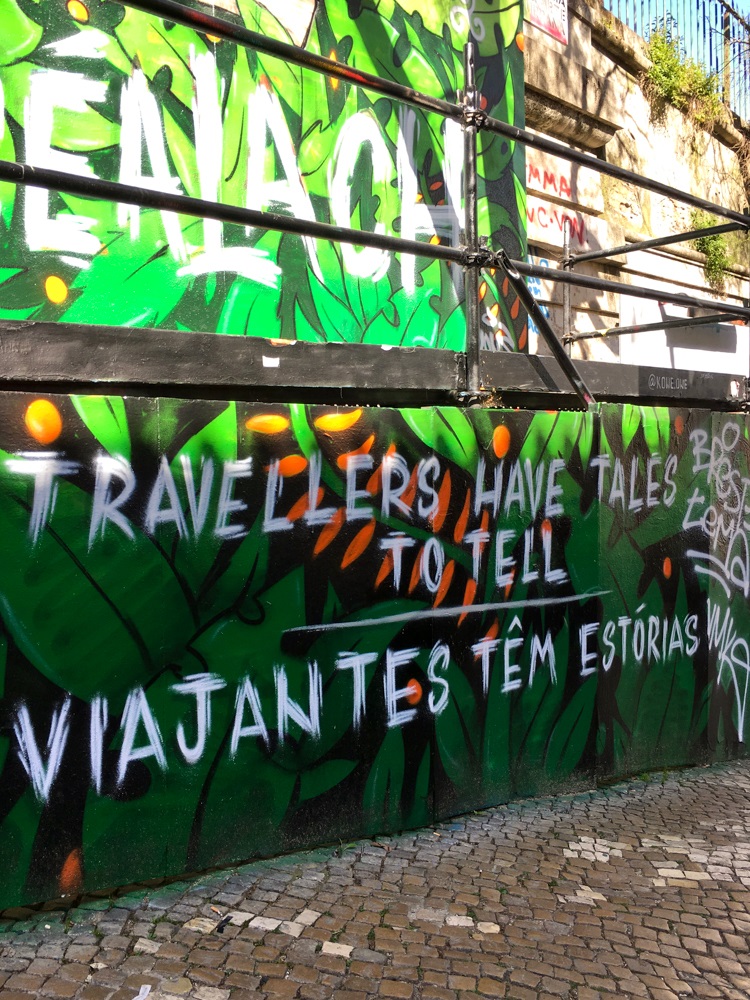
One of the designated street art areas runs along the Glória Funicular, a funicular system up and running since 1885.
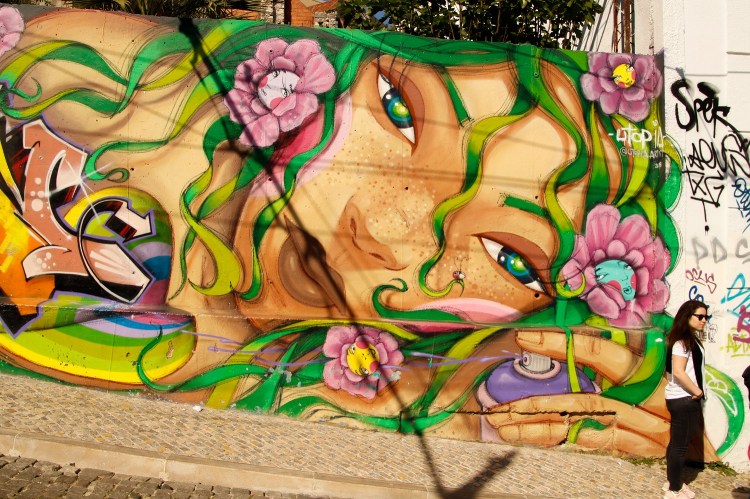
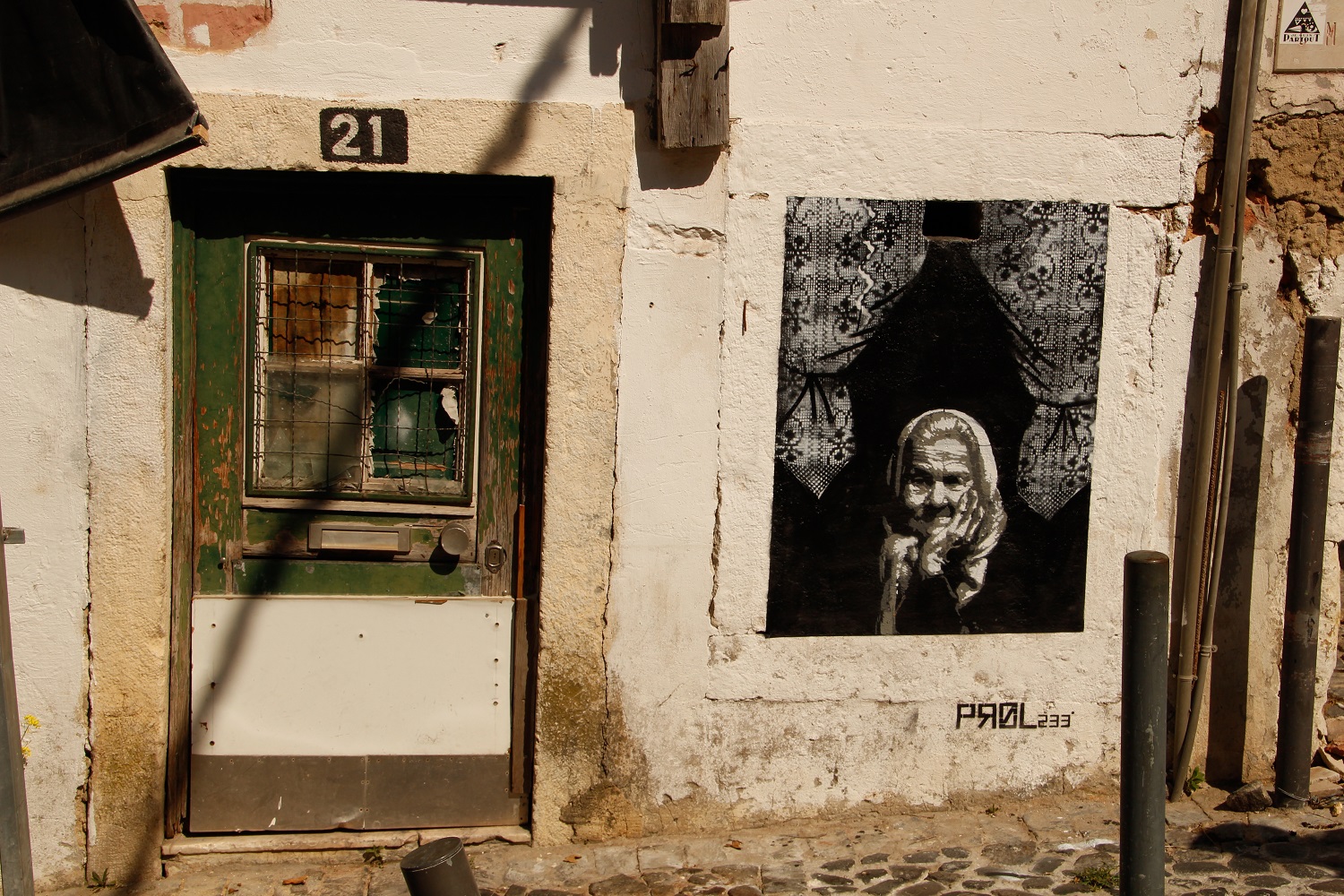
With the advent of Instagram, artists are recognizable not only by their style, but by the included Instagram handles that encourage onlookers to follow them online
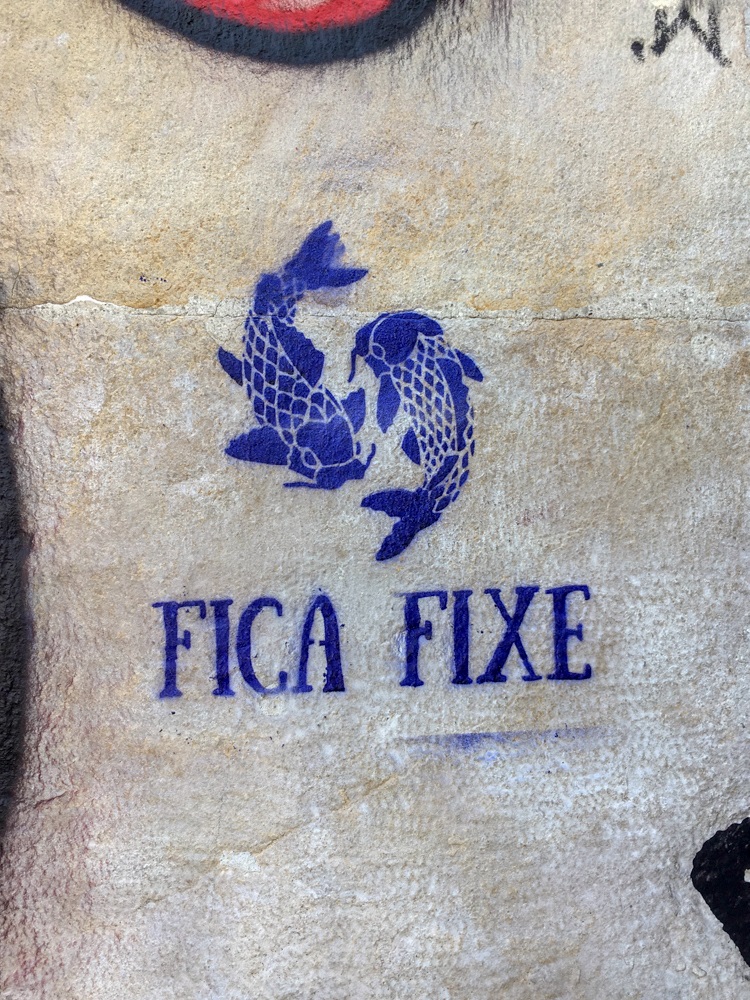
“Stay Chill”
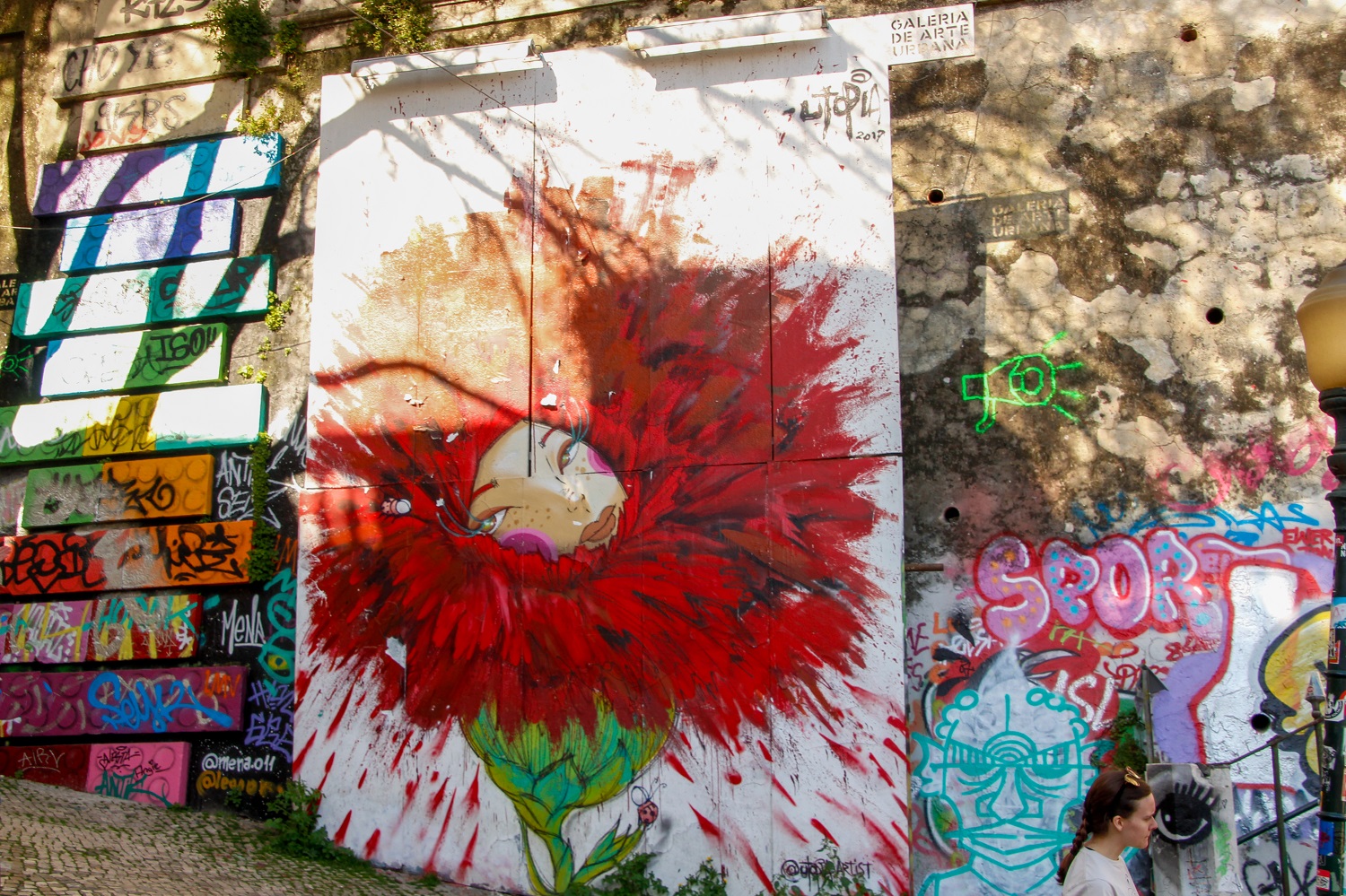
The carnation is an important motif in Portuguese art as it commemorates the Carnation Revolution of 1974 in which the military overthrew the authoritarian regime that had been in power 48 years. The name stems from the fact that almost no shots were fired, and civilians, following Celeste Caeiro’s lead, placed carnations and other flowers in the gun muzzles and revolting soldiers’ uniforms.
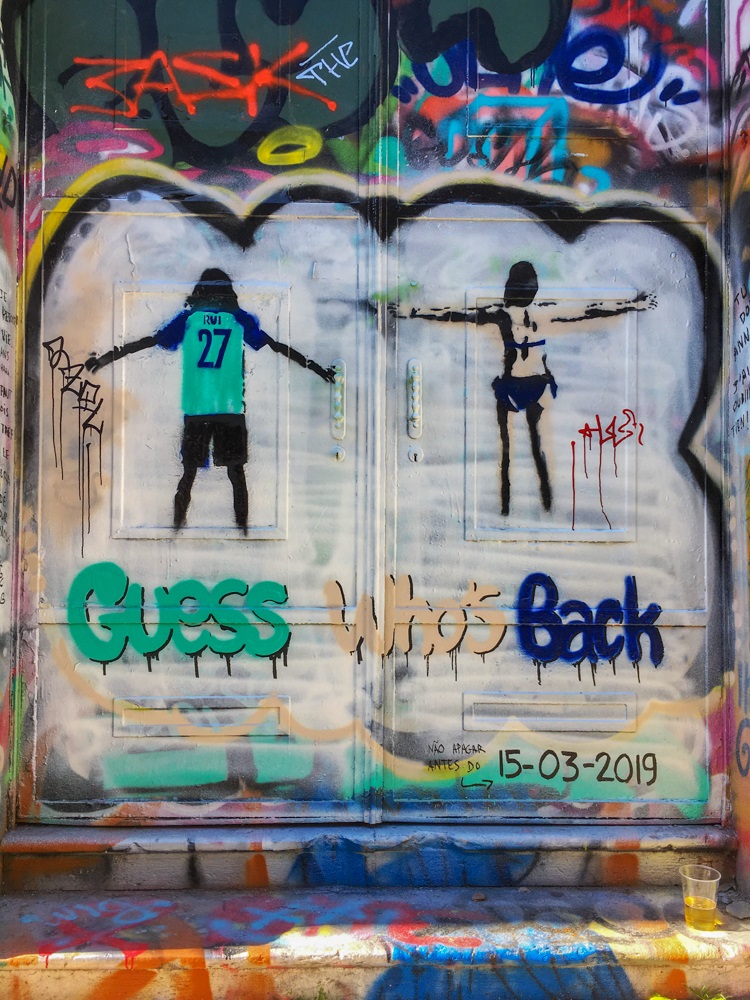
Our guide was very pleased that the artist’s wishes to not paint over his work until after the 15th were respected (it was the 16th).
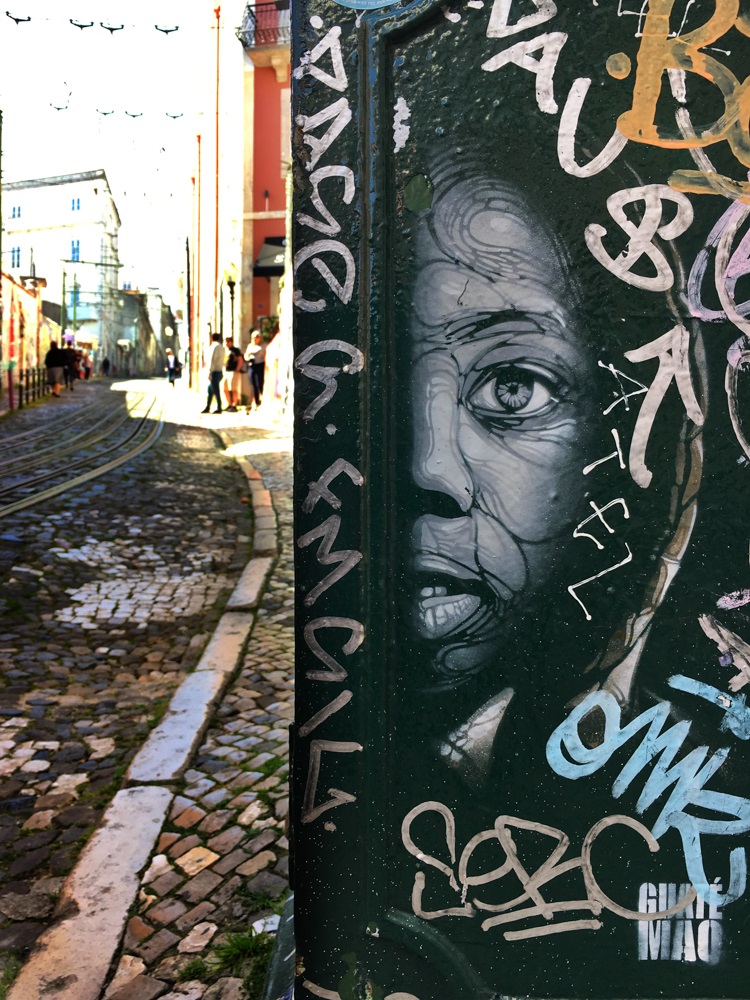
Julien and I were hopeful the artist’s name Guate’mao was Portuguese for Guatemala — we were insufferable in adding “ao” to most nouns to pretend to speak Portuguese; it is, alas, not the case.
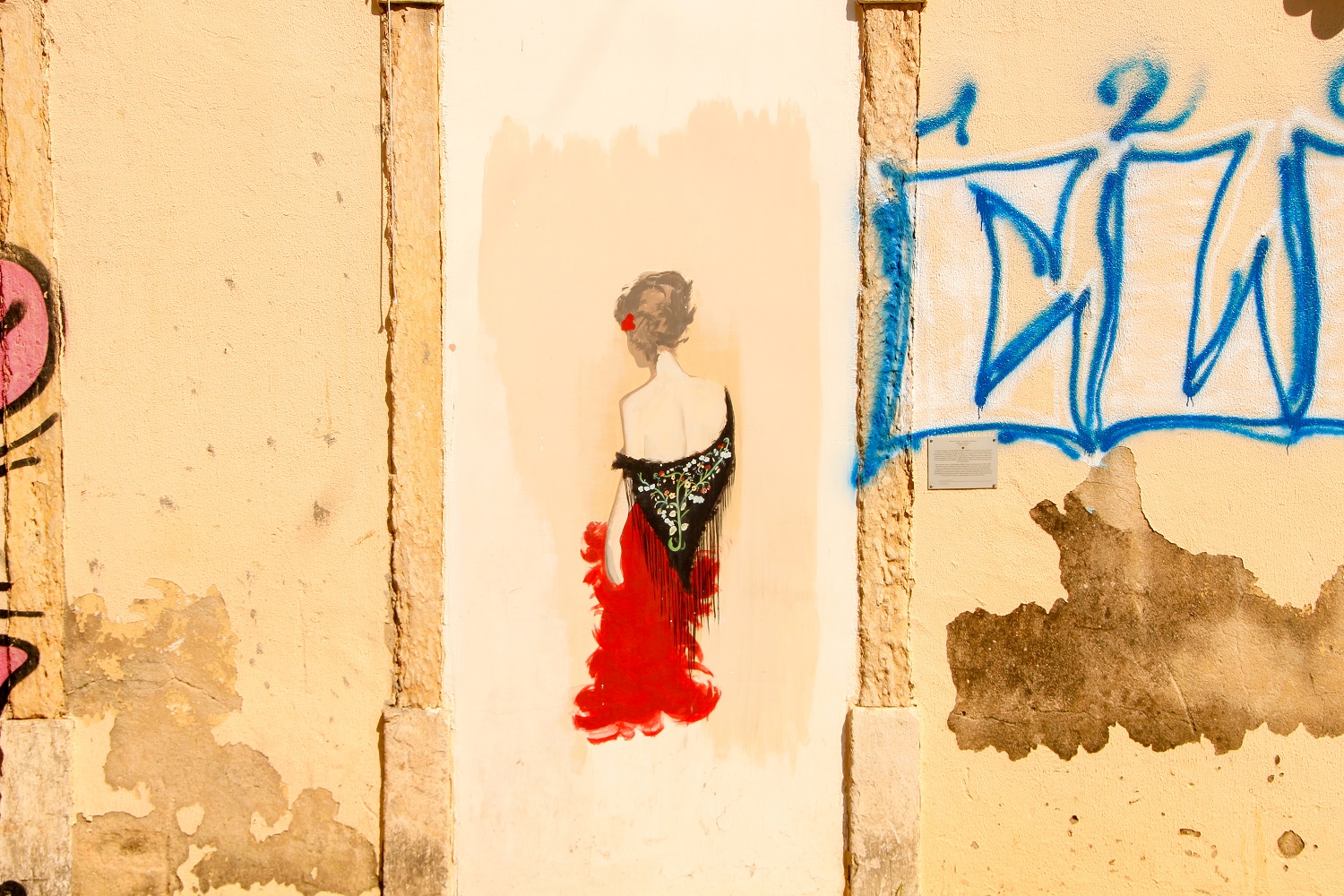
The folkloric music of Lisbon is called Fado. This painting depicts the traditional singer’s outfit in the neighborhood of one of the first Fado singers that rose to fame, Severa.
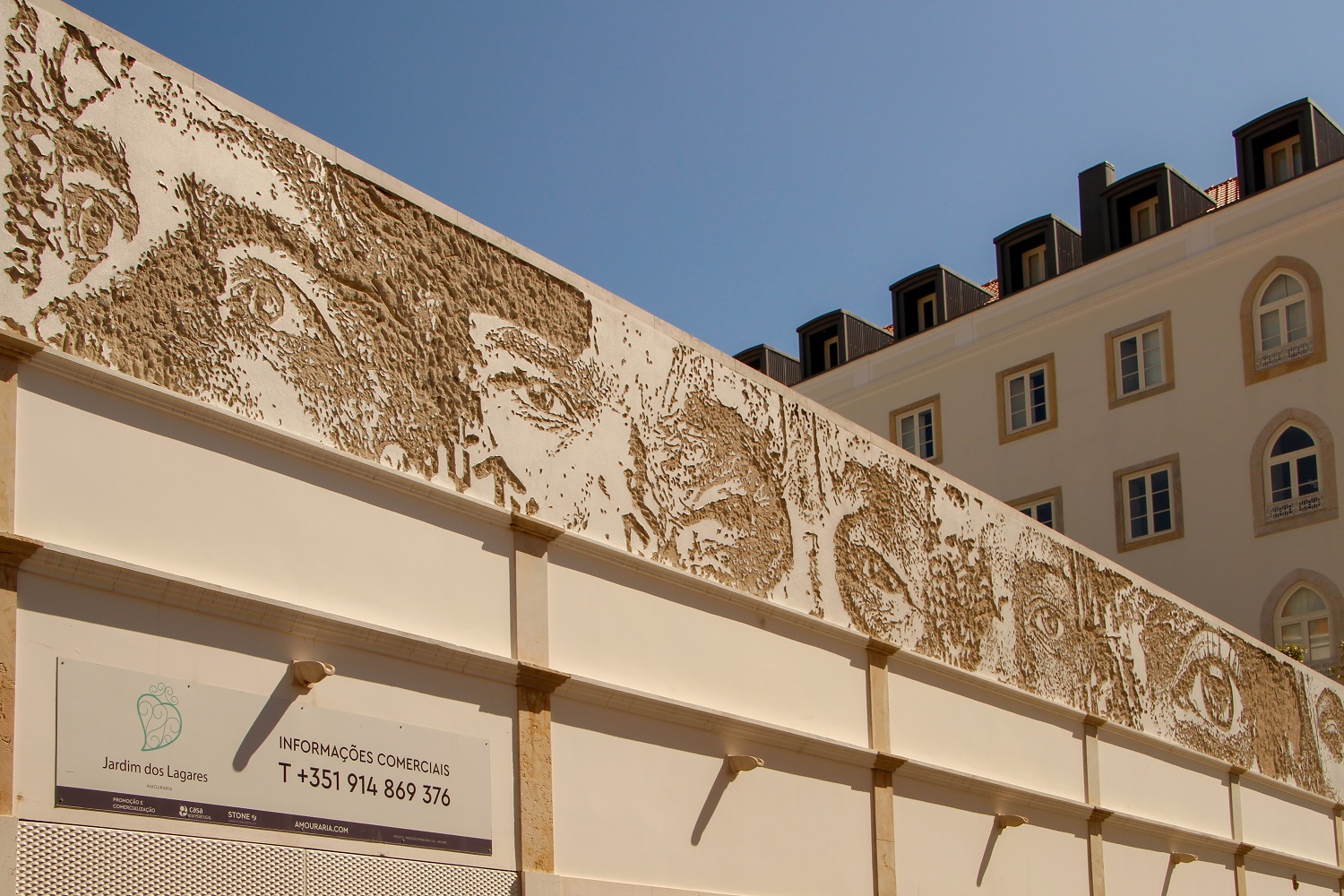
Portuguese artist Vhils is famous for his deconstructive art, either using mini explosions to create images and text, or a hammer drill as he did here.
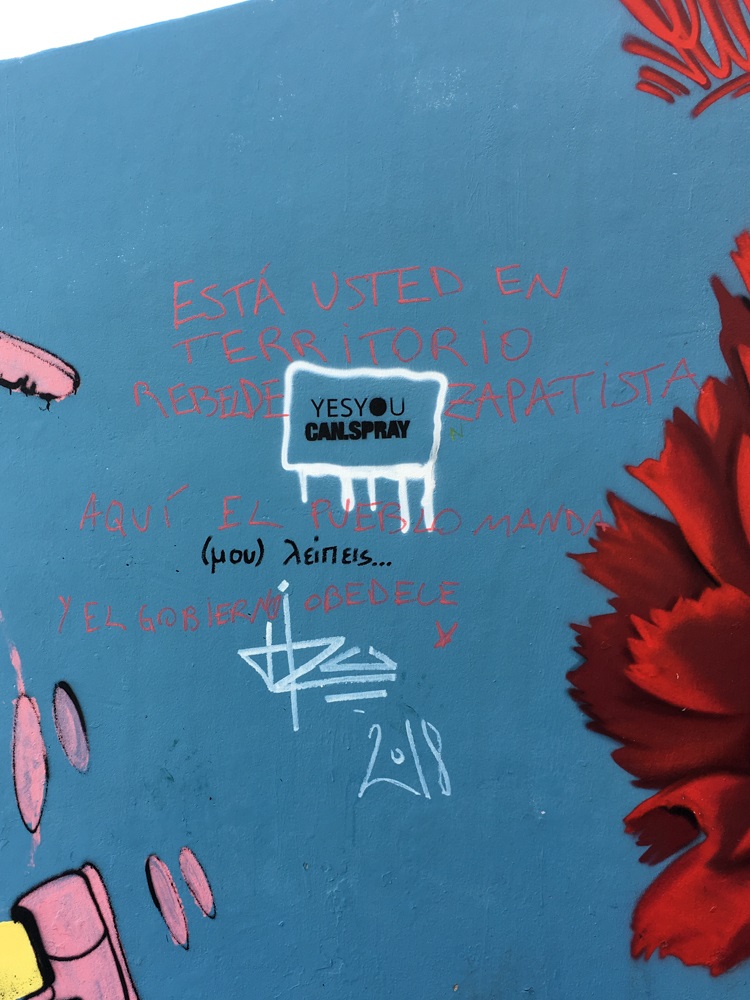
ESTA USTED EN TERRITORIO REBELDE ZAPATISTA. AQUI EL PUEBLO MANDA Y EL GOBIERNO OBEDECE. “You are in Zapatista territory. Here the people rule, and the government obeys.” We saw this same quote in a Zapatista community in the Chiapas region of Mexico, in Oventic.
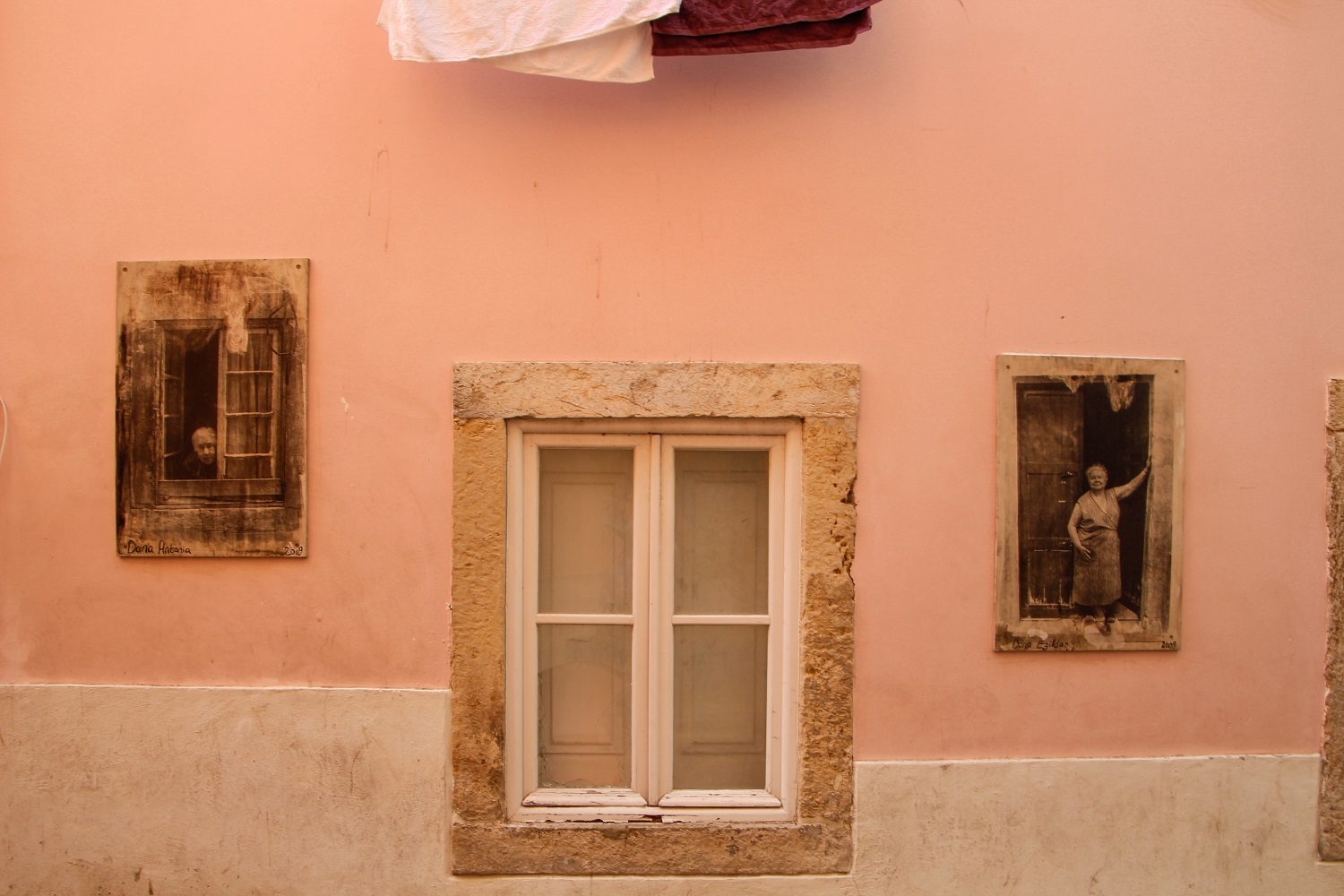
In 2009 artist Camilla Watson photographed local residents of the Mouraria and Alfama neighborhoods. Described as a “collaborative community project involving the elderly” her goal is to bring intimacy to the walls of the narrow streets. Residents volunteered to be photographed and chose the photo that would be displayed. If you’re lucky, you’ll recognize somebody from the photos hanging out in the streets.
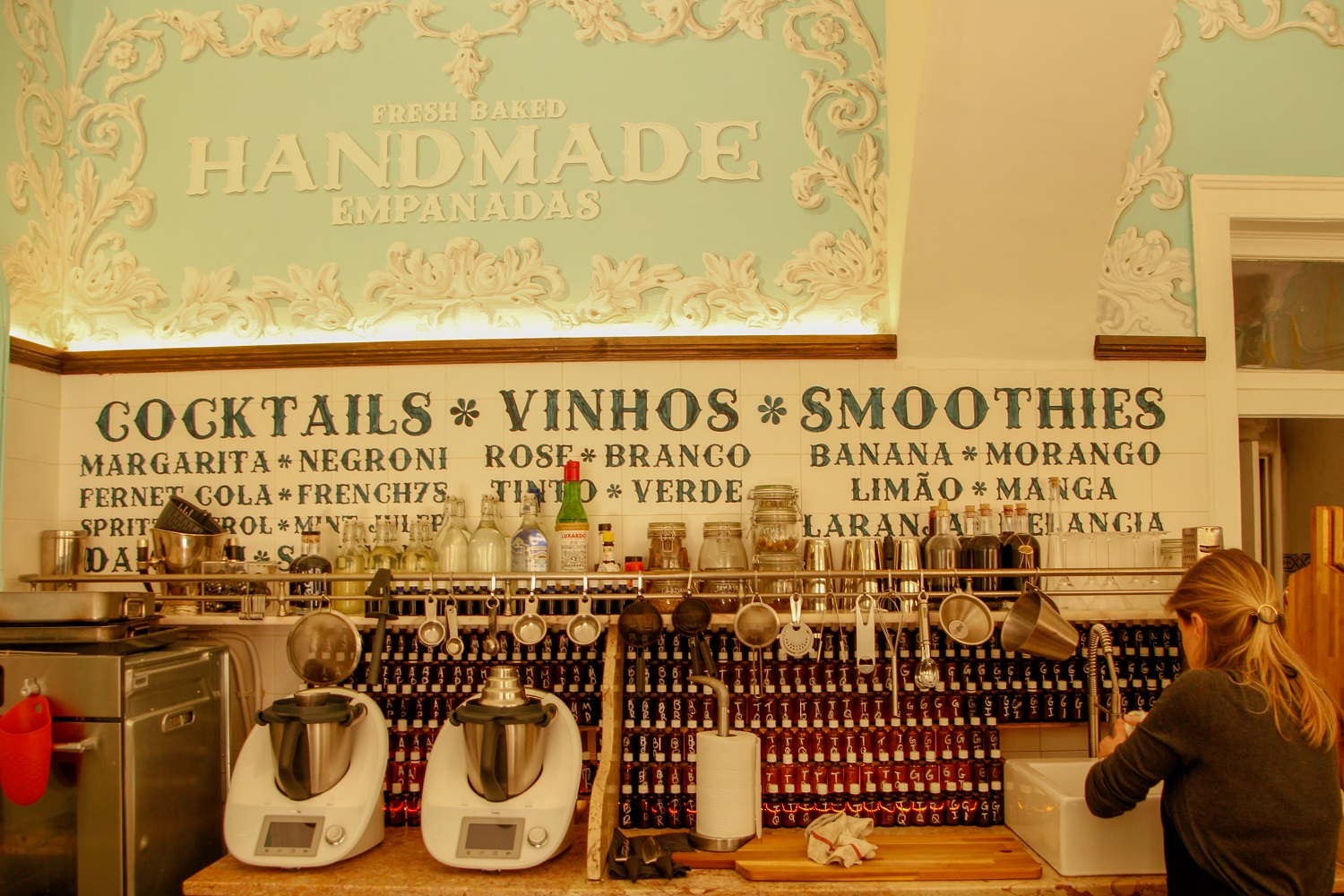
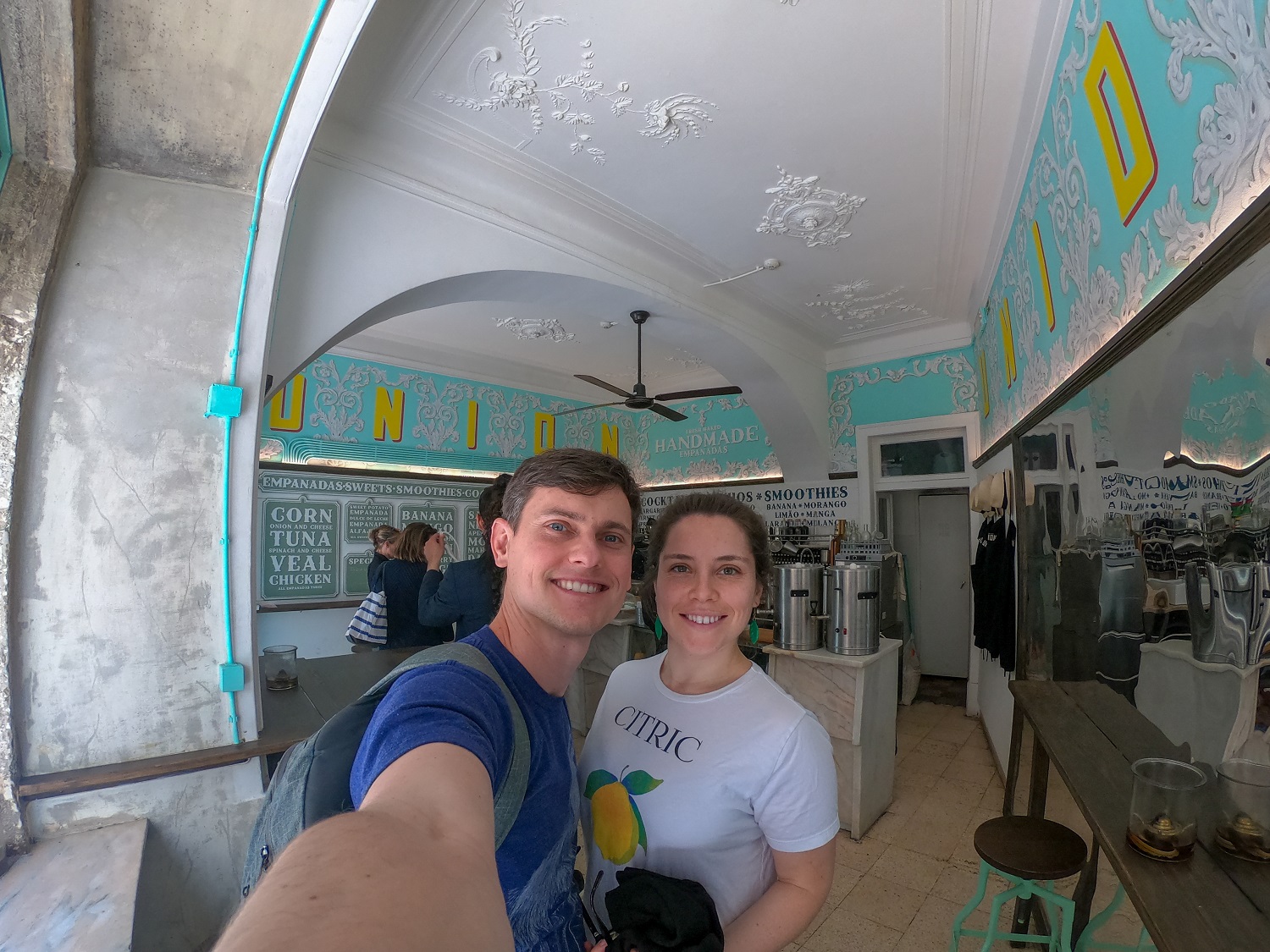
Painter Gonçalo Jordão, who did work for Wes Anderson’s Oscar winning Grand Budapest Hotel, painted this emapanada shop which provided a welcome pitstop for teas and empanadas.
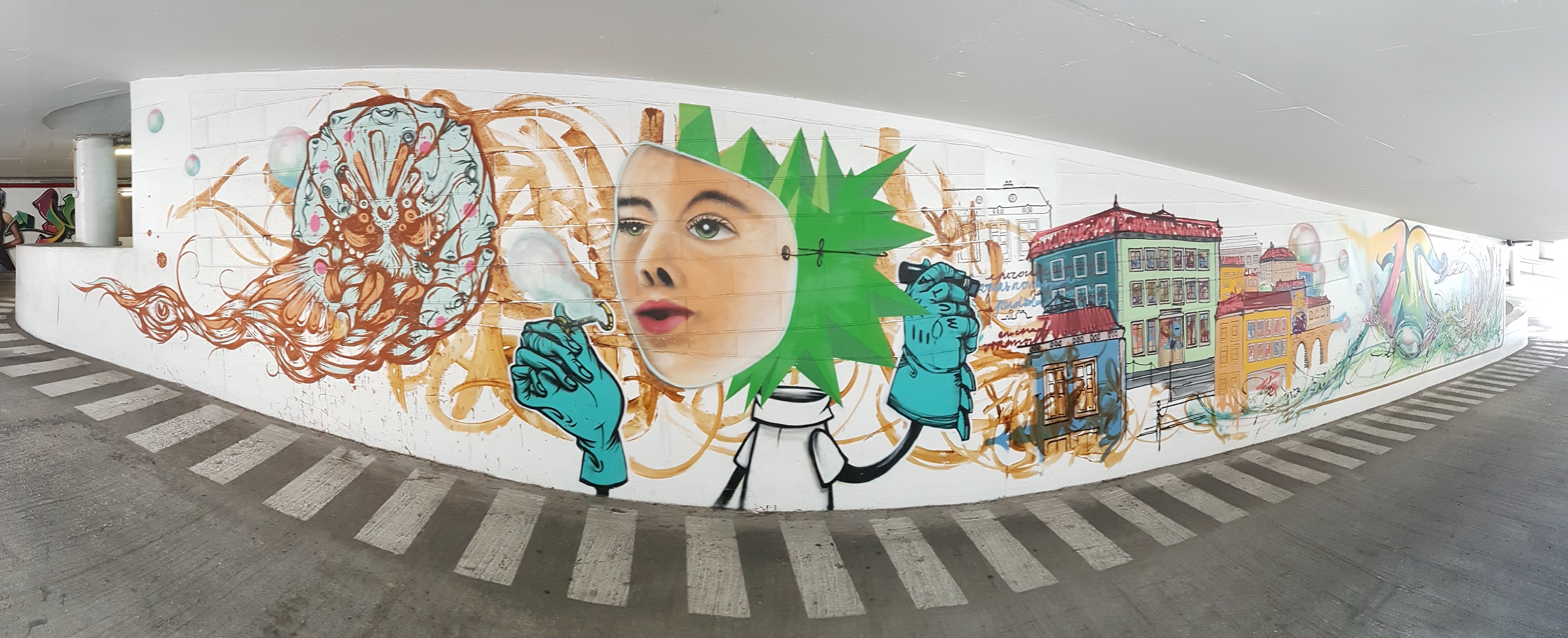
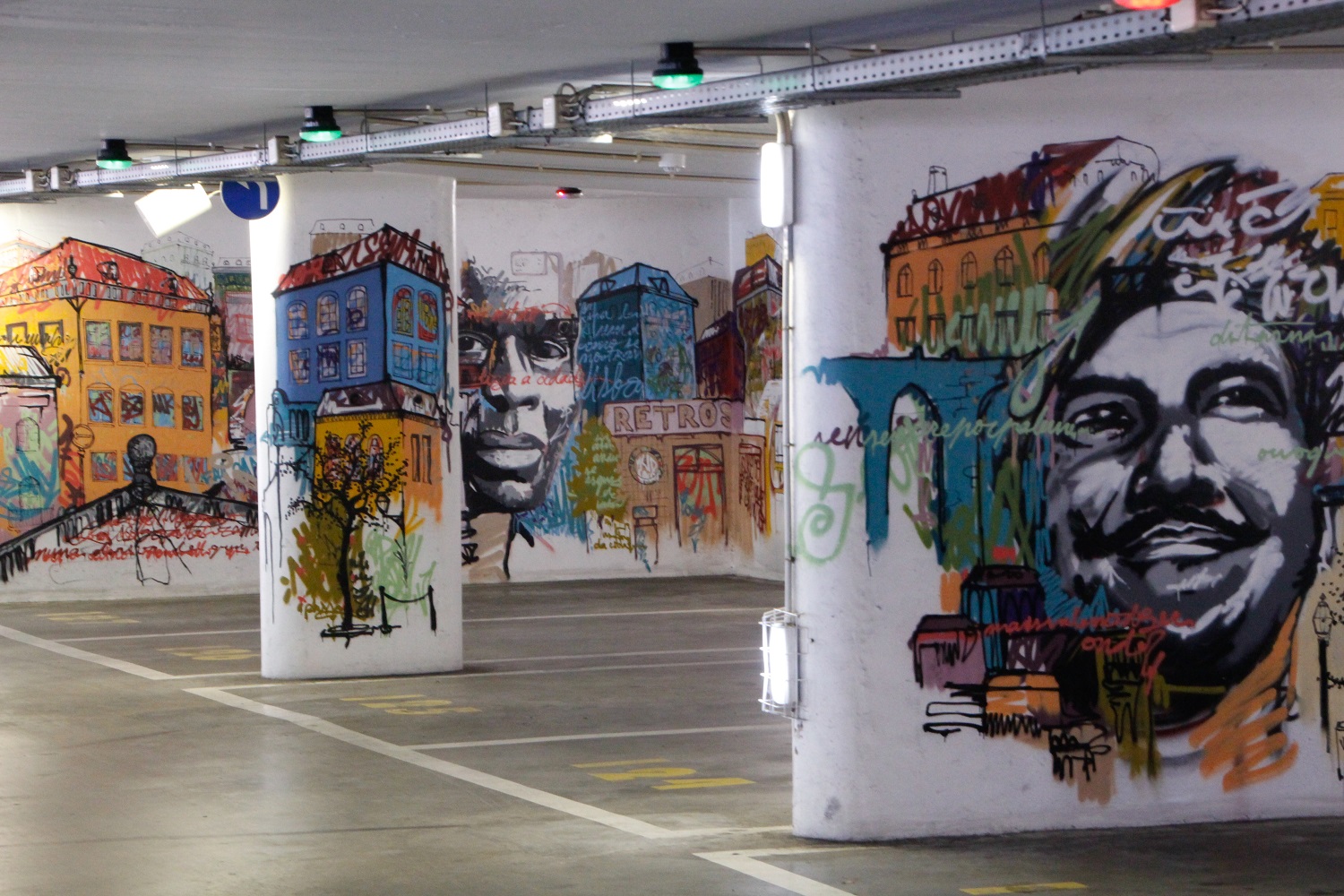
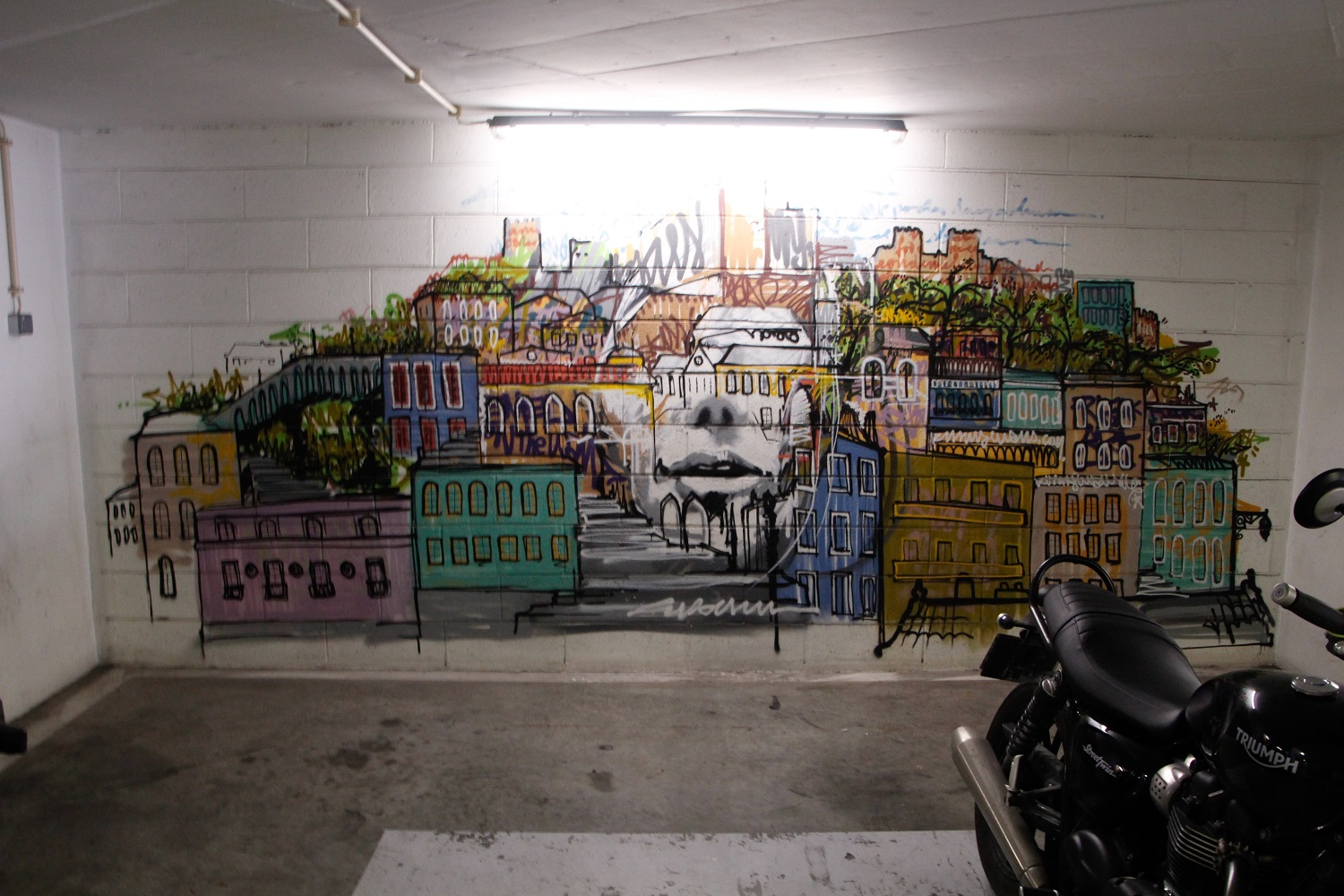
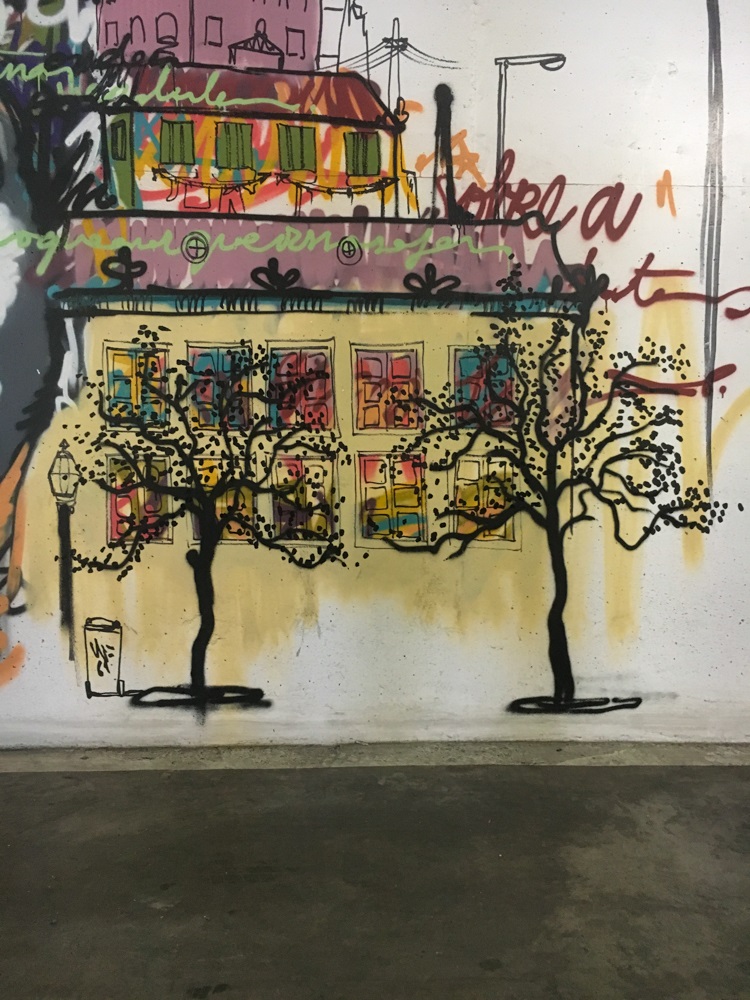
In another example of art being available in a most democratic way, this six-floor parking garage was handed over to the discretionary spray cans of five urban artists. One floor was a collaboration between the five, then each took their distinct style to their own floor, creating complex narratives and a free art gallery.
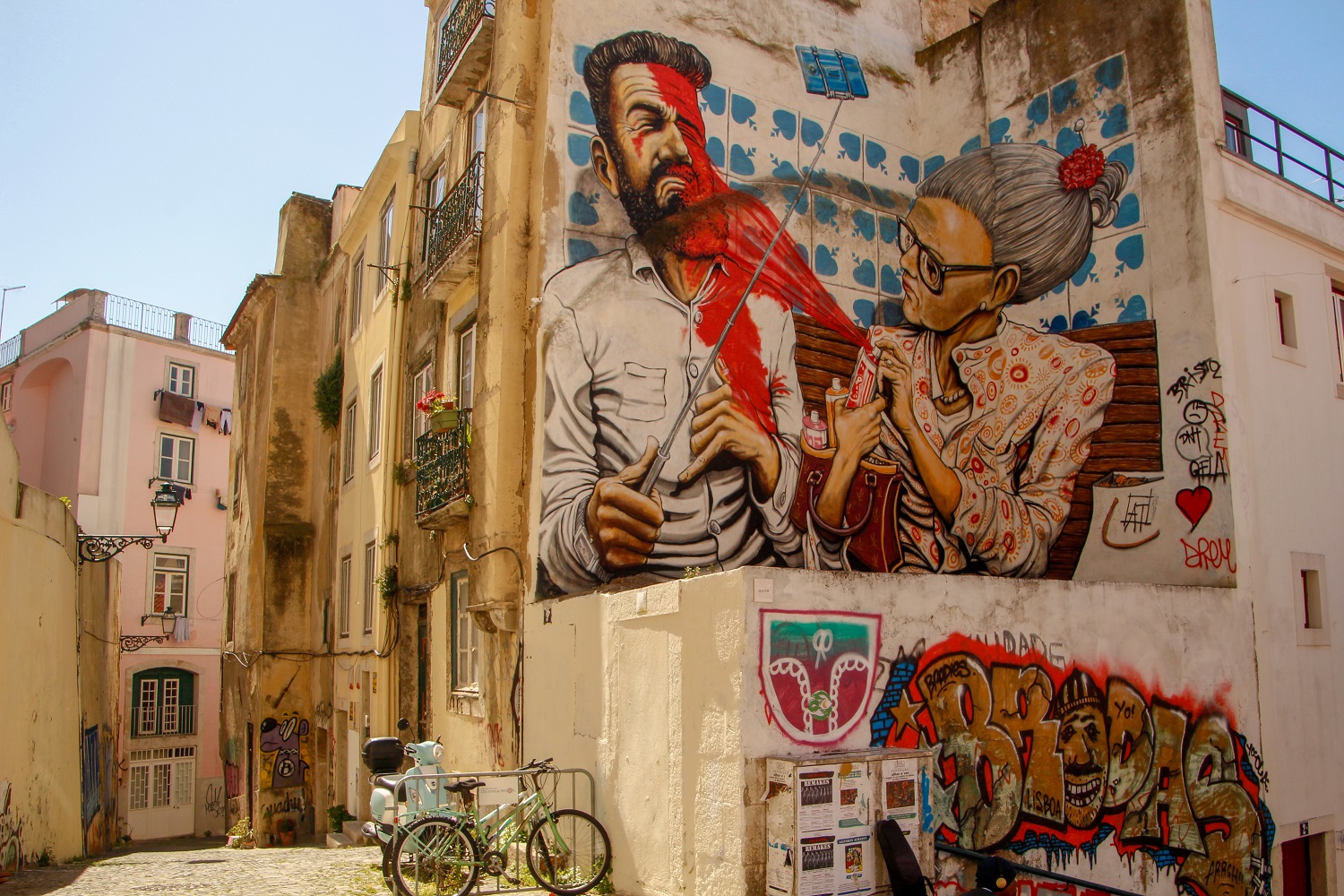
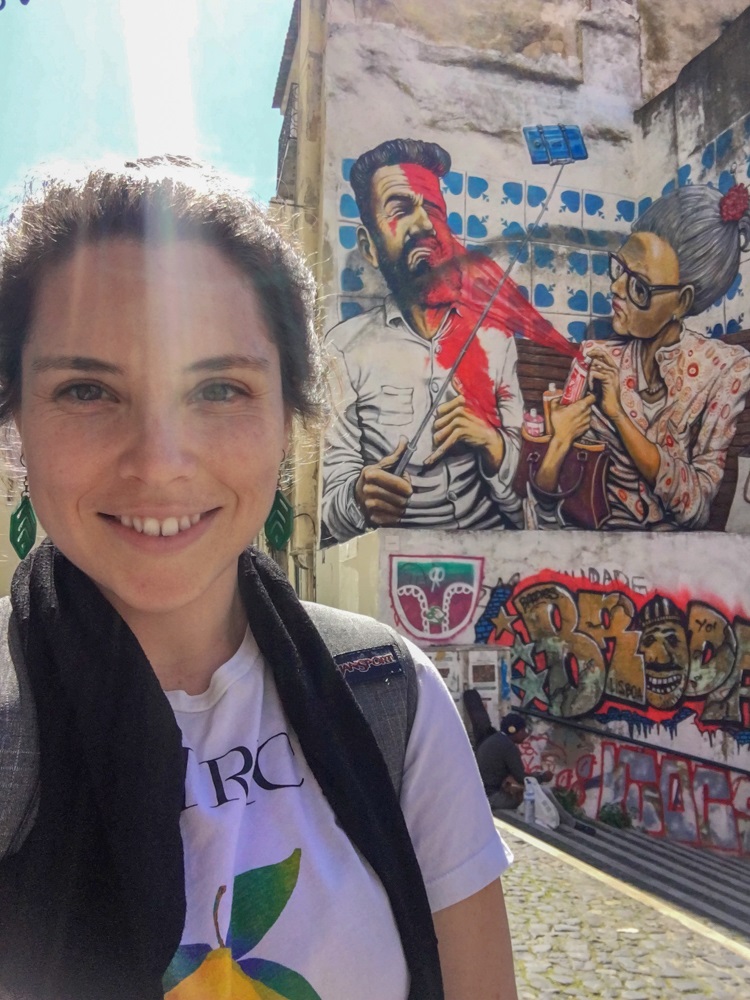
Italian artist Andrea Tarli pokes fun at the selfie-obsessed tourist getting spray painted by a Portuguese woman.



 This Framerican Life