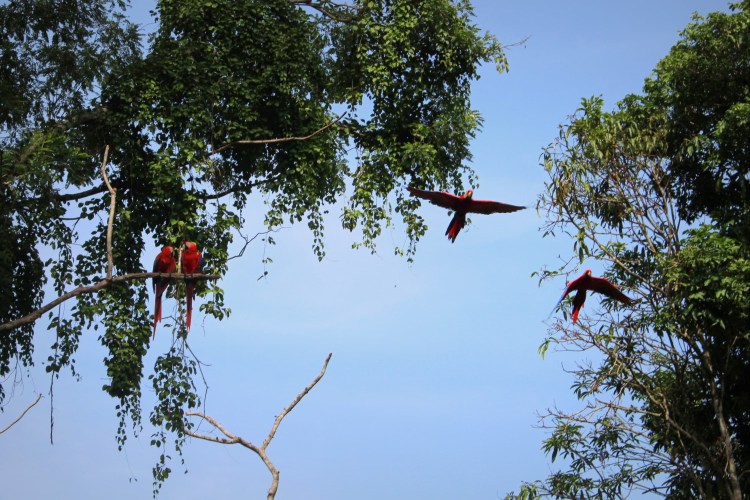
We started traveling around Guatemala at quite a turbulent time. The September 6 presidential elections were quickly approaching amidst the scandal that the Vice-President and President were actively involved in the corruption ring La Linea. In May of this year Vice President Roxana Baldetti had resigned and in August was arrested and jailed under charges of fraud. Nineteen consecutive Saturdays Guatemalans protested religiously to lift the president’s immunity so that he may be subjected to the same fate. On August 25, we departed from Antigua, Guatemala to Copán, Honduras for a one-day trip to the Copán ruins and four hours into our journey, twenty minutes before the Honduran boarder, our shuttle bus could not continue due to a protest, and we ended up crossing the blockade by foot with the others from the shuttle (a 15-minute walk), catching a pick-up on the other side and passing through immigration. Little did anyone know that exactly one week later, Guatemala’s congress would lift President Otto Pérez Molina’s immunity, the following day he would be issued a warrant of arrest, and the day following that he would resign. But, I’m getting ahead of myself…let’s get back to Copán!
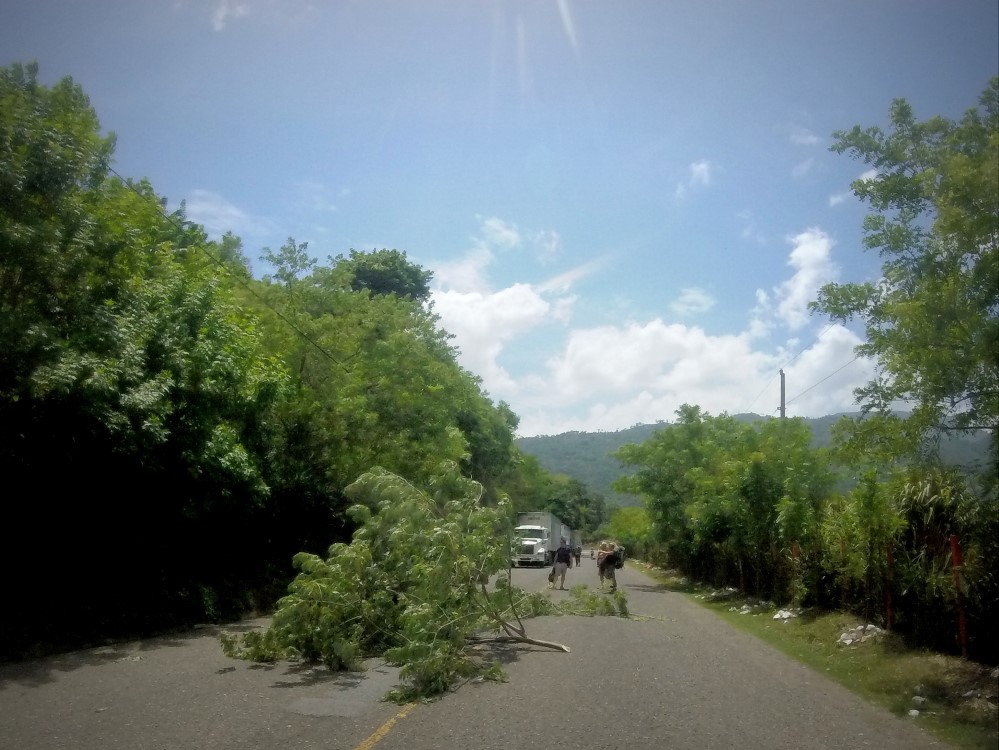
 This is what a shuttle of gringos packed into the back of a pick-up looks like.
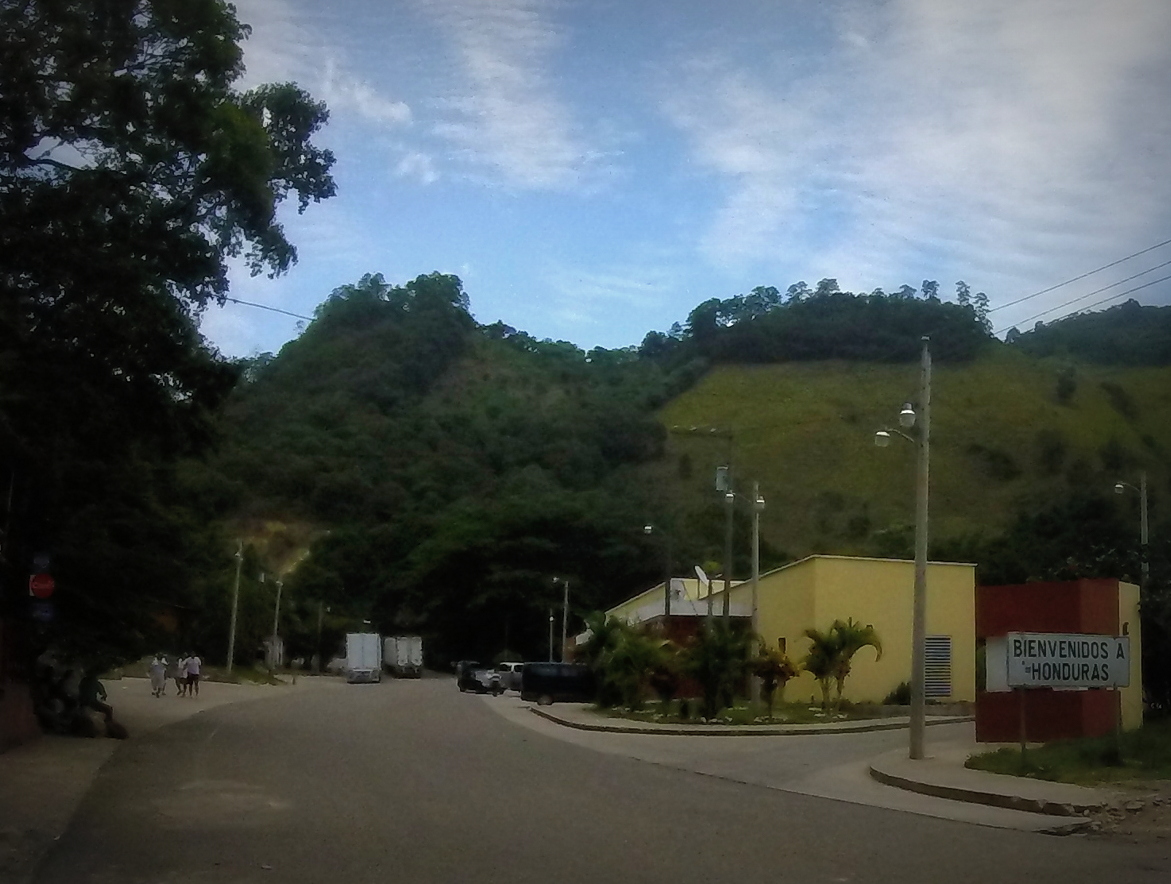 Honduran/Guatemalan boarder
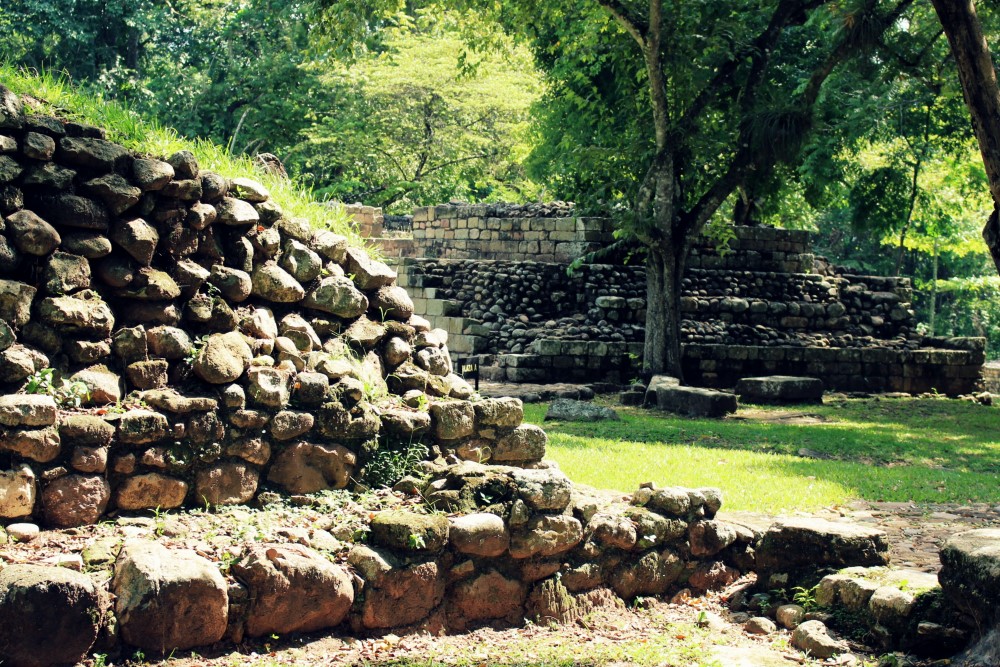
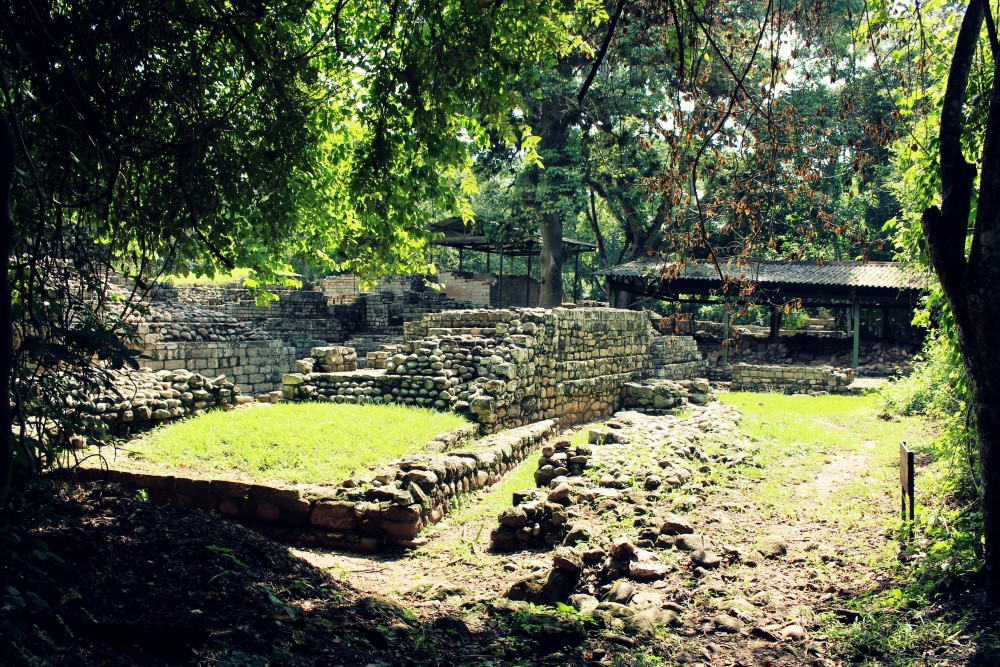
With our first half-day in Copán, we walked about a kilometer past the main site and headed to an area called Las Sepulturas (burial sites) so named for the skeletal remains discovered here. According to archaeological evidence, human occupation in the area dates back to 1400 B.C.; from 450-850 A.D., at the height of Copán’s existence, this area housed elite lords, scribes, astronomers, artisans, royal servants, and their families. This is what is left.
For a short video recap, click here
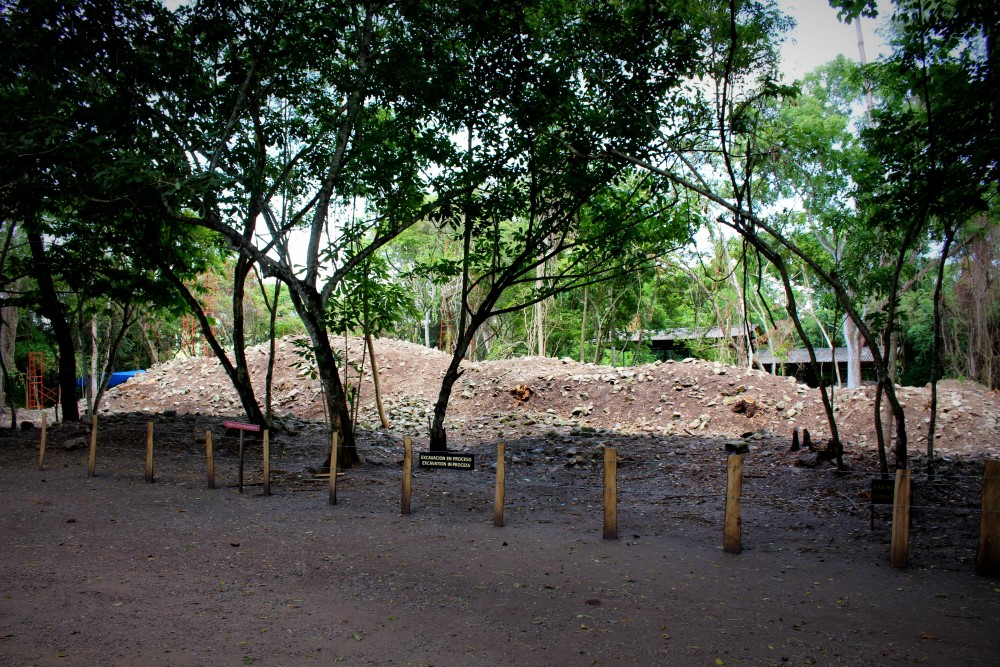 Pile of rocks to be excavated
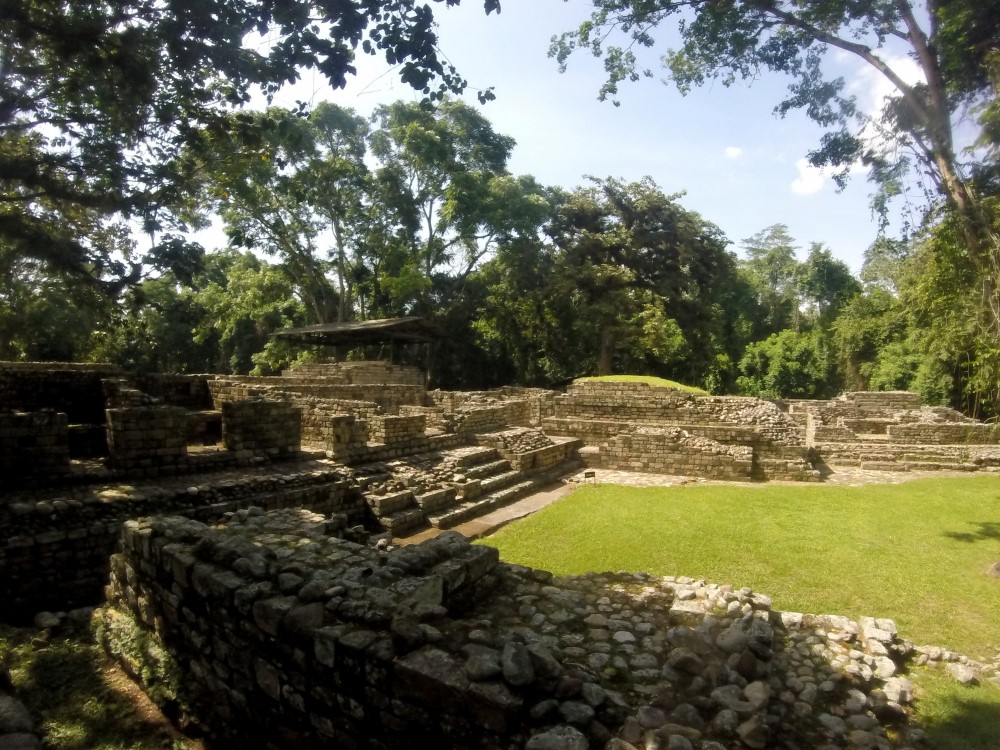 Middle class residence
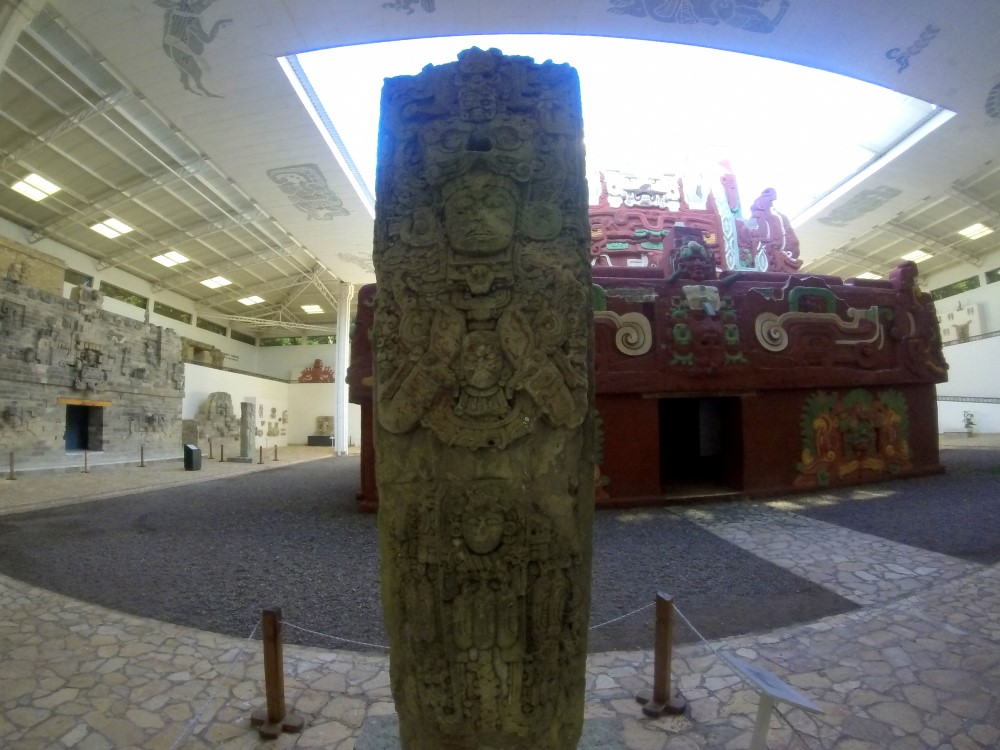
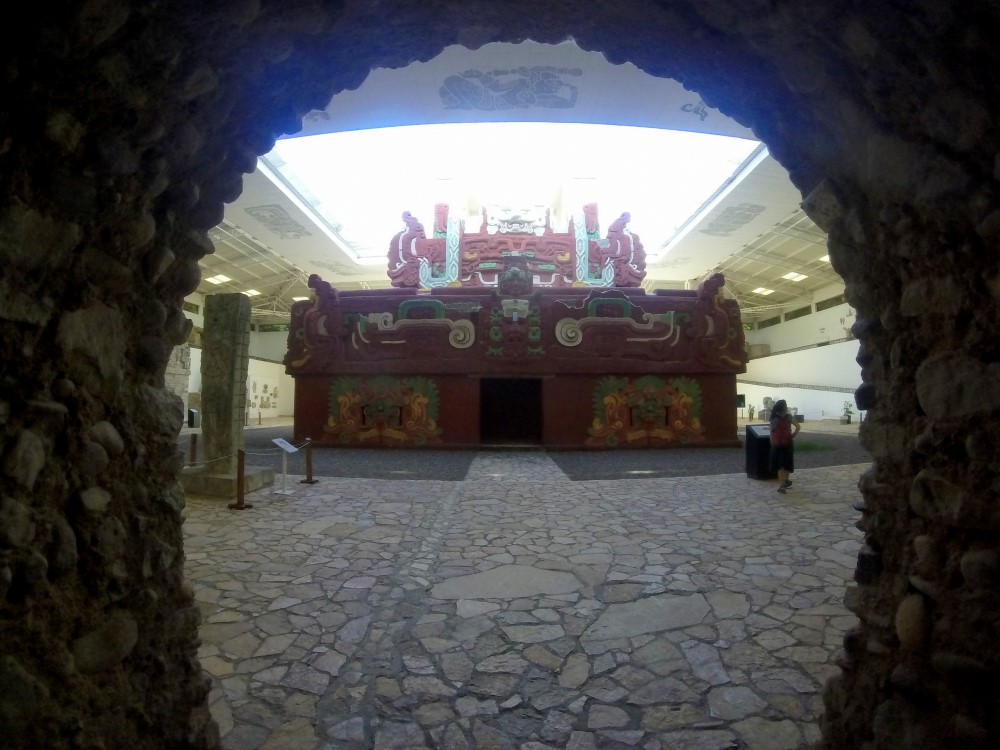 Sculpture Museum; the centerpiece was a scale replica of the Rosalila, a magnificent temple that has been found beneath an existing temple which we would see the following day. To this day, the Rosalila is completely intact, much of the color still clinging to the stone. To preserve it, it has not been excavated.
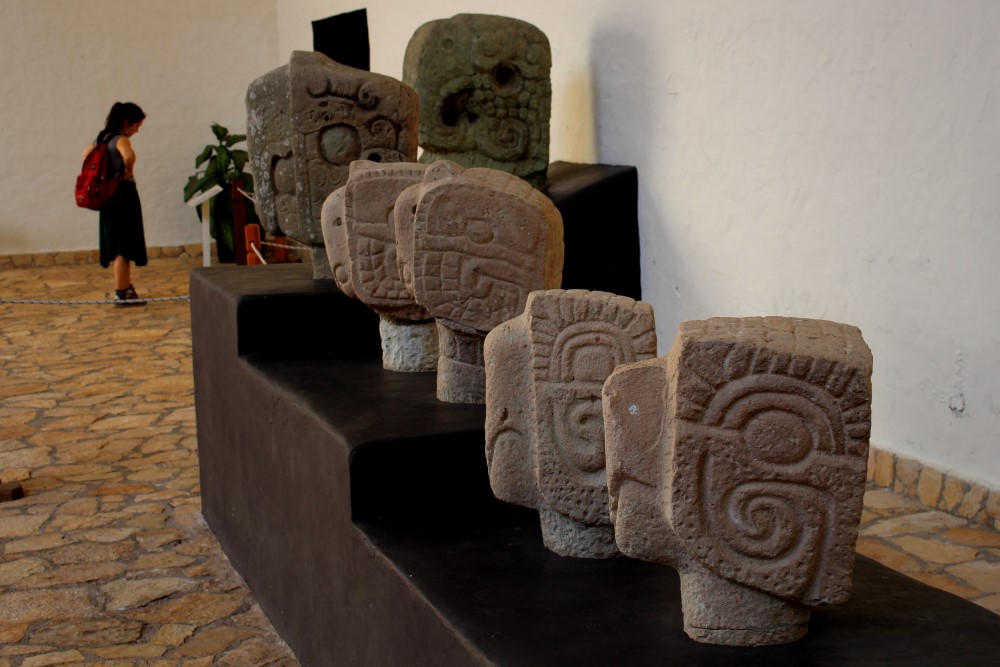 Macaw decor through the ages (originals); you can see how the styling became more intricate and realistic with time. These heads decorated the ball-courts.
 Apparently these show how the sculptors had a sense of humor, making goofy-looking faces.
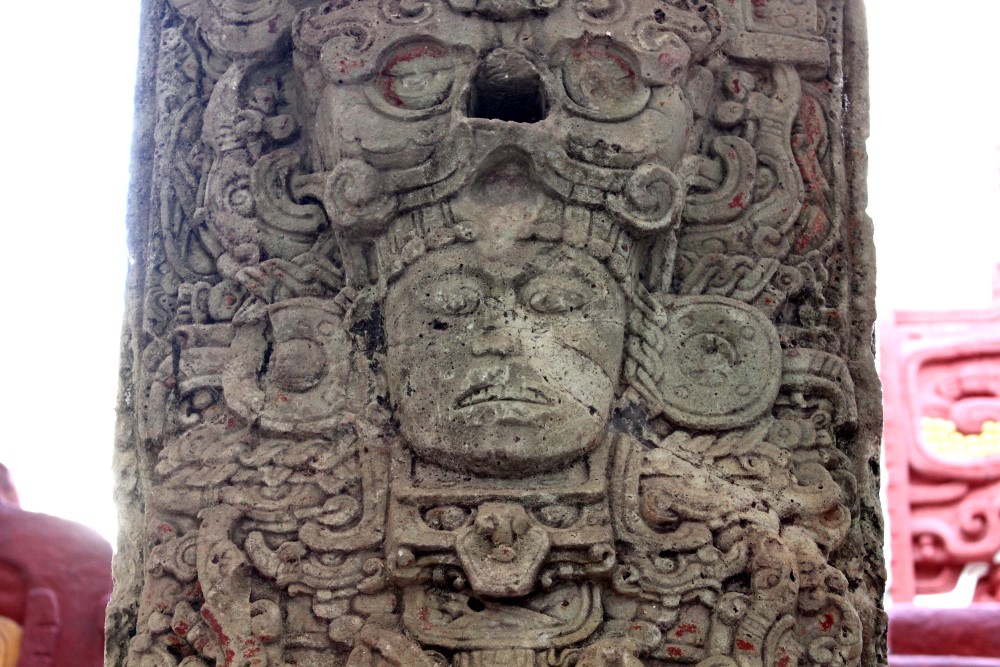 Original stela
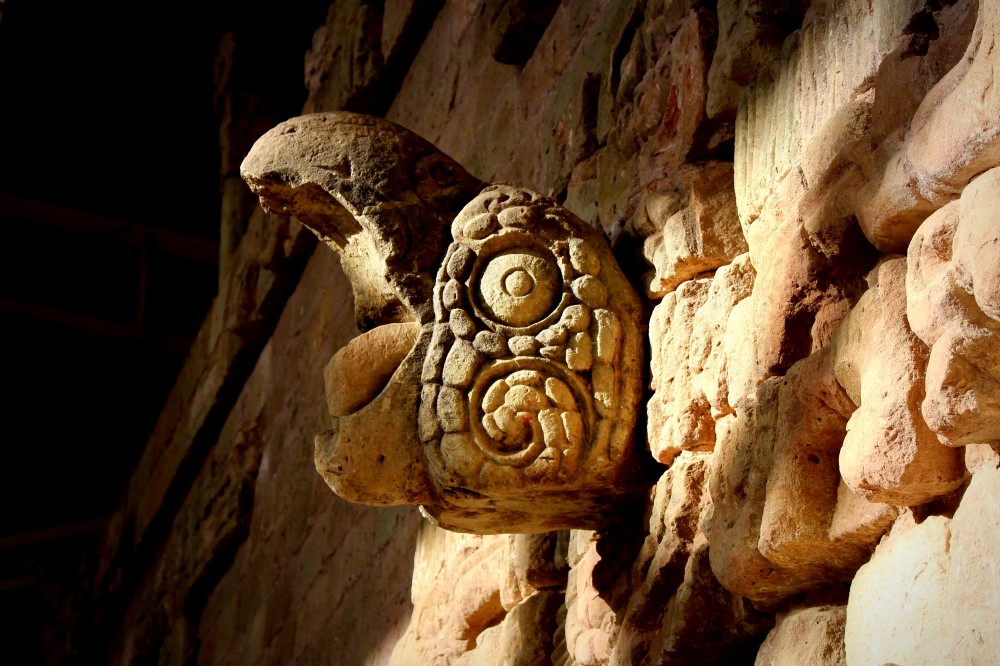
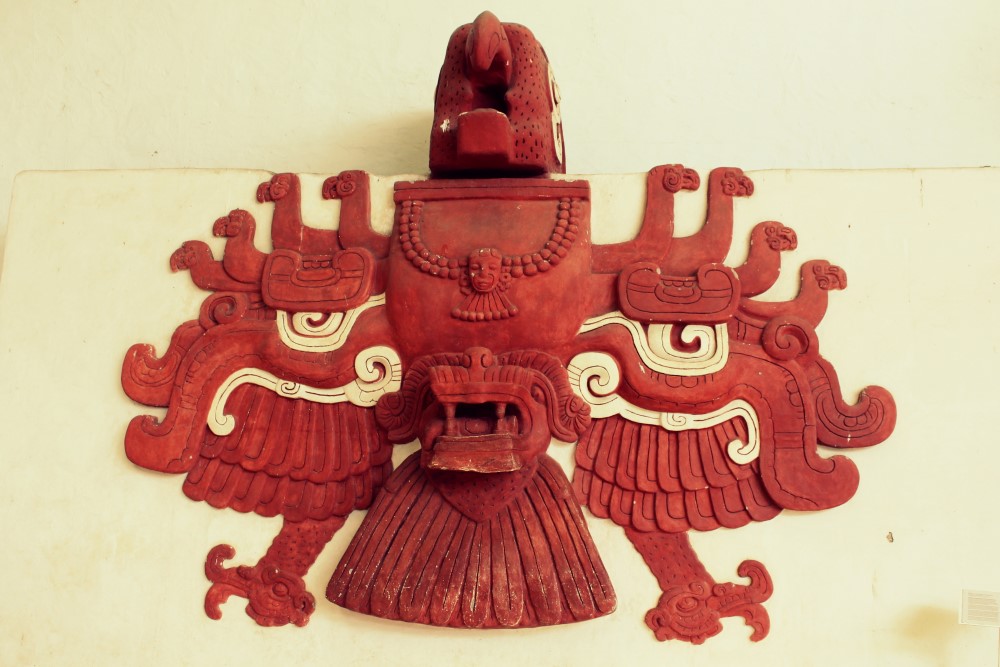 This is a replica of the macaw that decorated the earliest version of the ball-court. A jaguar-like head protrudes from below his chest, carrying a severed arm in his jaws. This is the arm of Hunapu, one of the hero-twins from the Mayan Popol Vuh, who had his arm torn off by the fearsome Vucub-Caquix, a demon-bird ultimately defeated by the twins. The sculpture was uncovered in 1988 and red paint was preserved on the original; the stucco is fragile and cannot be removed from the wall underground.
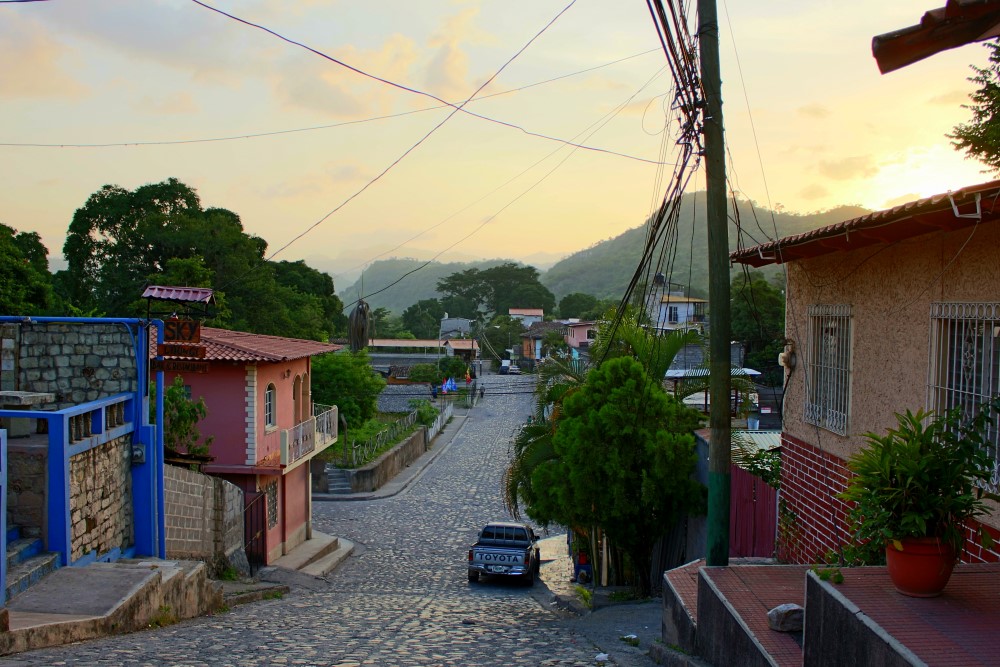 Sunset over Copán
 I ordered a salad and was quite delighted to find the bowl made of giant lettuce leaves.
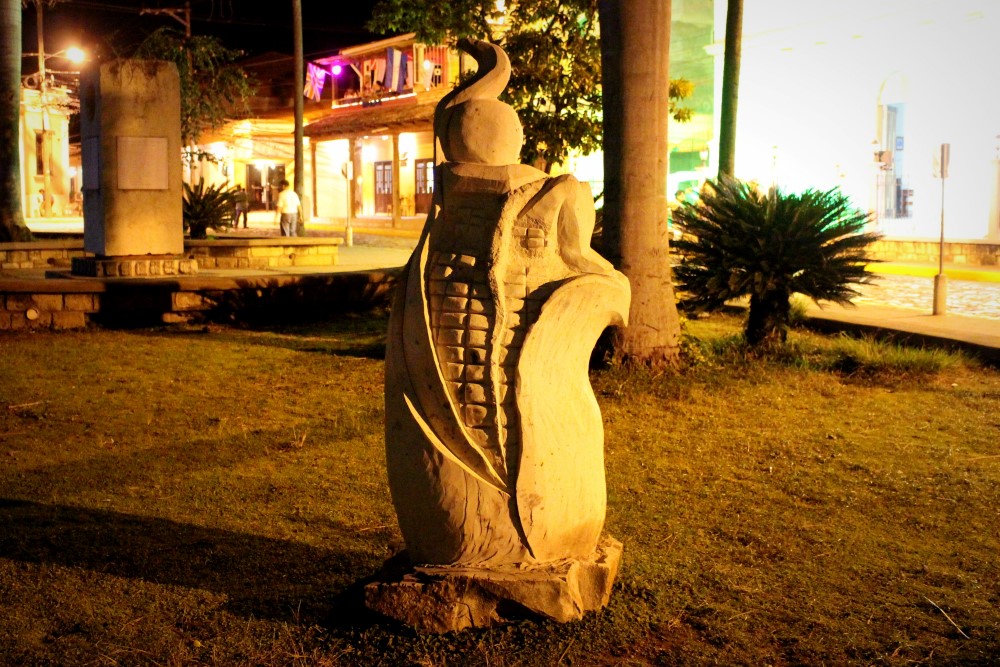 Children of the Corn
The following morning we headed to the main site of Copán to enjoy cooler morning temperatures
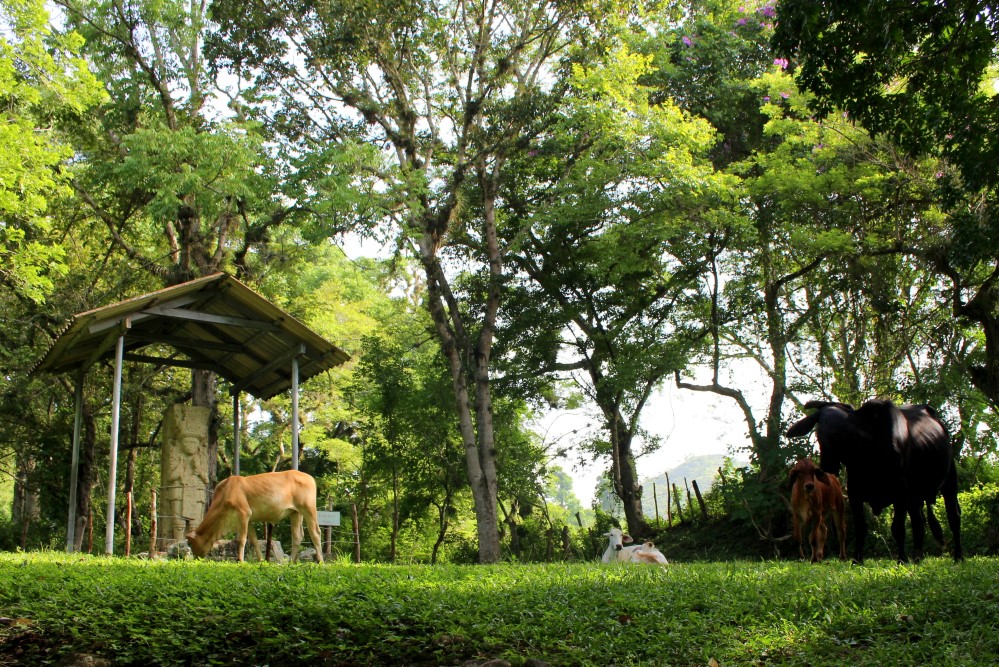 Cows and Stela 6
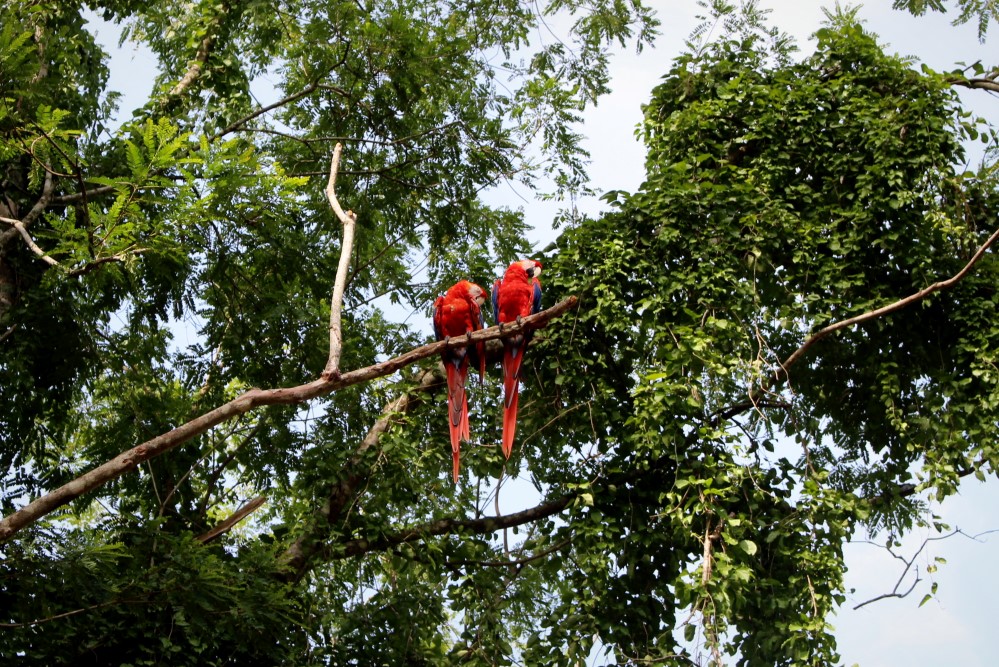
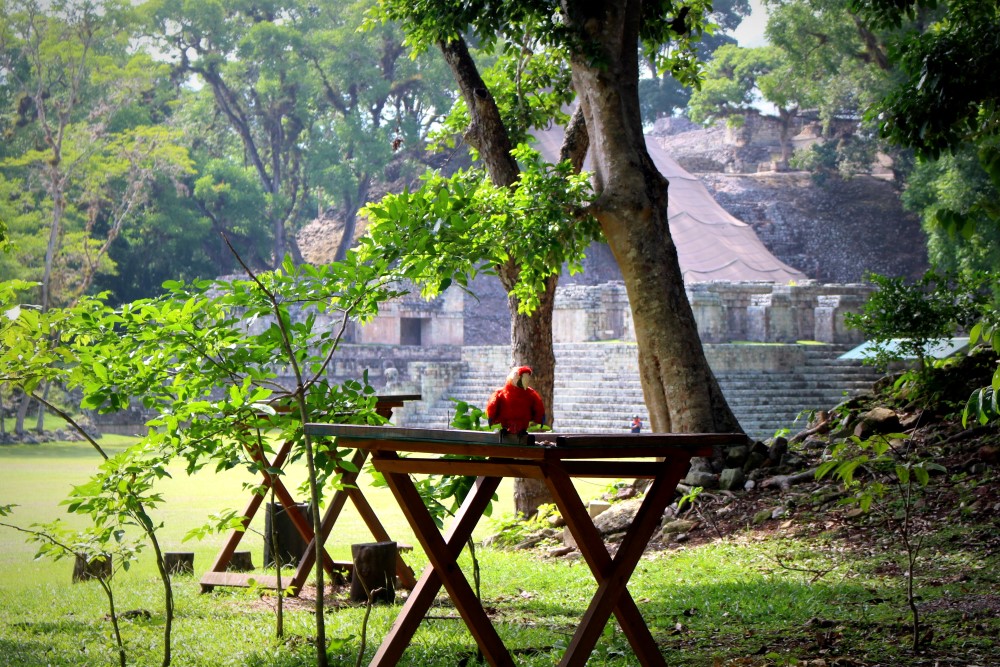
 One of the 36 macaws that live on site
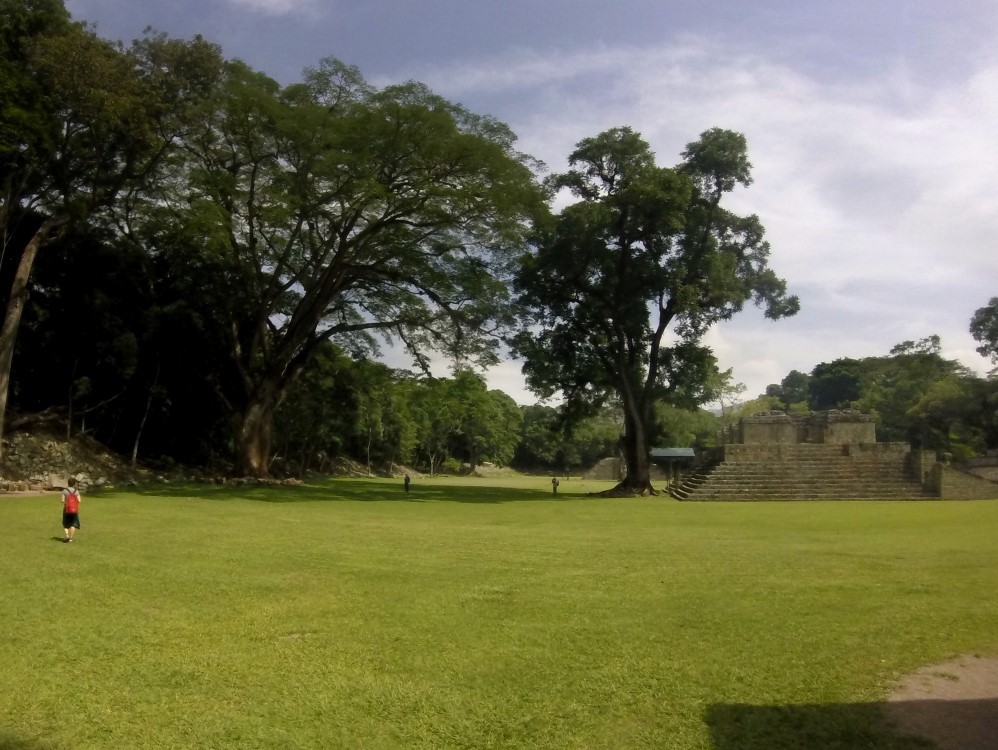
 Freshly manicured lawn, the mower to right of photo. The smell of freshly cut grass was quite lovely.
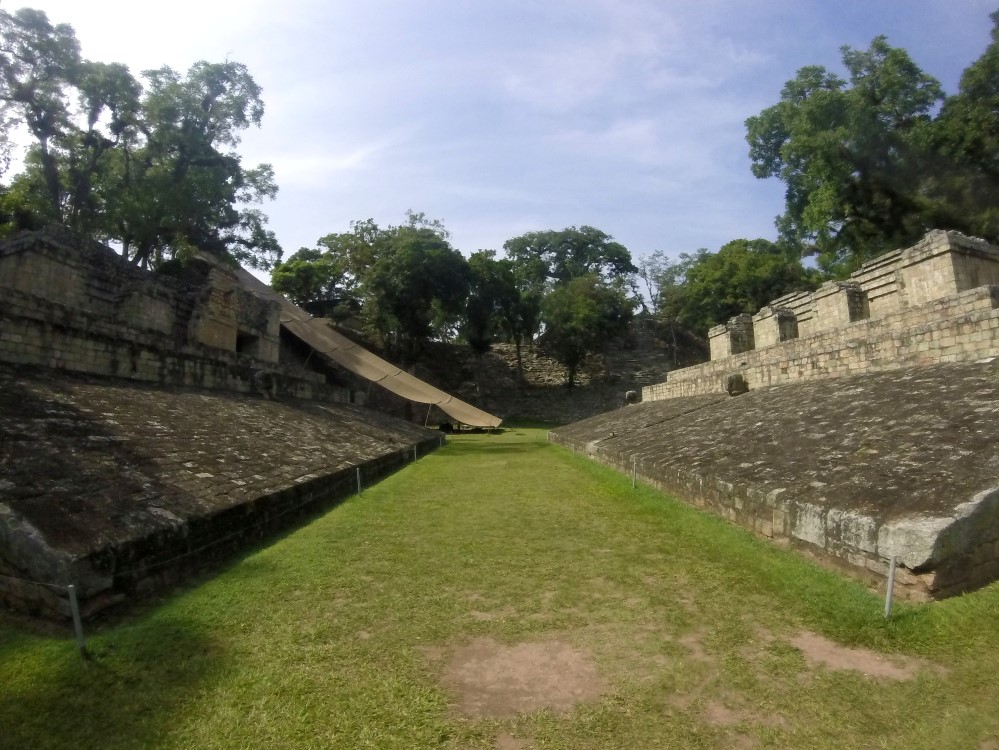 Ball-court
 The Hieroglyphic Stairway, the longest pre-Columbian hieroglyphic inscription in America
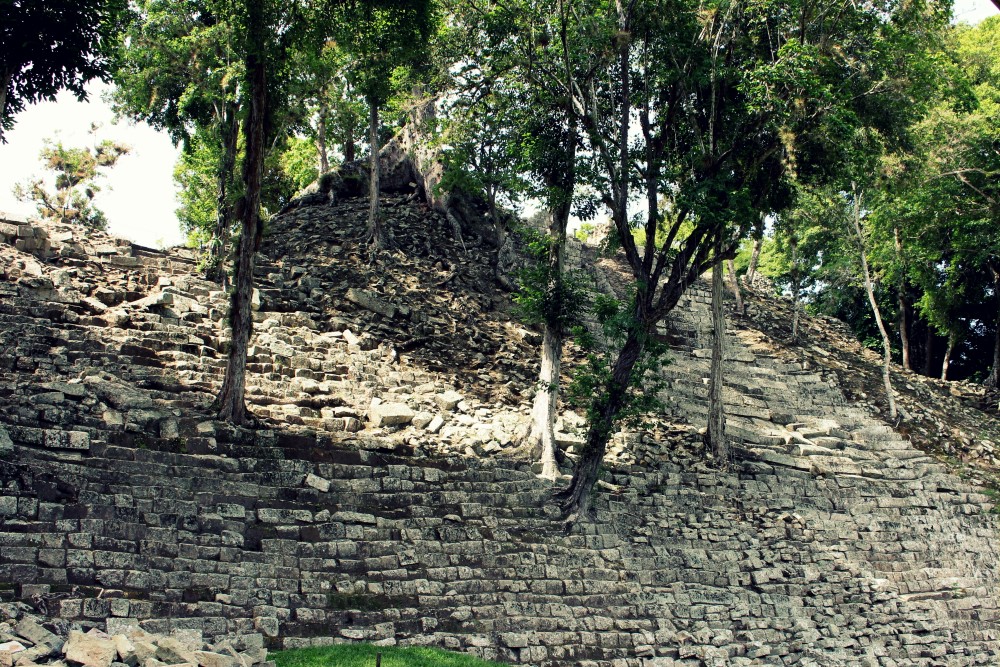
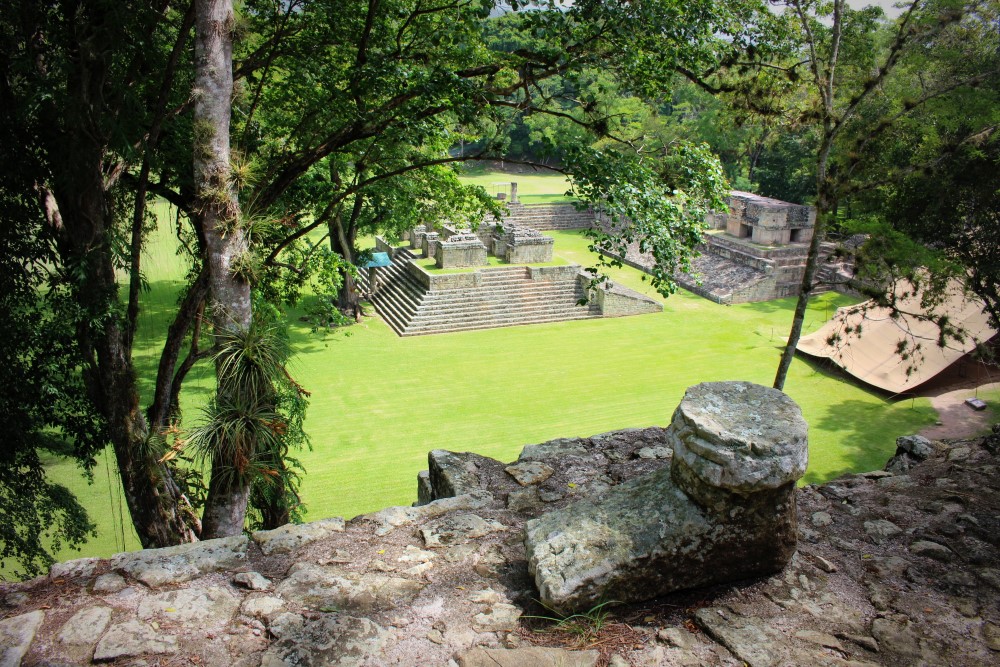 Big foot
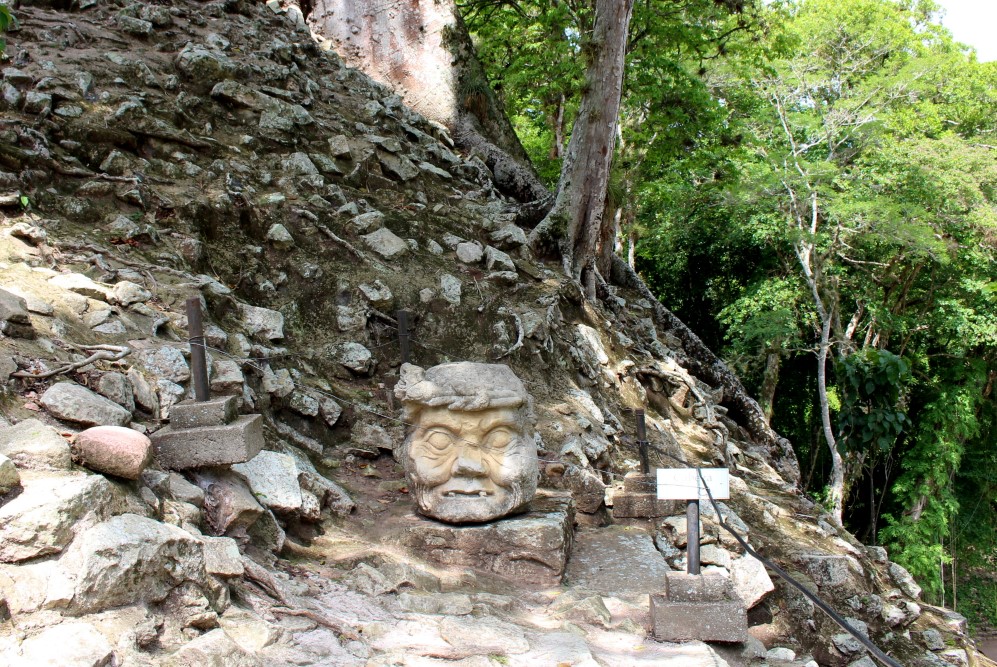 The Maya believed that old deities called Pawahtuuns held up the surface of the earth which they imagined to be the body of a crocodile floating on the surface of a large body of water. This toothless “old man of Copán” is the head of one of two giant Pawahtuuns that once held an enormous mosaic crocodile that stretched across the Temple 11 façade. The headdress is a knotted waterlily, a symbol of fertility; if reassembled, the Pawahtuuns would represent the largest sculpted human figures found at Copán.
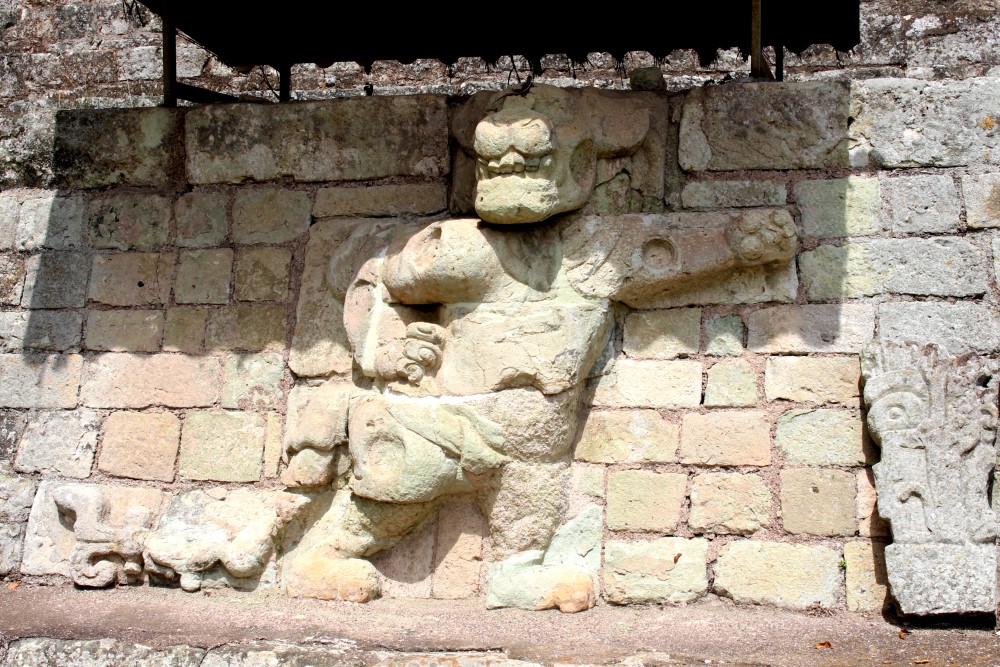 Jaguar striking a pose
 Eastern Court
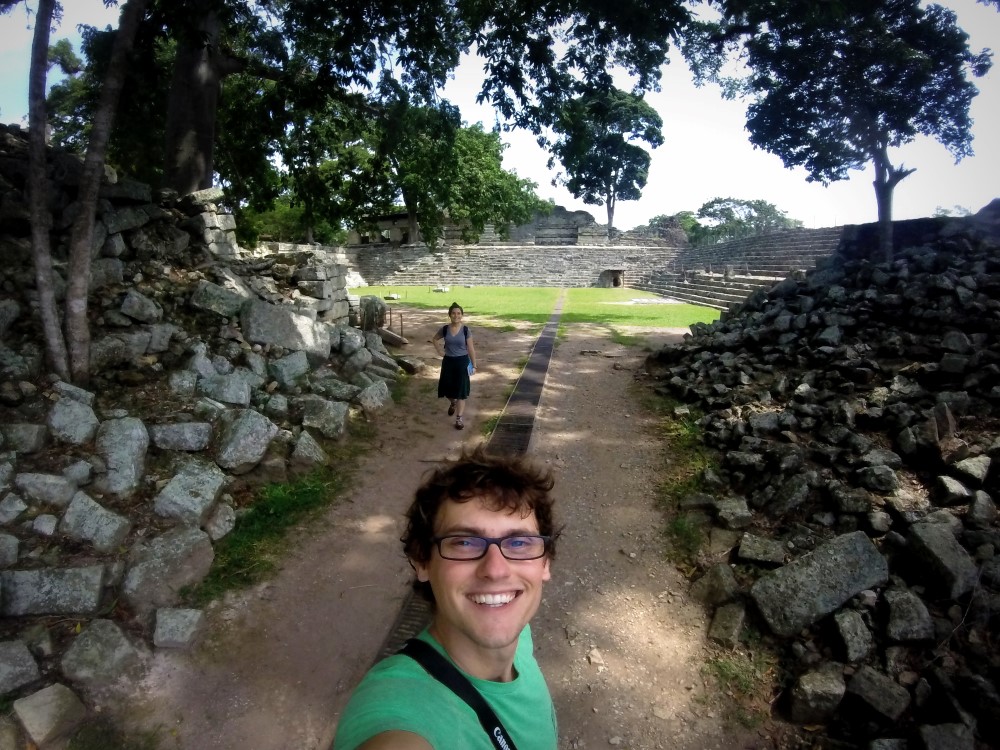
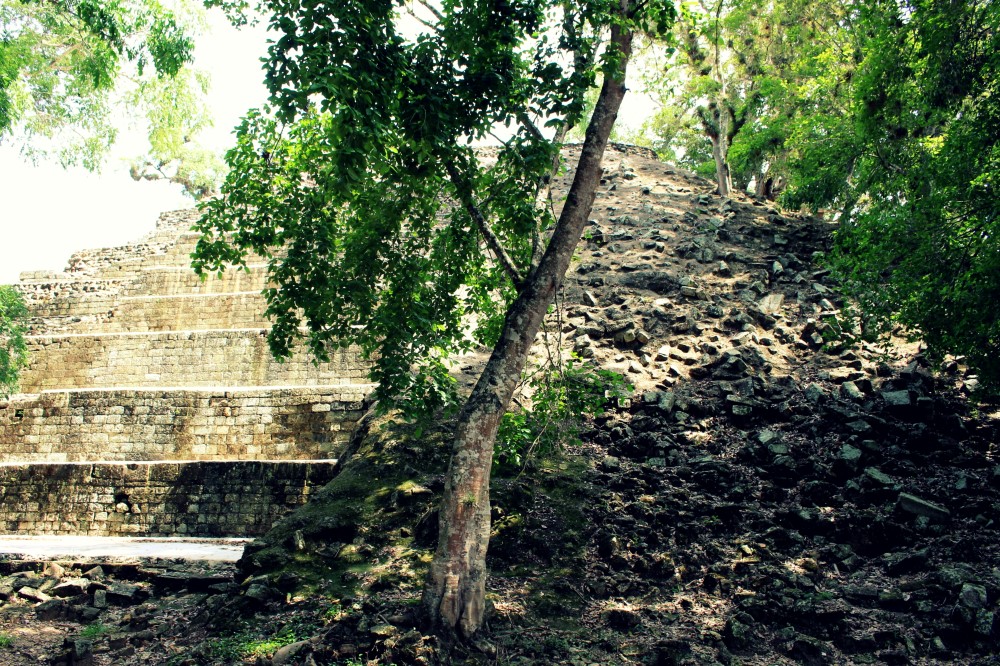 Half reconstructed, half in ruins
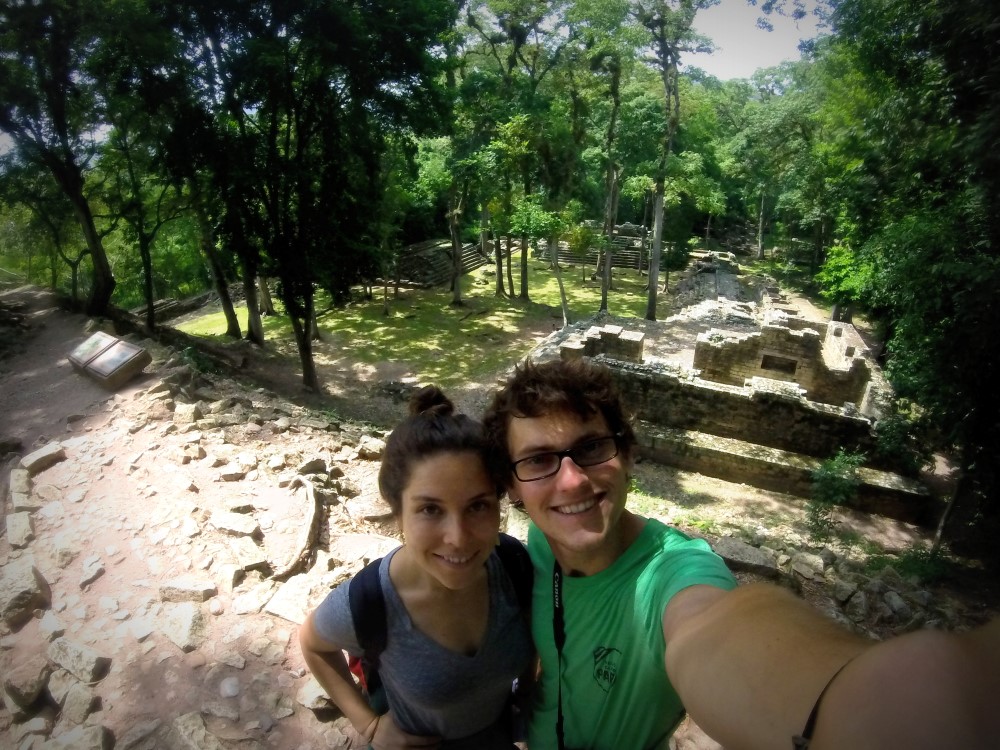 Called El Cementerio, this is thought to be a residential compound
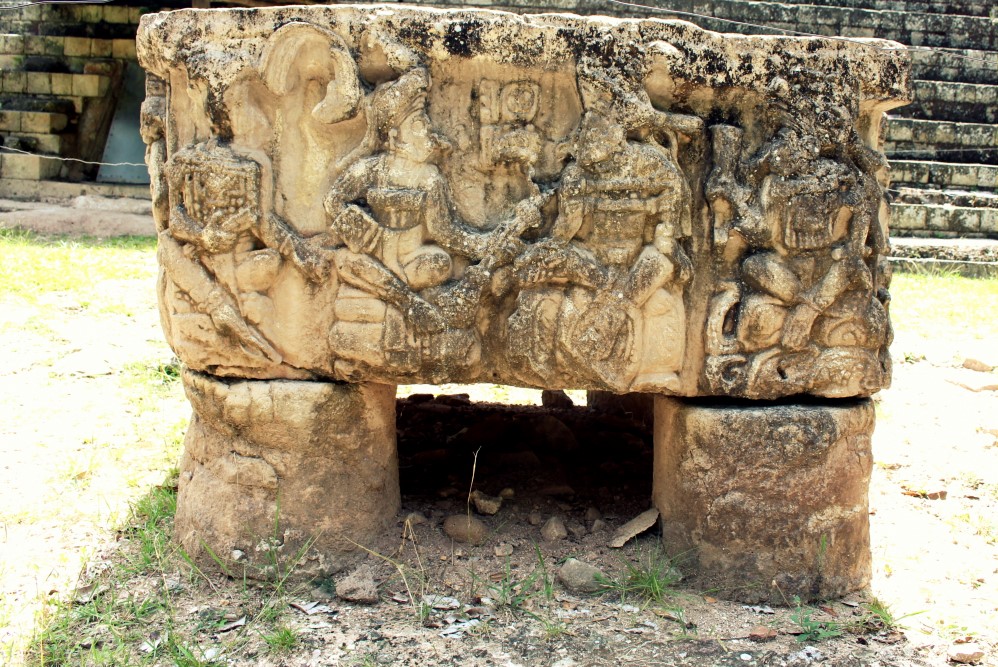 This four-sided altar slightly foreshadowed Copán’s decline. Carved on the four sides are representations and names of the 16 dynastic rulers of Copán; there are four rulers per side, and here the first dynastic ruler of Copán is handing over the staff of office to the sixteenth ruler, Yax Pasaj Chan Yopaat, the one who had commissioned the piece. Copán went into decline soon after Yax’s rule.
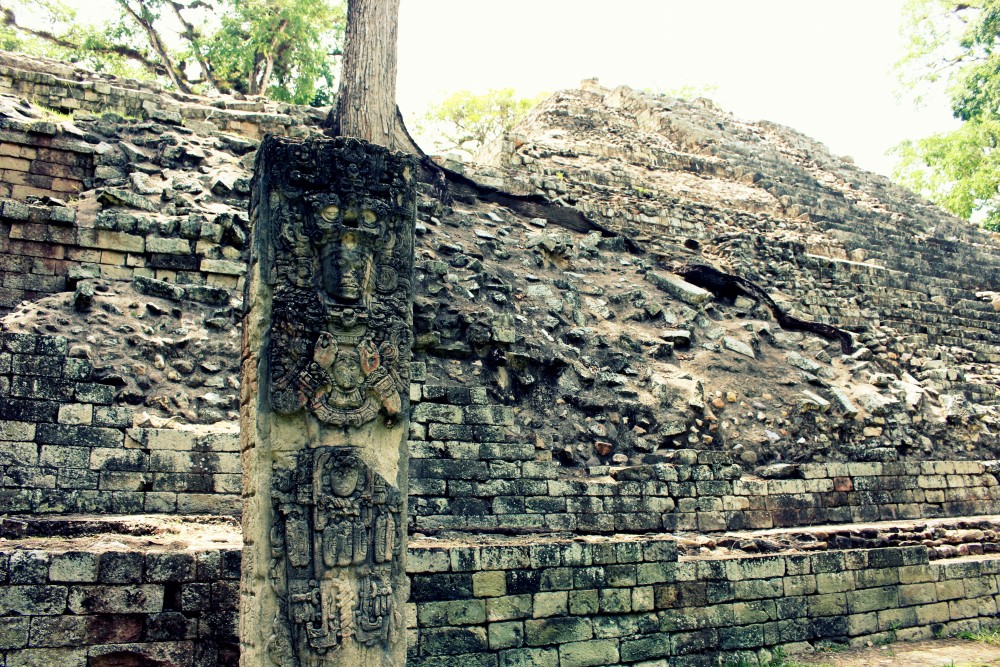 The Rosalila temple (that big red one whose replica was in the museum) is under this temple. The custom was for the new ruler to destroy previous temples and build their temple over it. This ruler recognized the beauty of Rosalila and left it completely intact…before building his temple over it.

At noon we were headed back to Antigua. By this time the shuttle company was able to get a little more organized and had transportation on either side of the protest, but we still had to cross the actual blockade by foot. The blockade had grown in the 24 hours since we had last crossed it and we had to walk about 45 minutes before exiting the blockade and then flagging down a pick-up that drove us the additional two miles to where our shuttle was waiting.
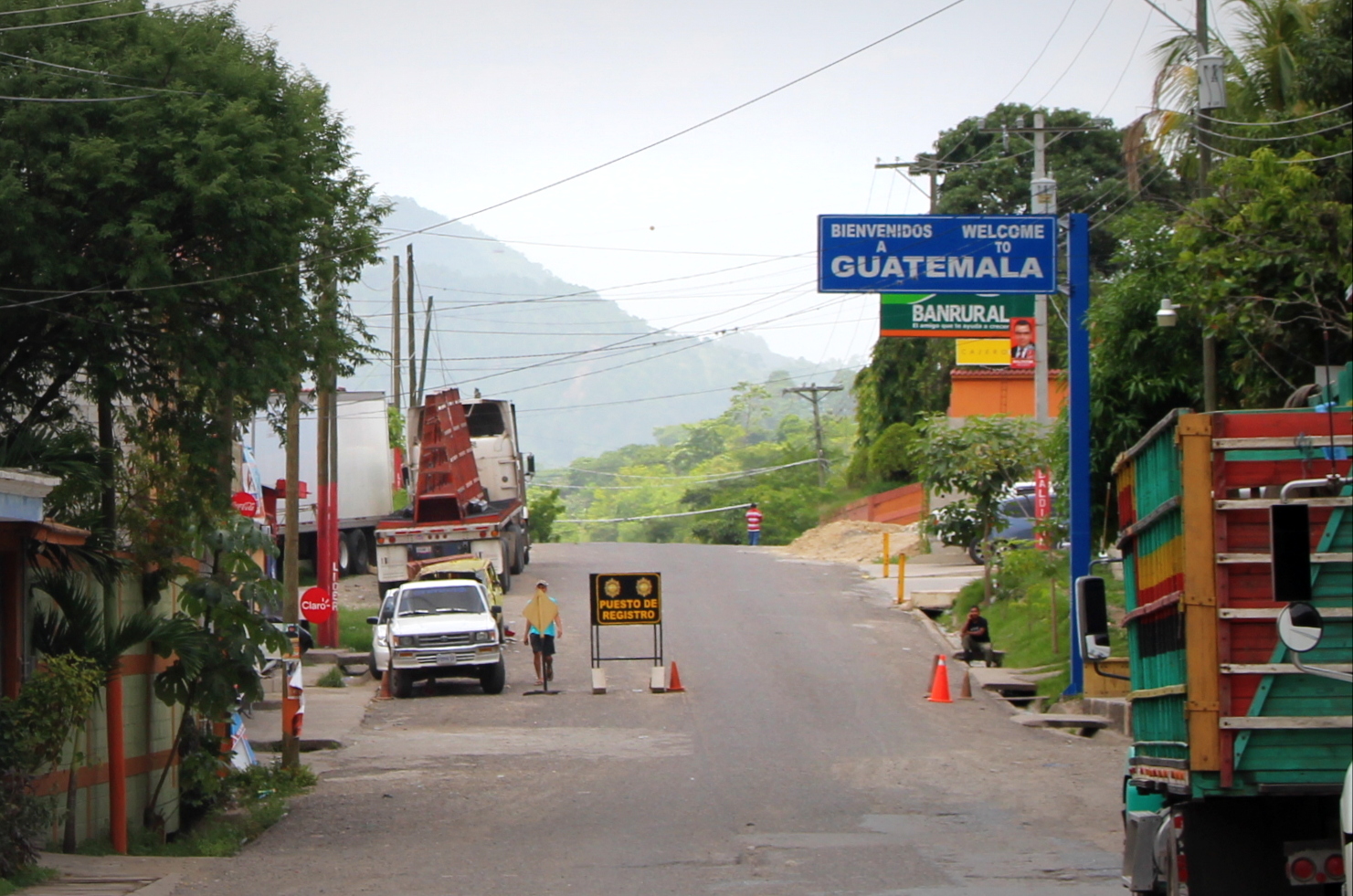
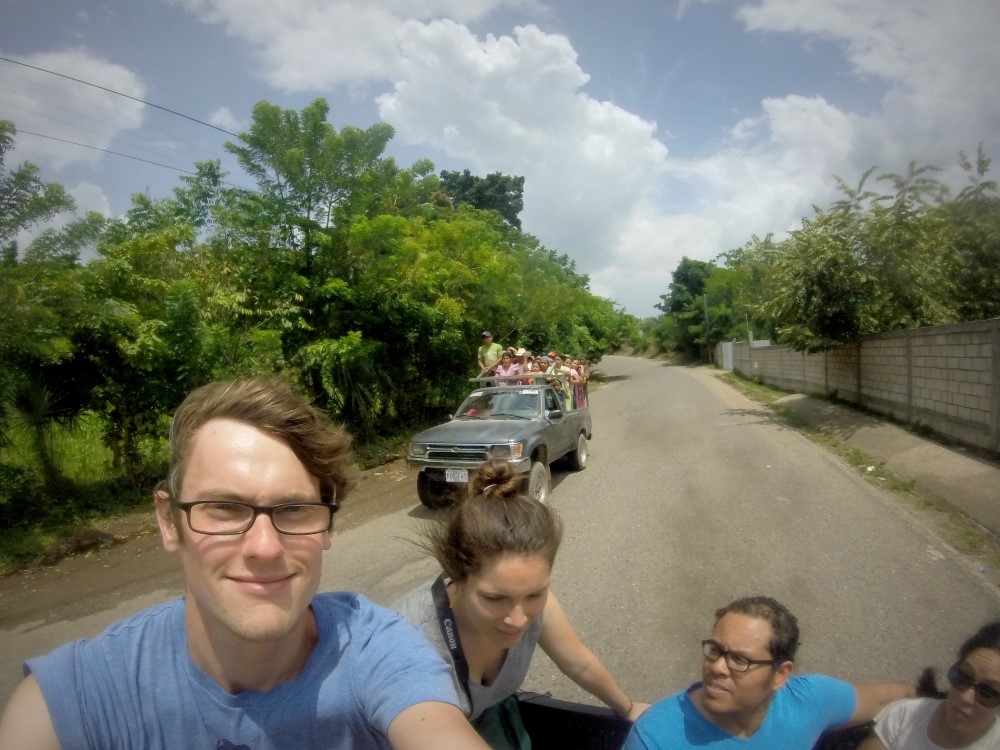 Arranged transport
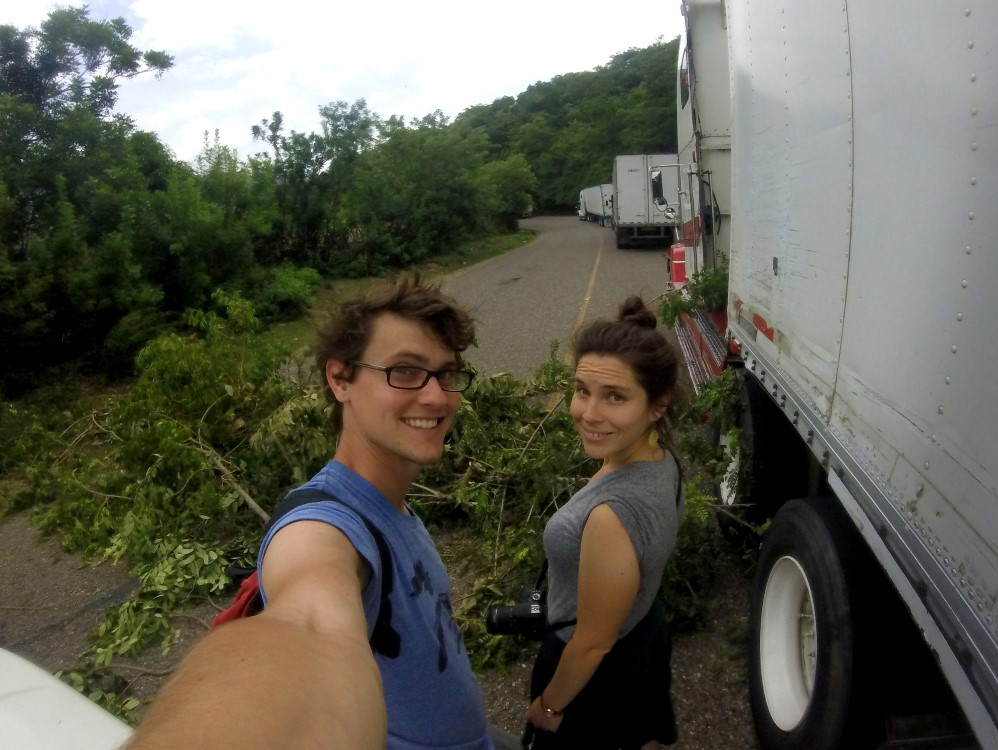
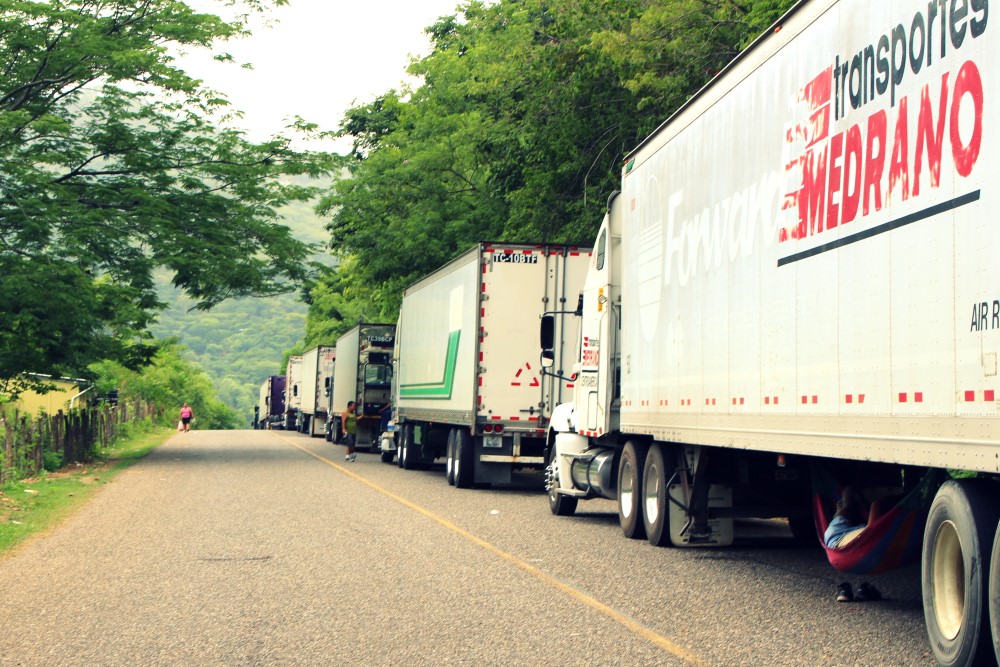 All the truck drivers have hammocks that attach underneath the semis
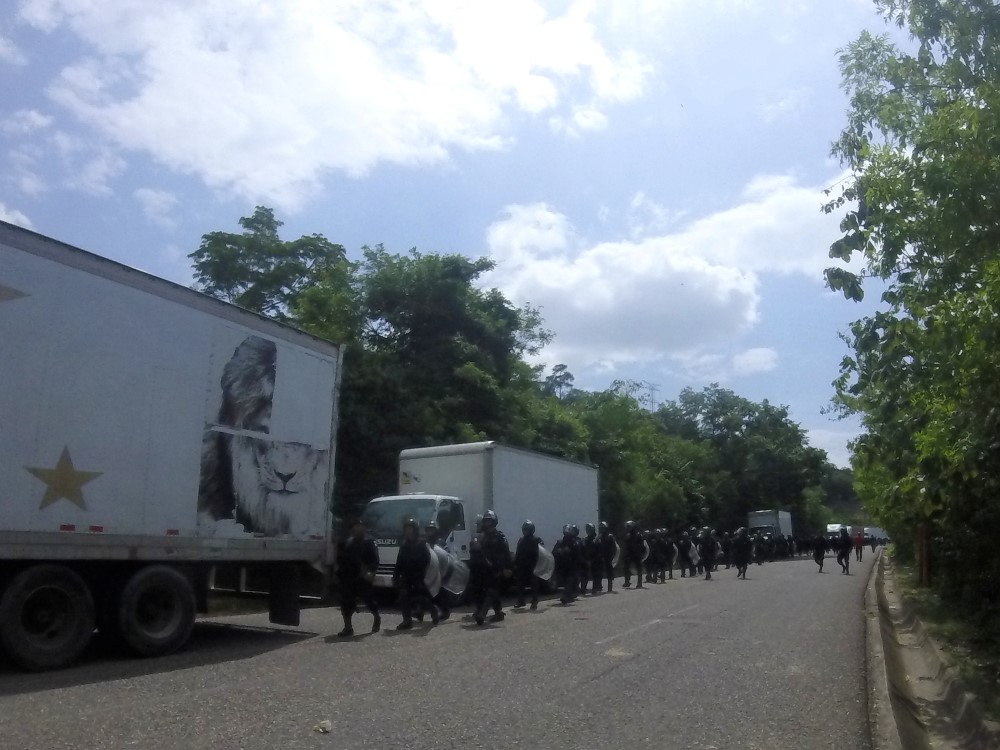 Police heading to the strike
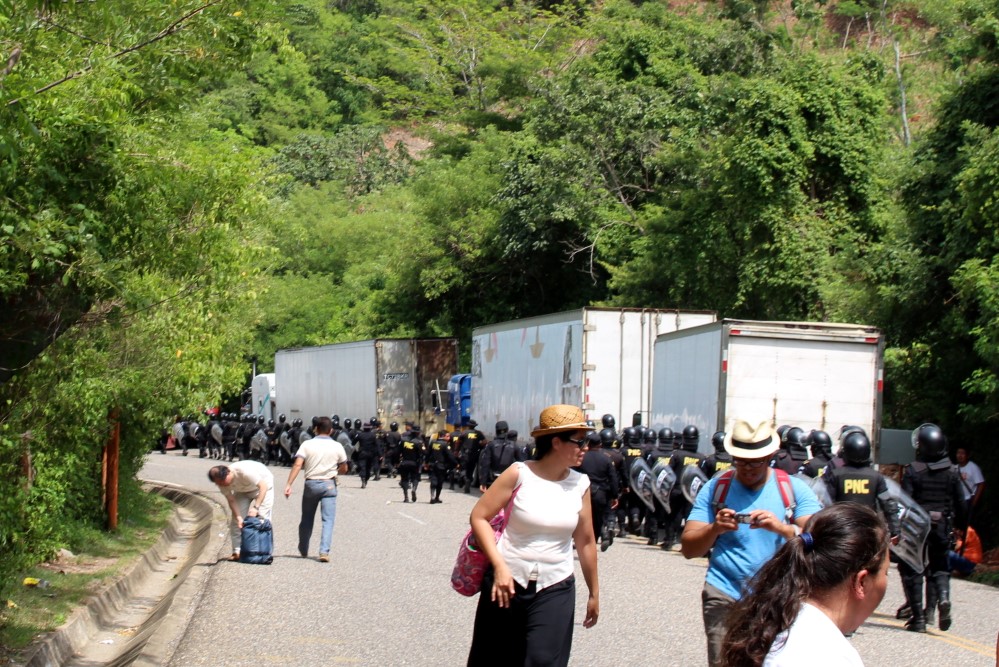
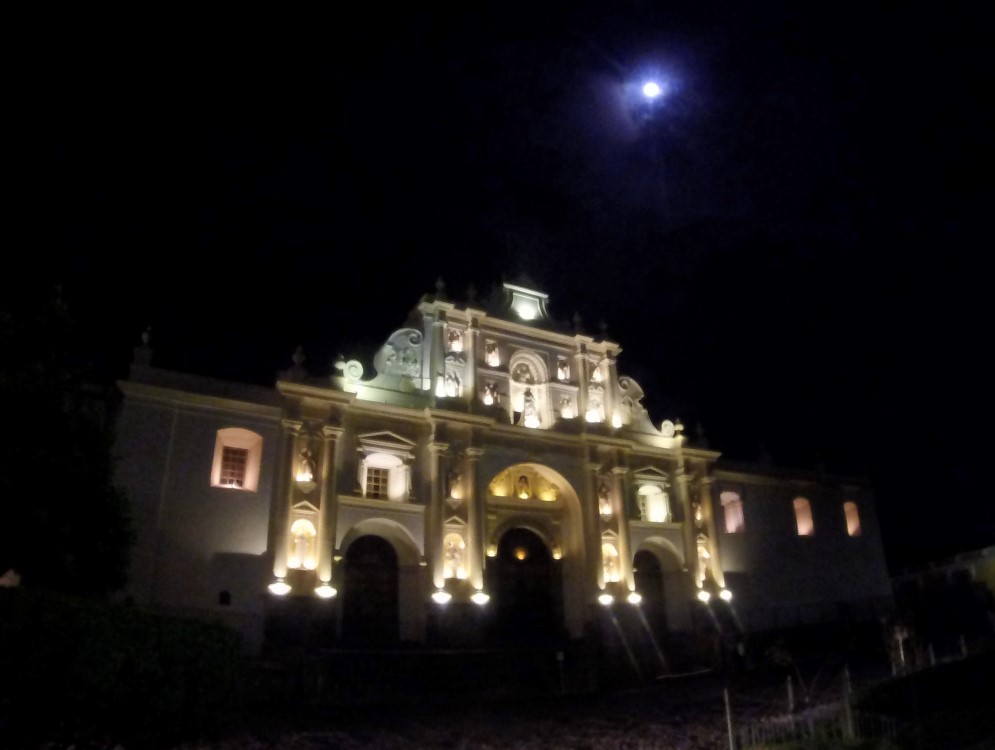 Back in Antigua a few hours behind schedule, but safe and sound. Next day, off to Cobán
 This Framerican Life
I had not even read the captions of the pickup truck pic yet… but I thought ‘hey lots of gringos’ 🙂
But it’s good… if all gringos travelled on pickup trucks they would have not been called gringos ! 😀
LikeLike