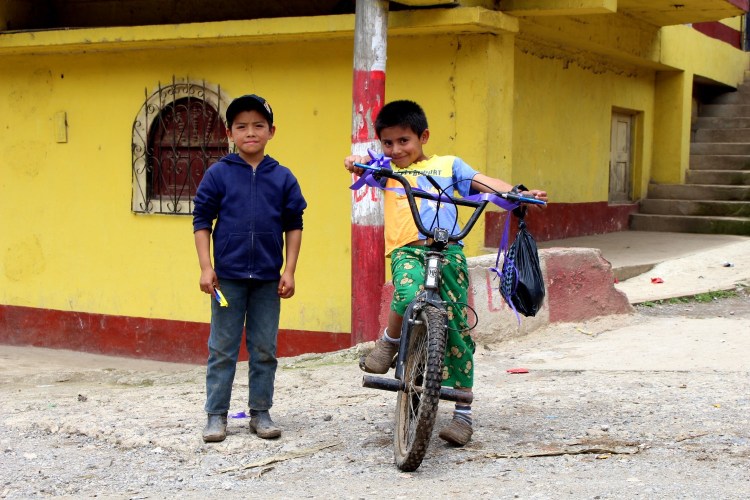
The time came to leave Cobán and we headed westward to an area of Guatemala I had never visited, the Ixil Triangle. The road there was a long and bumpy one, a gravel roadway continually carved out of the mountainside as semi-regular landslides buried what was there before.

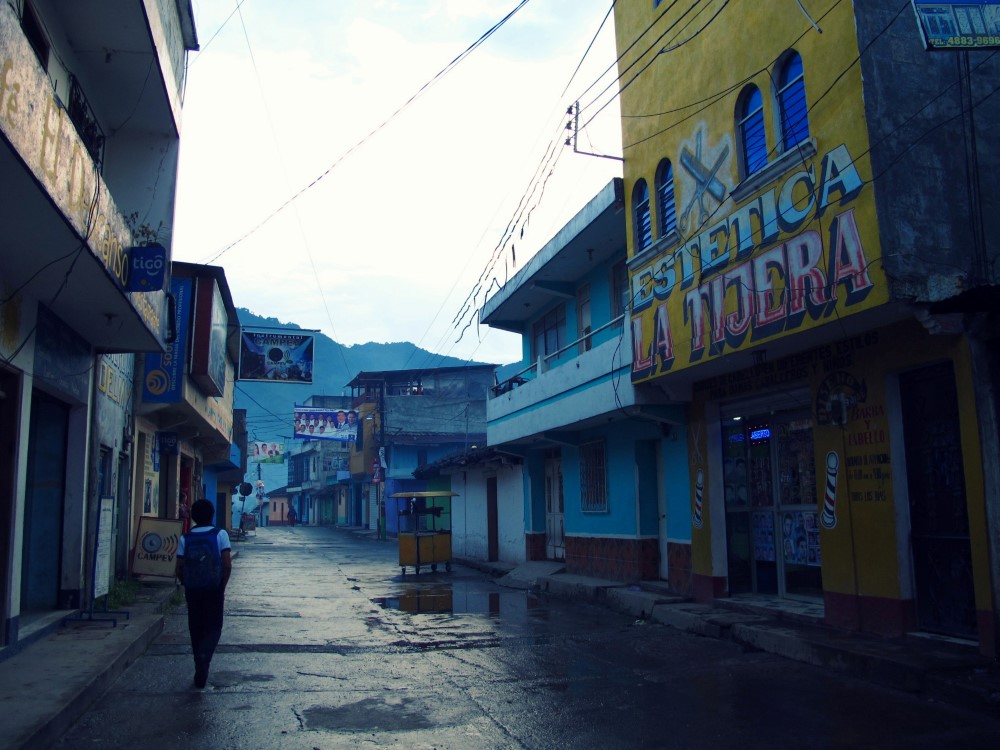 We arrived in Nebaj, the largest of the three cities that make up the Triangle, at dusk, and the cool temperatures were a welcome change.
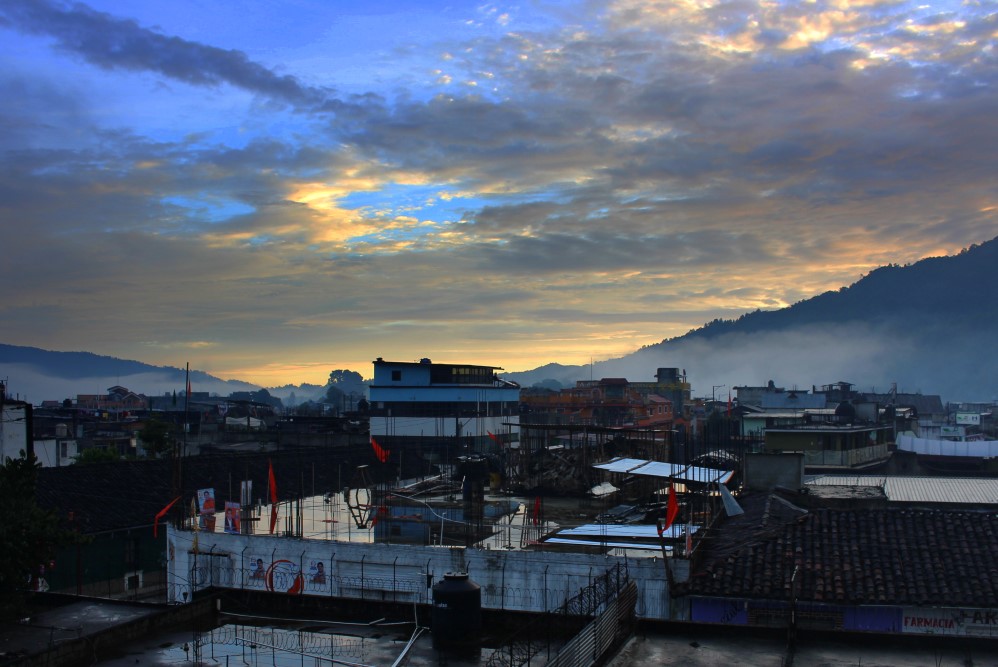 Sunrise from our rooftop.
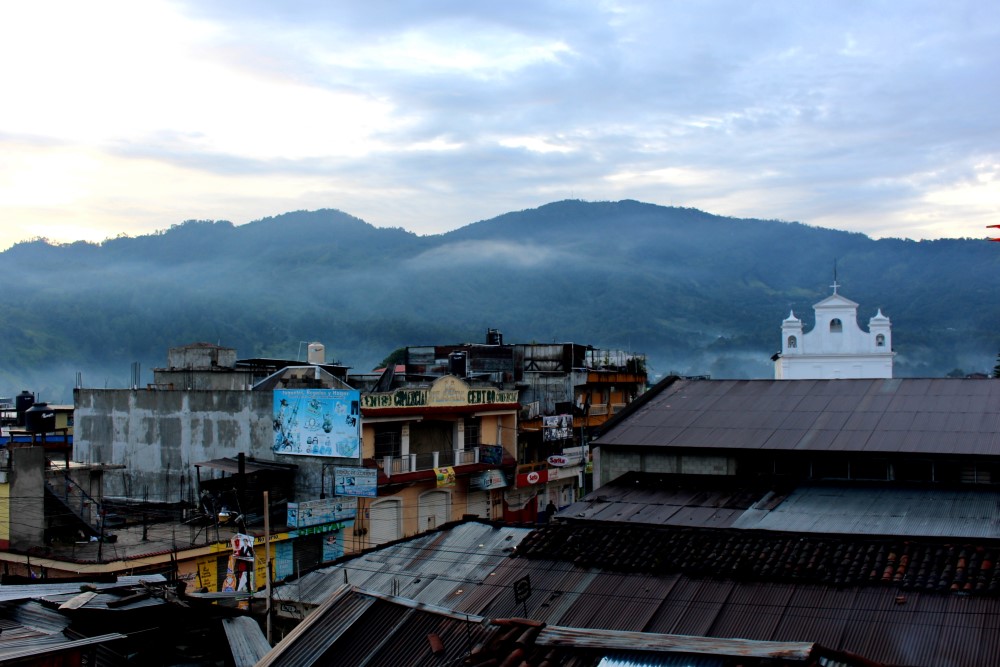
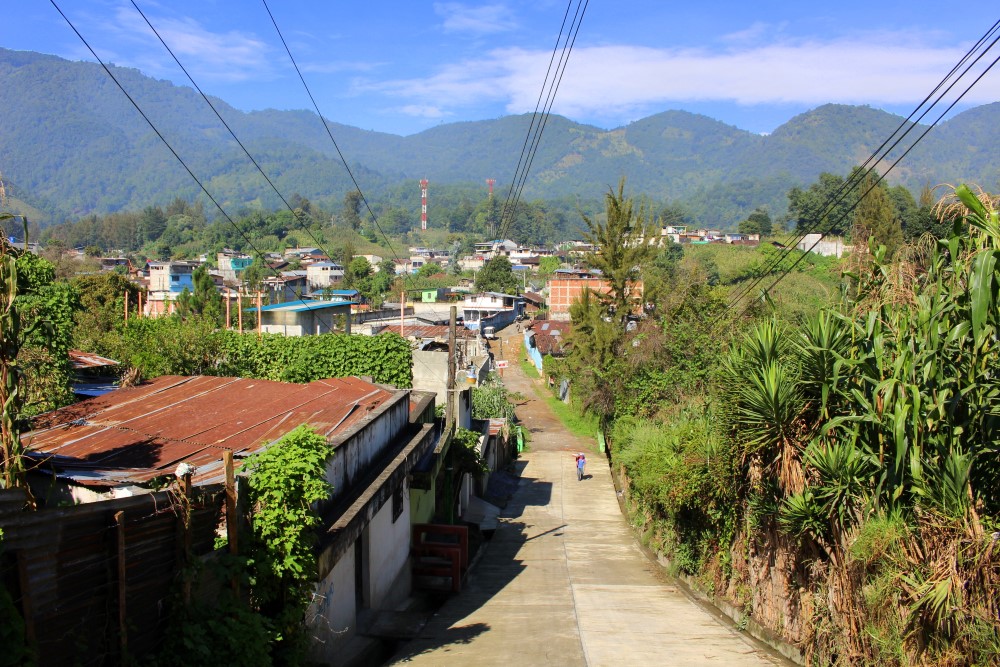 That next day we headed out on a 5-hour hiking tour to Acul, a neighboring city, with promises of ending up at a family-owned cheese farm.
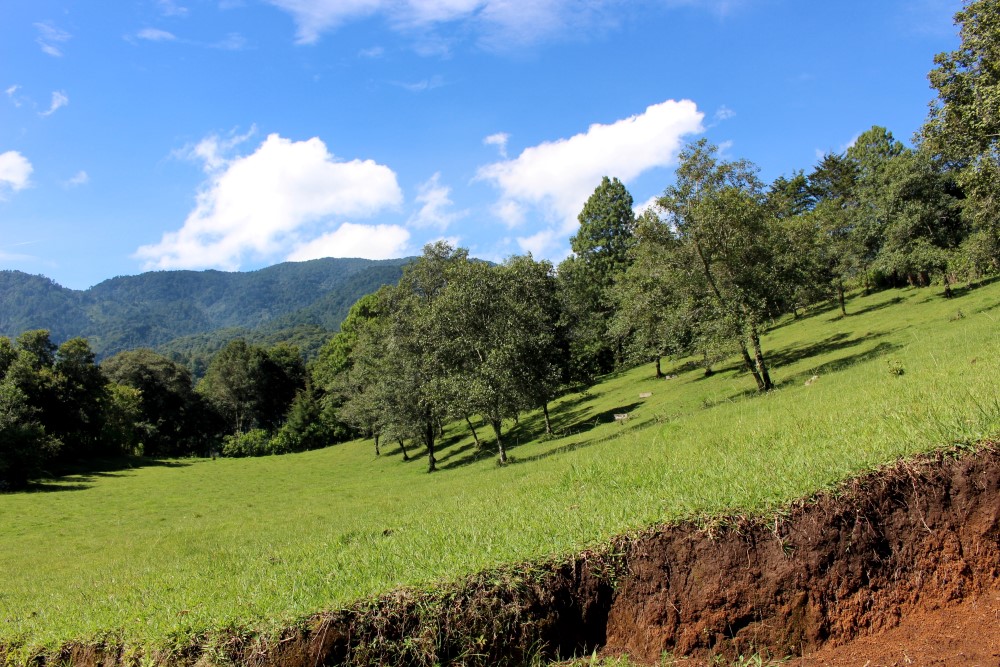
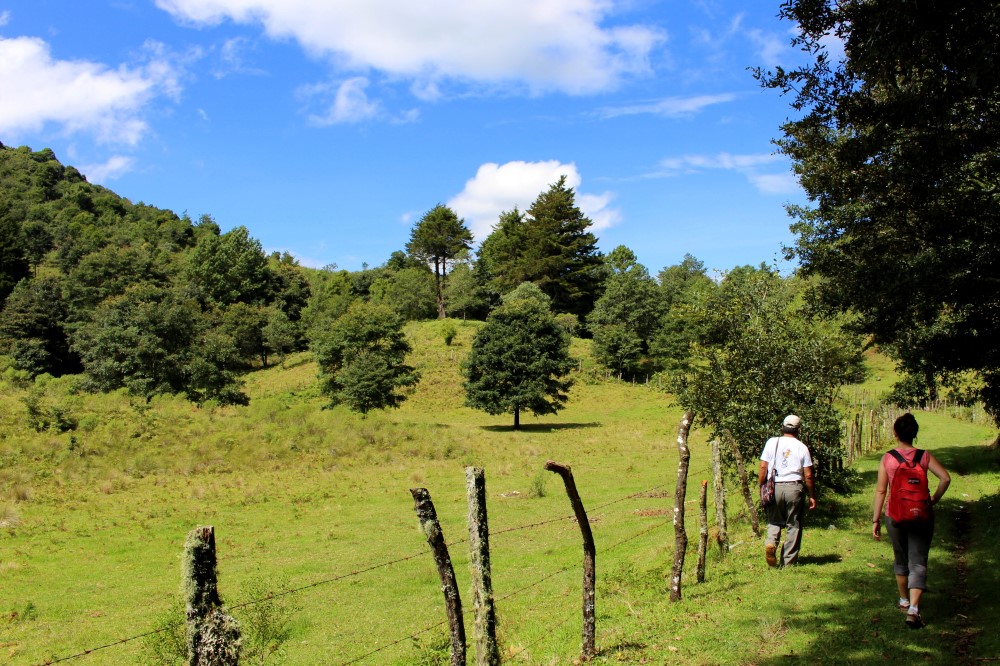
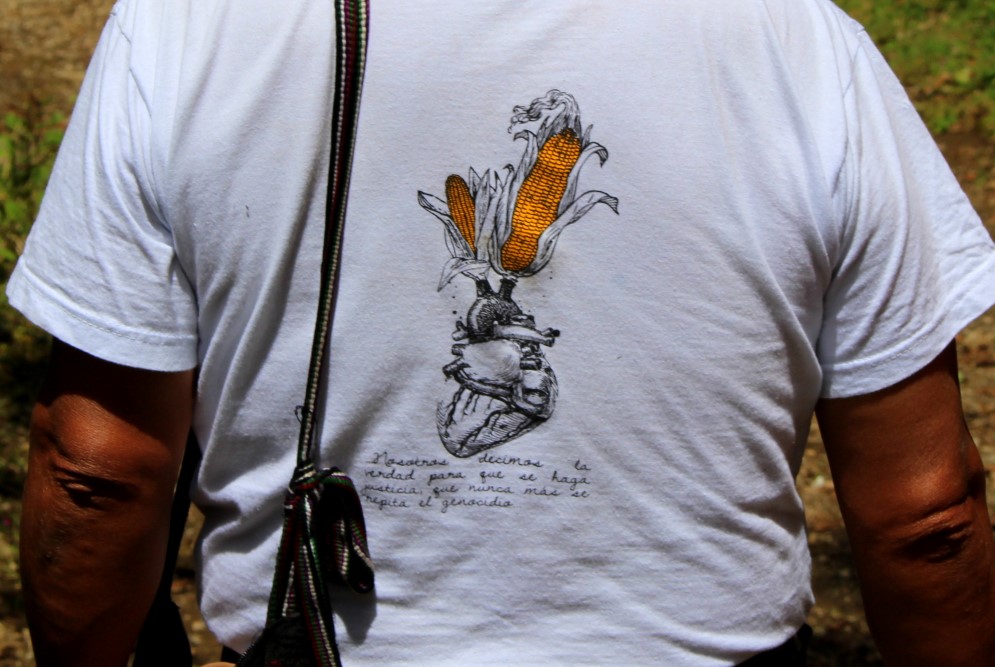
As we started our climb up the mountain (about an hour and a half uphill through mud and manure) our guide revealed to us he had been a guerrilla fighter during the civil war, and that these mountains we were crossing held many stories from before, during, and after the civil war, the “internal armed conflict.” Being mountainous and full of shelter such as trees and caves necessary for hiding, these mountains were full of guerrilla fighters; consequently it was also where the Guatemalan Army focused and massacred all in sight, destroying towns, livestock, and entire forests to drive anybody and everybody out. In the mid-90s, our guide was very active in collecting testimonials from victims of the war. He said, quite frankly, “If we don’t do anything as a community to remember, who will?” His shirt reads “Nosotros decimos la verdad para que se haga justicia, que nunca más se repita el genocidio” –We tell the truth so that justice is served, that never again will the genocide be repeated.
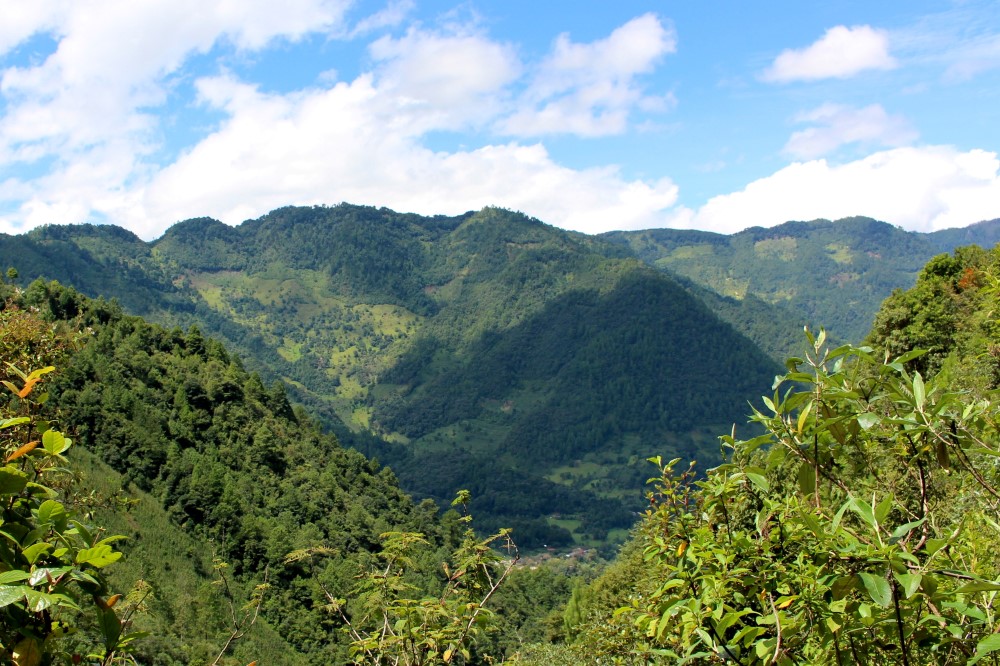 From the top of the mountain we could see our destination, Acul, in the valley below.
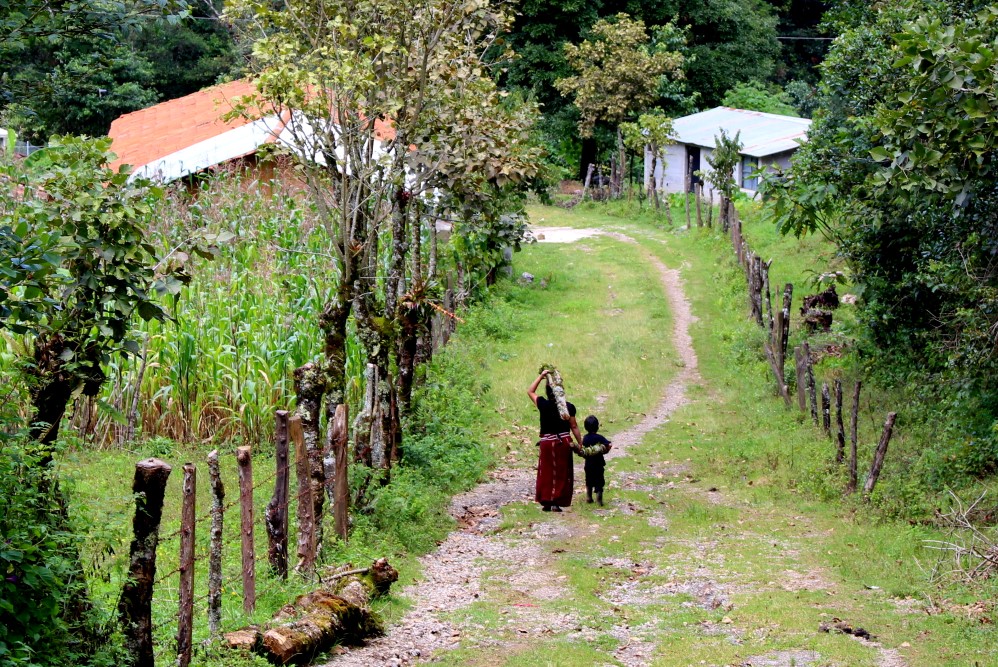

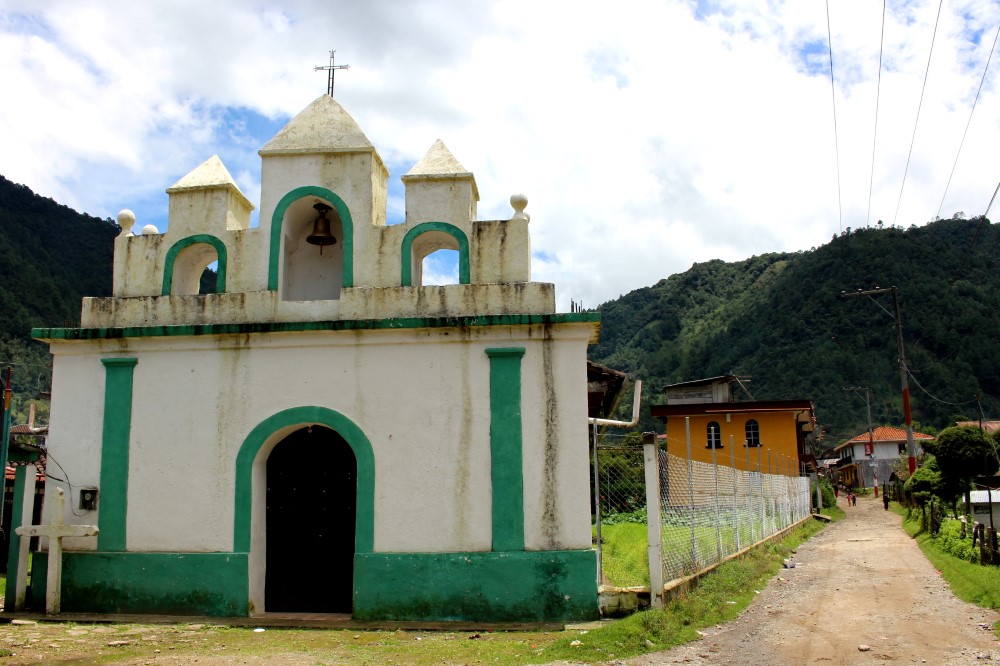 Though Acul today is the picture of pastoral paradise, like many of the surrounding towns it has a dark, dark past. This church is the site of a brutal massacre by the Guatemalan Army and is the only building left standing after the army burned the entire city to the ground.

In 1983 the Guatemalan government rebuilt Acul as a model town for other Mayan communities similarly affected by the violence of the civil war. Foreign press was invited to Acul to see how peaceful and calm the city was. About 80% of Ixil villages were destroyed by the army during the war.
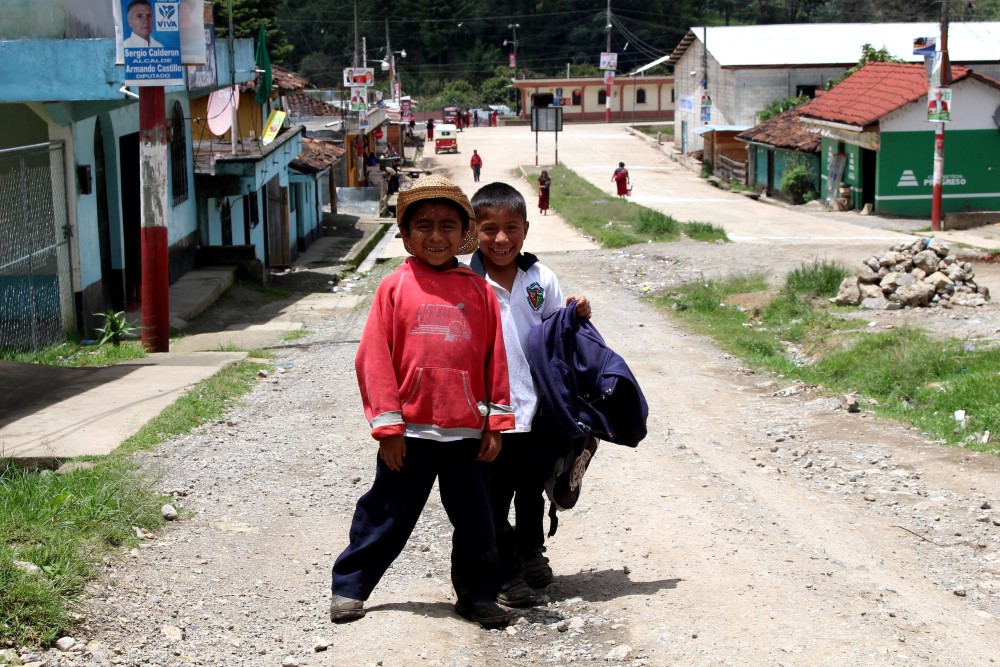 Main street of the rebuilt city
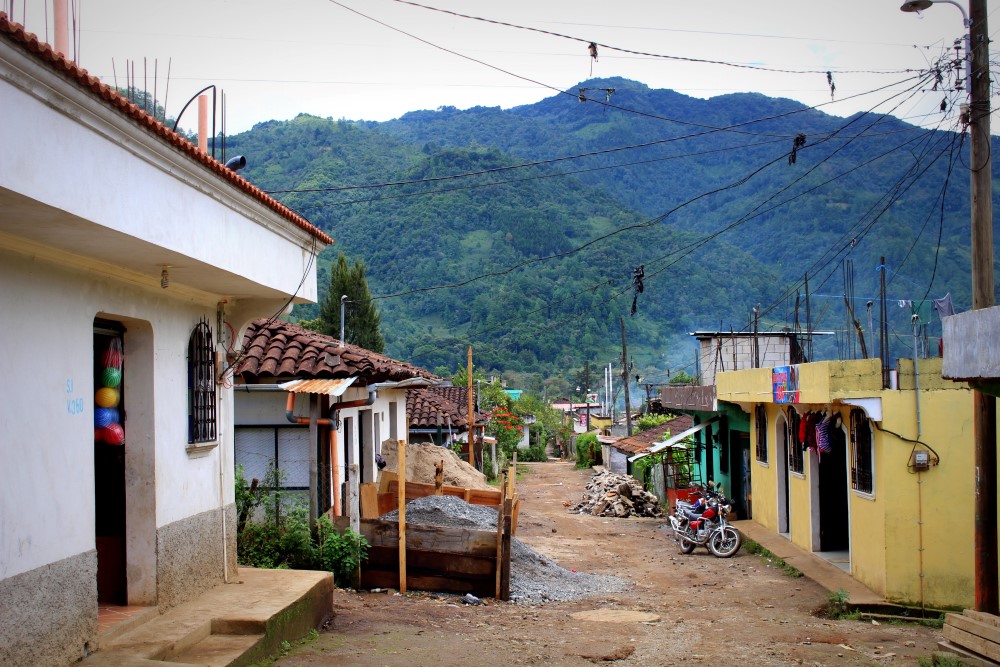 Off the main road
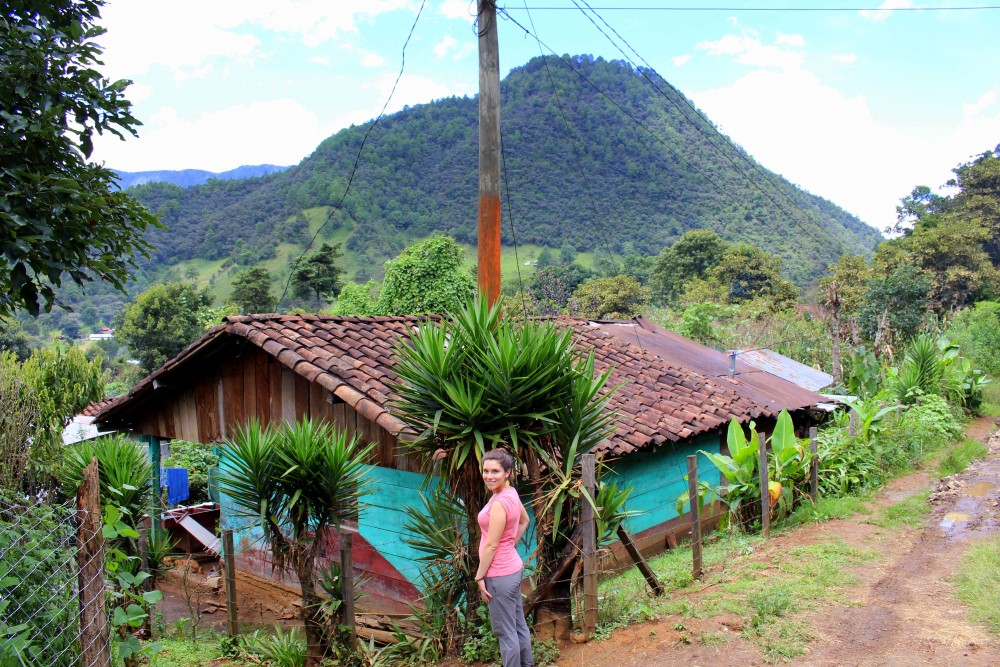 Heading down a road off the secondary road where we would meet a most lovely woman weaving a huipil (the traditional blouse). She spoke only Ixil, and we spoke only Spanish, so we communicated through the guide and with exaggerated gestures and a lot of smiles. After we left, our guide told us that she was a witnesses that gave a testimony to the atrocities she saw and suffered during the war.
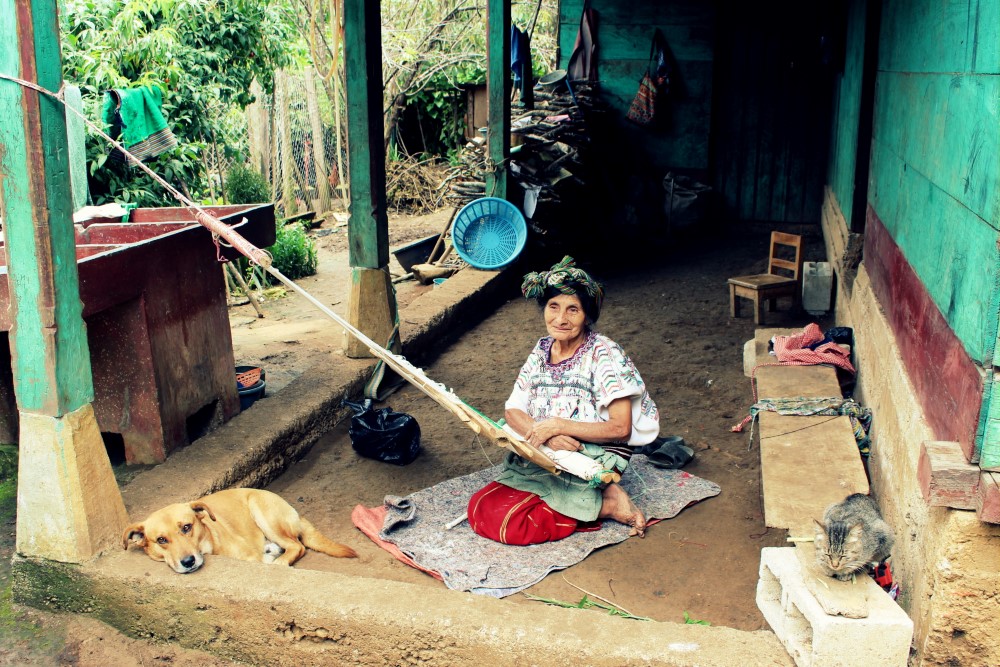 Our guide knew the woman, so we stopped by for about 15 minutes to watch her weave…and our guide did a little campaigning for the impending presidential elections
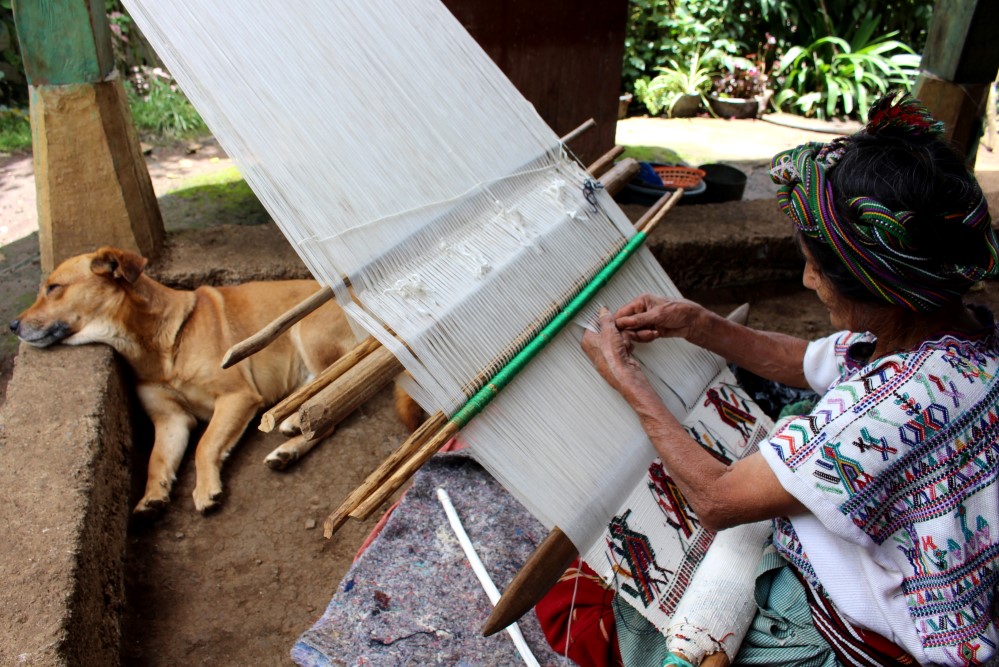
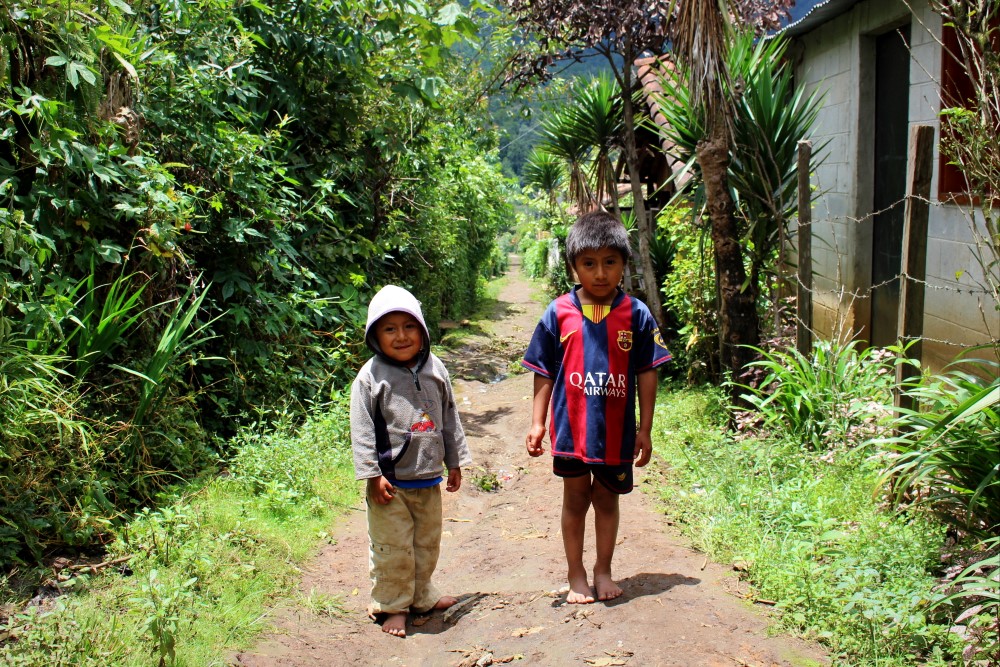 Julien and the camera quickly made some new friends while I attempted to understand the specifics of weaving.
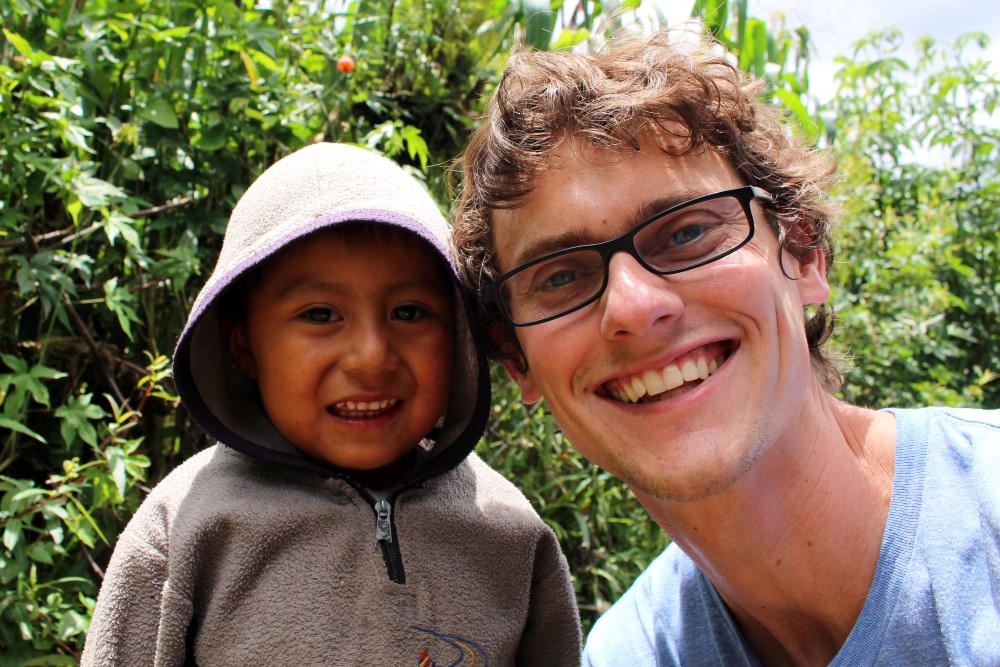

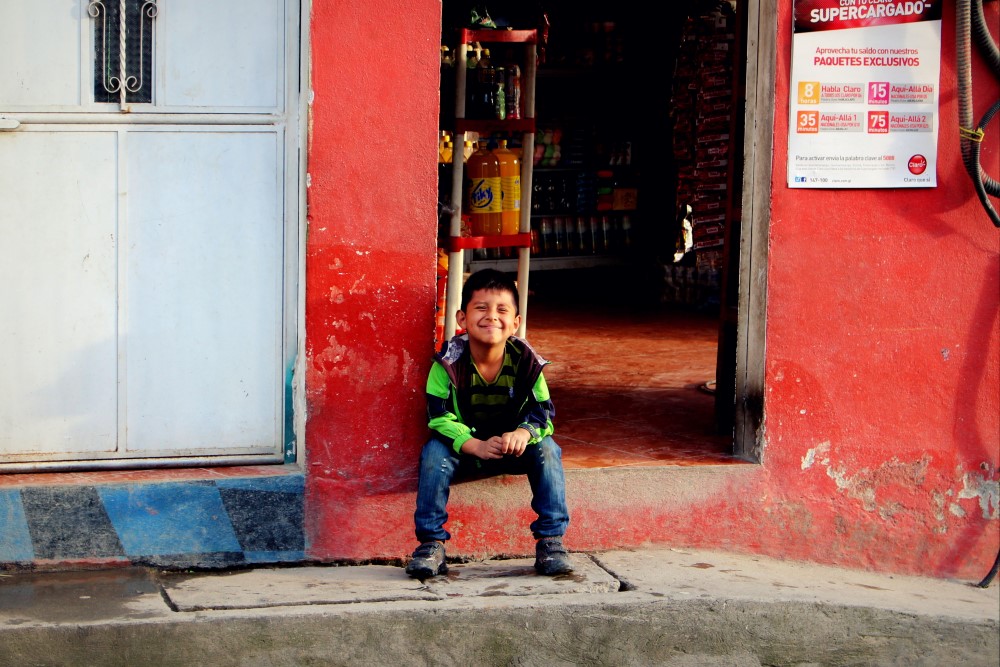
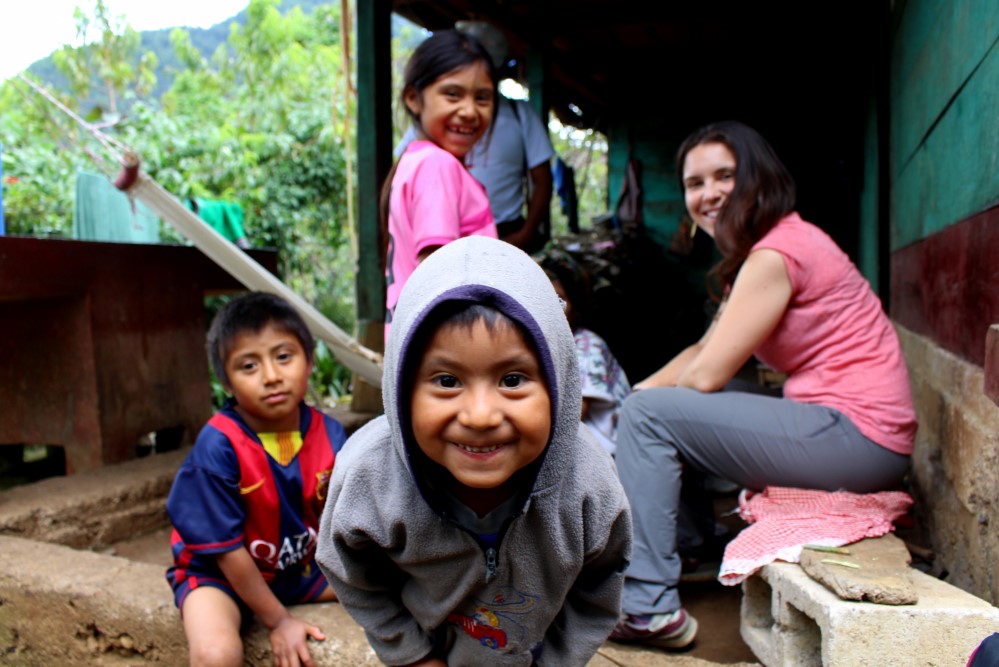 Julien was set to take a photo of the rest of us, but at the last moment our youngest friend jumped in front of the camera and the camera rightly focused on him.
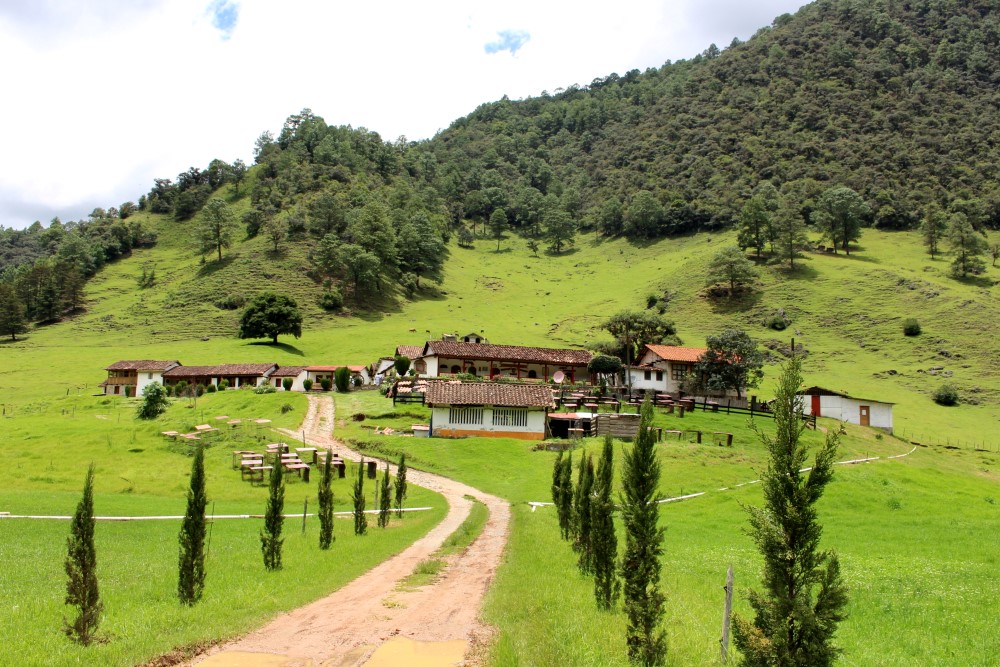 Four hours after we left Nebaj, the Hacienda San Antonio was in view. This is one of two farms started up by the Azzari brothers, an Italian pair that made their way from the Alps in Italy to the Cuchumatanes in Guatemala in the 1930s.
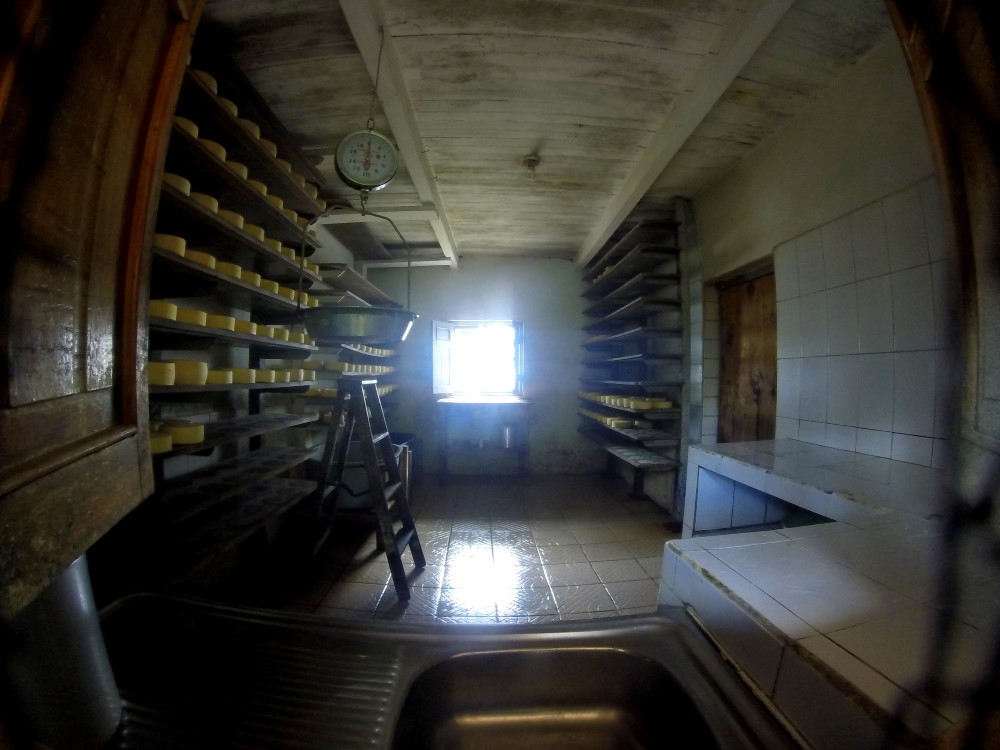 Cheese airing and aging
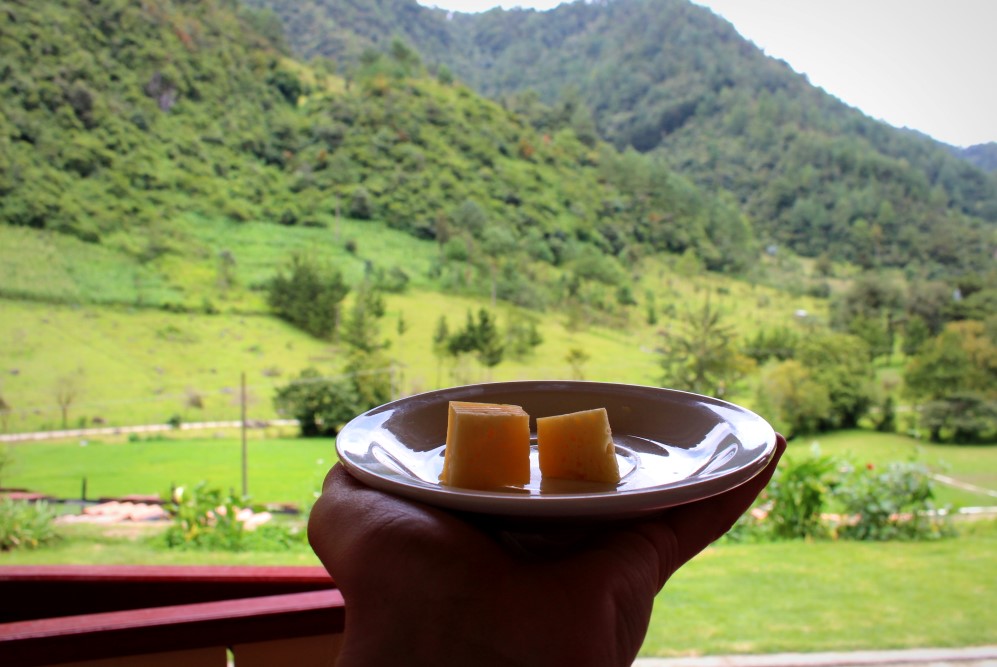 Sample cheeses ready to be eaten
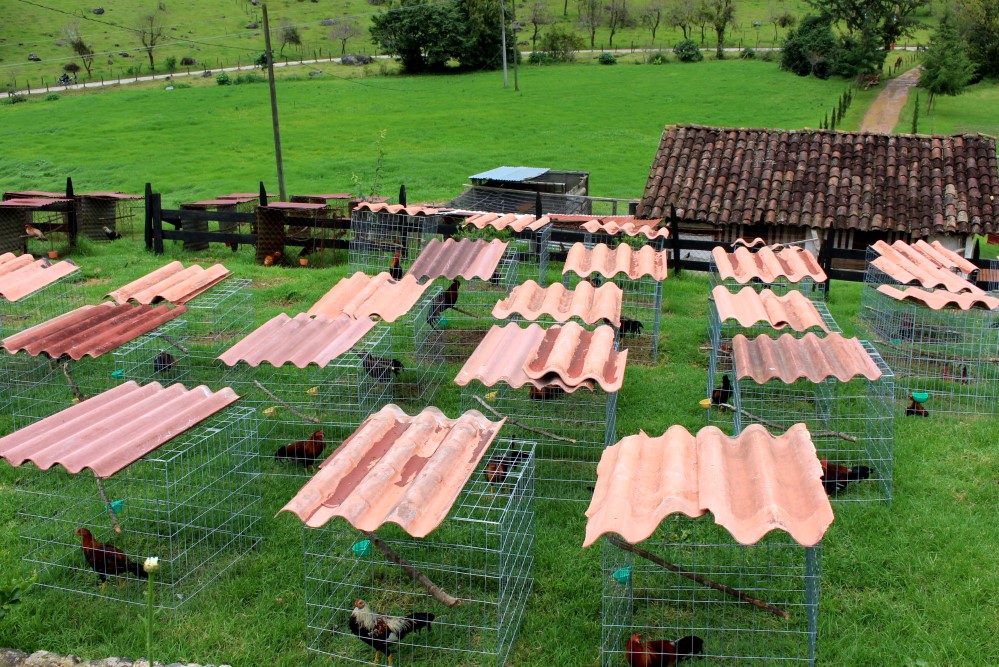
 We ordered a cheese quesadilla, fuel for our way to the main road to catch a chicken bus back to Nebaj.
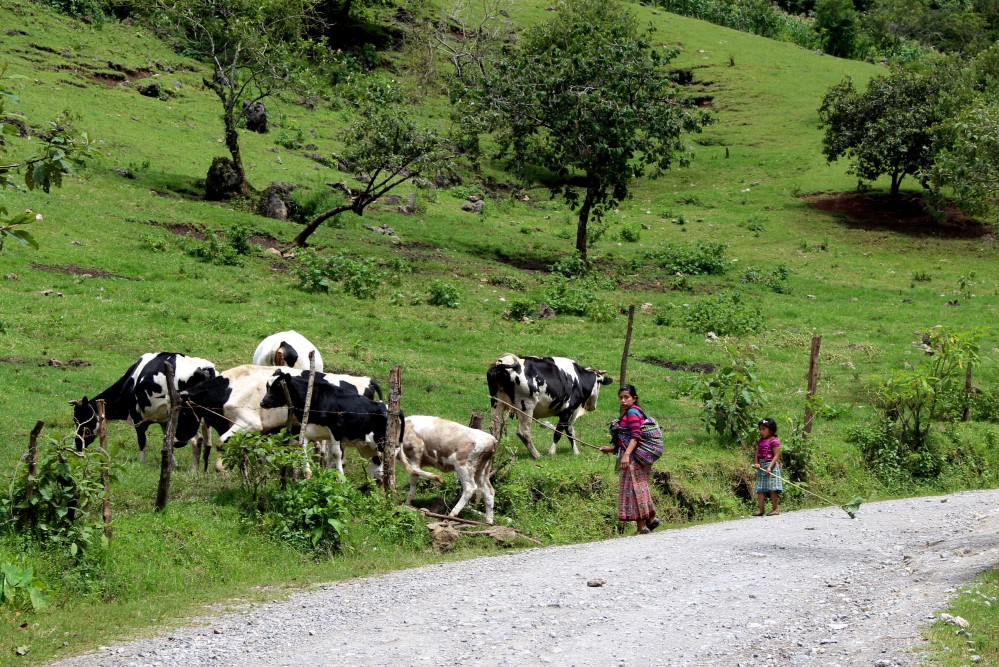 Even the little one was skilled in cow-herding
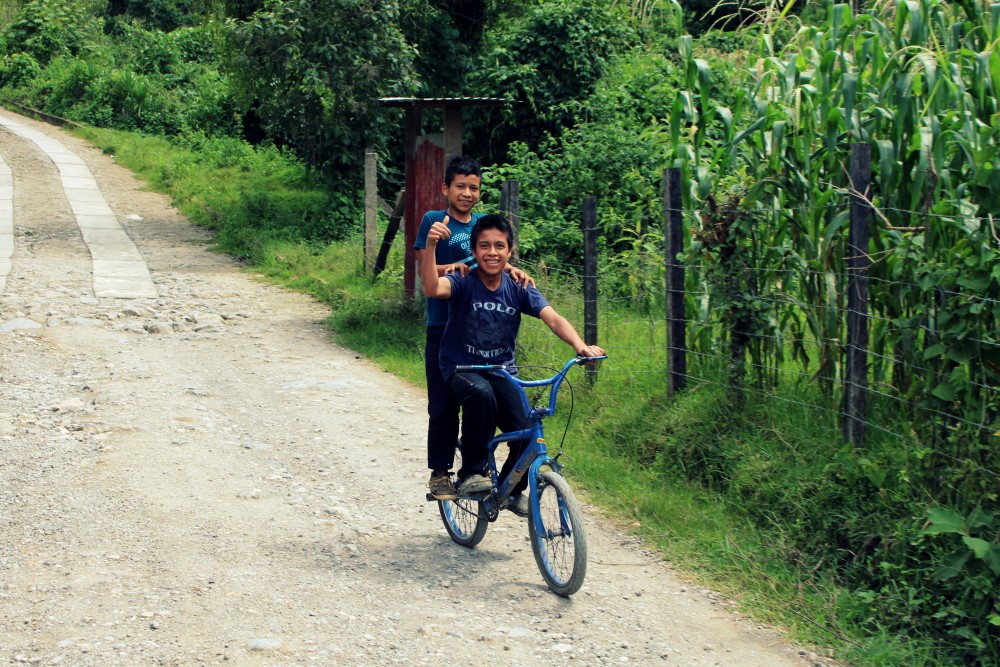
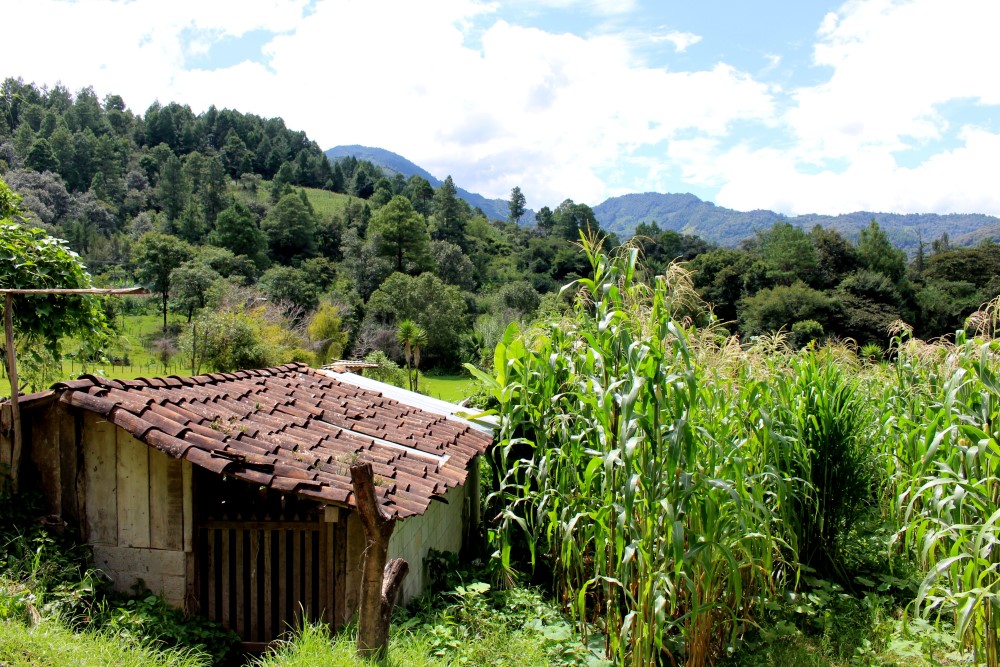
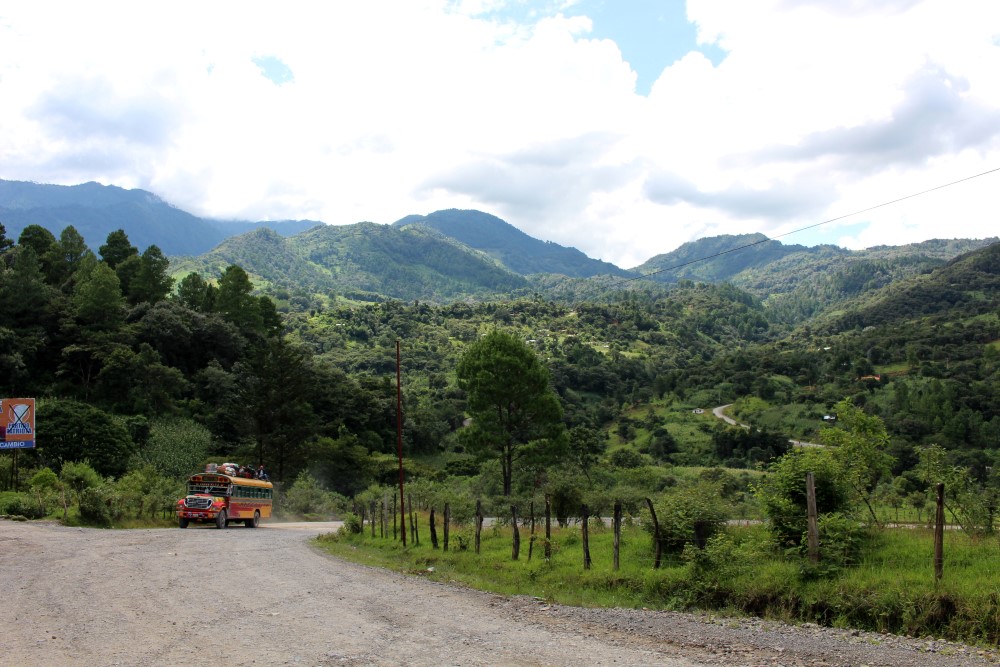
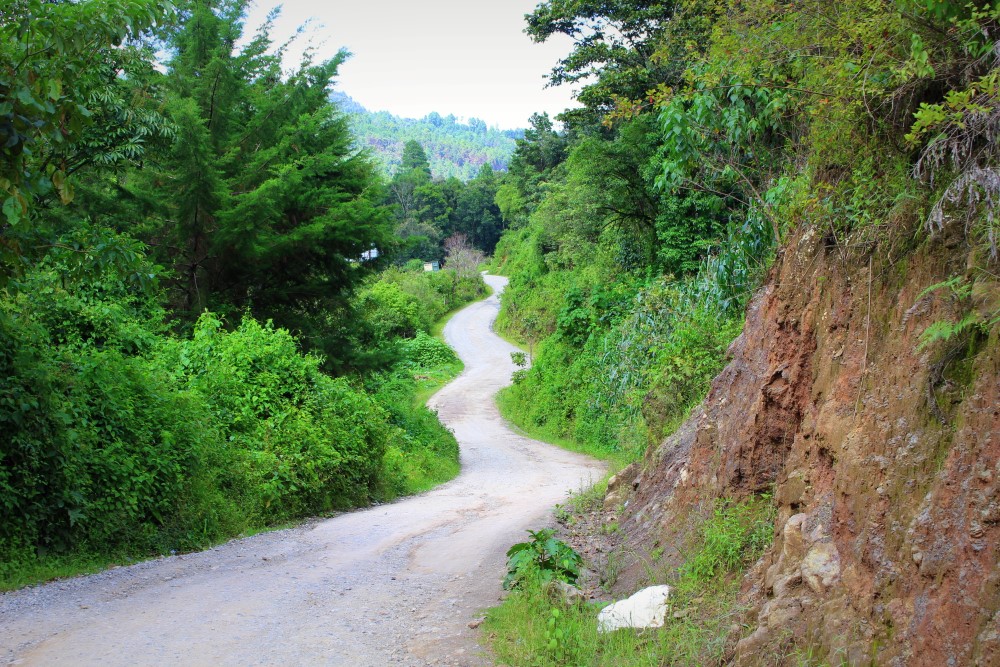 The last stretch before the main road
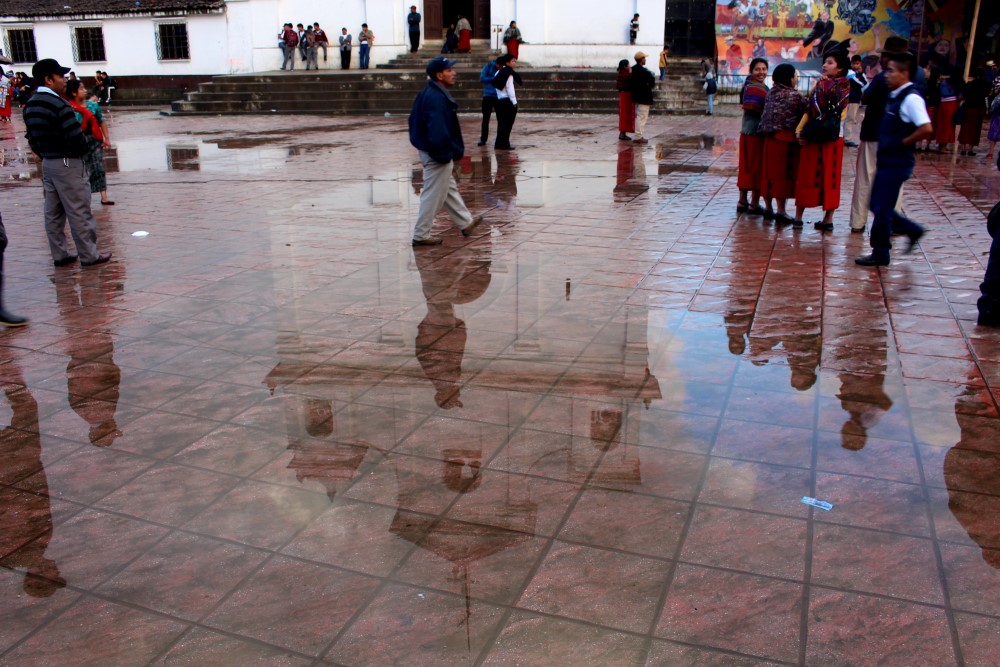
Remains of Guatemalans killed by the army during the civil war are still being found in mass graves in the area. We ran into a Dutch photographer who told us that in the following days possible relatives of the most recently recovered remains would be asked to identify the remains found, and he was going to be documenting the whole process. When we got back to Nebaj, we sat on a bench on the main square to rest our feet and saw a procession of caskets headed into the church, our photographer friend following closely behind (the man with the black shirt to the right of the photo).
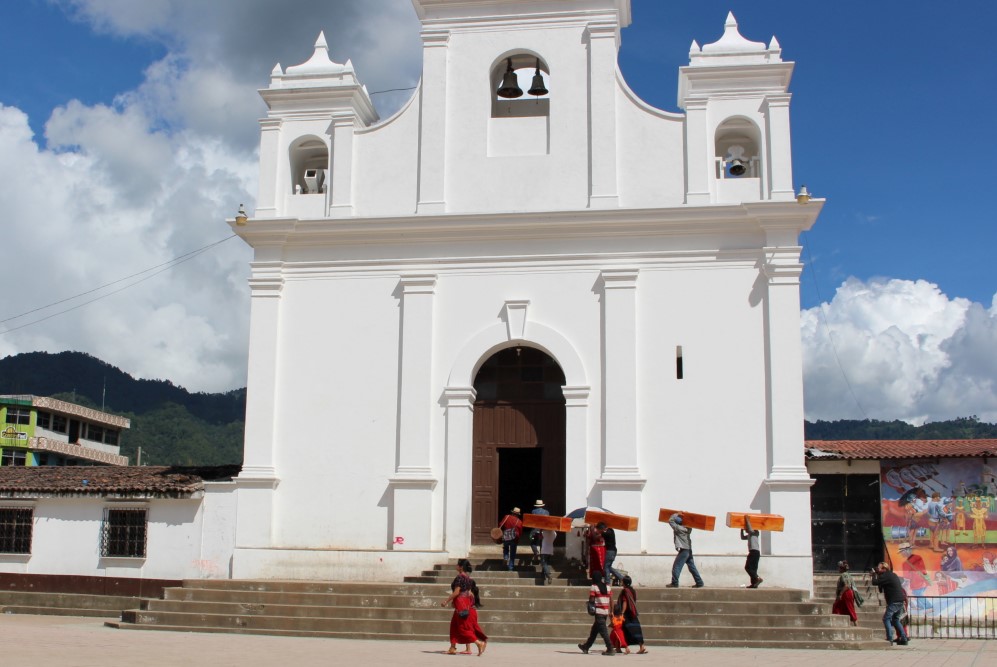
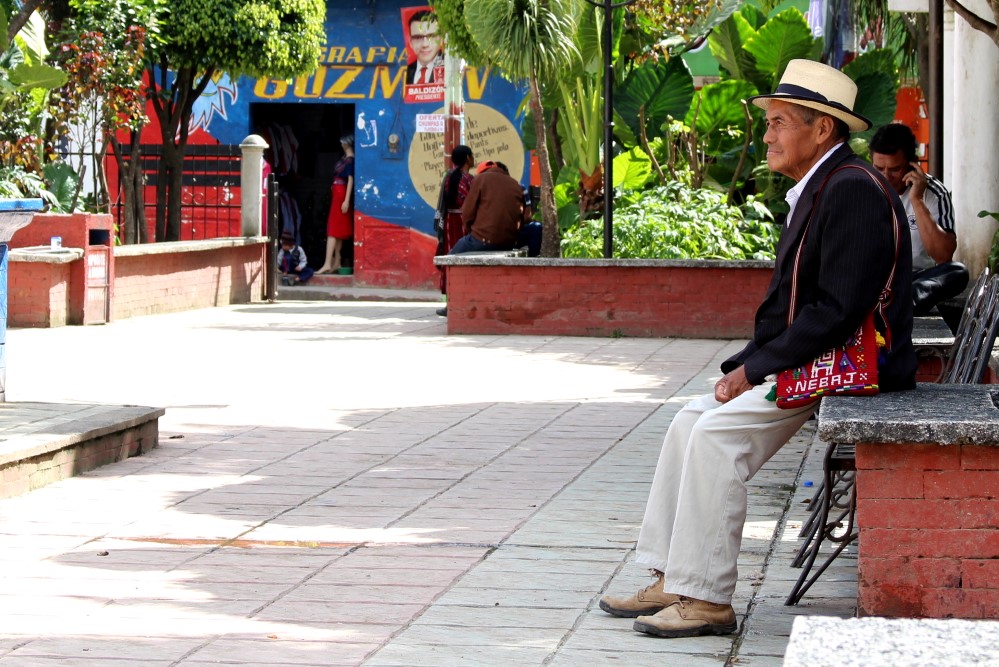 Fellow on-looker
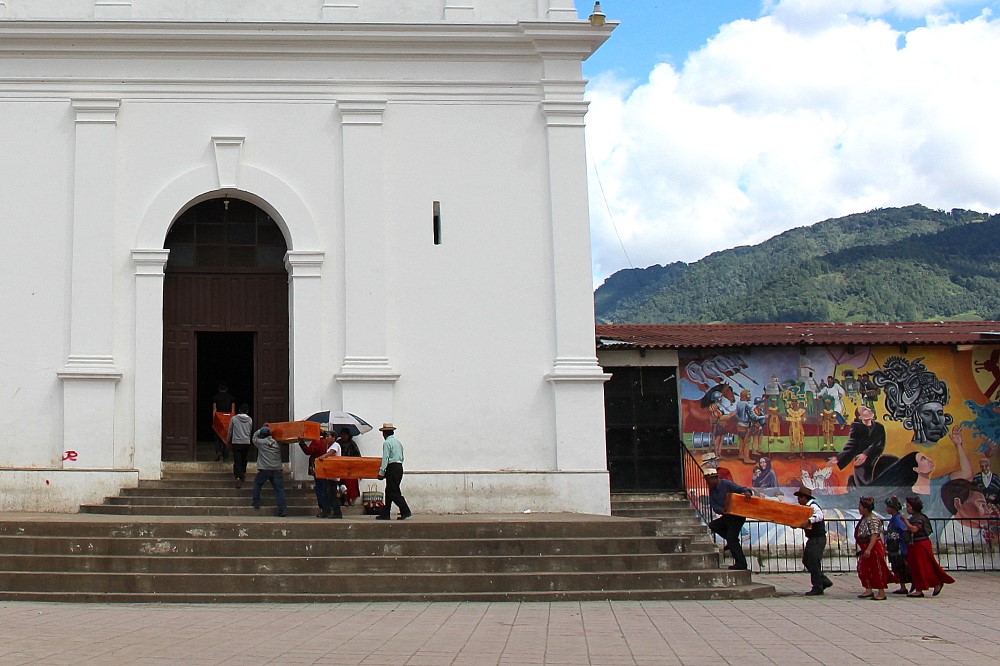
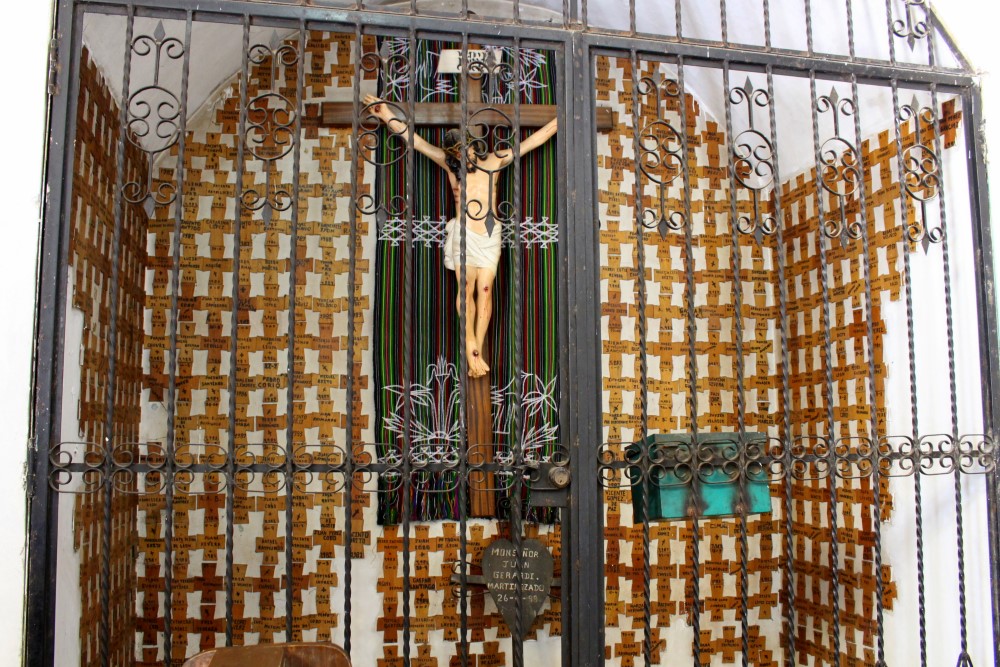 Just to the left of the entrance to the church are hundreds of crosses with the names of the disappeared from Nebaj.
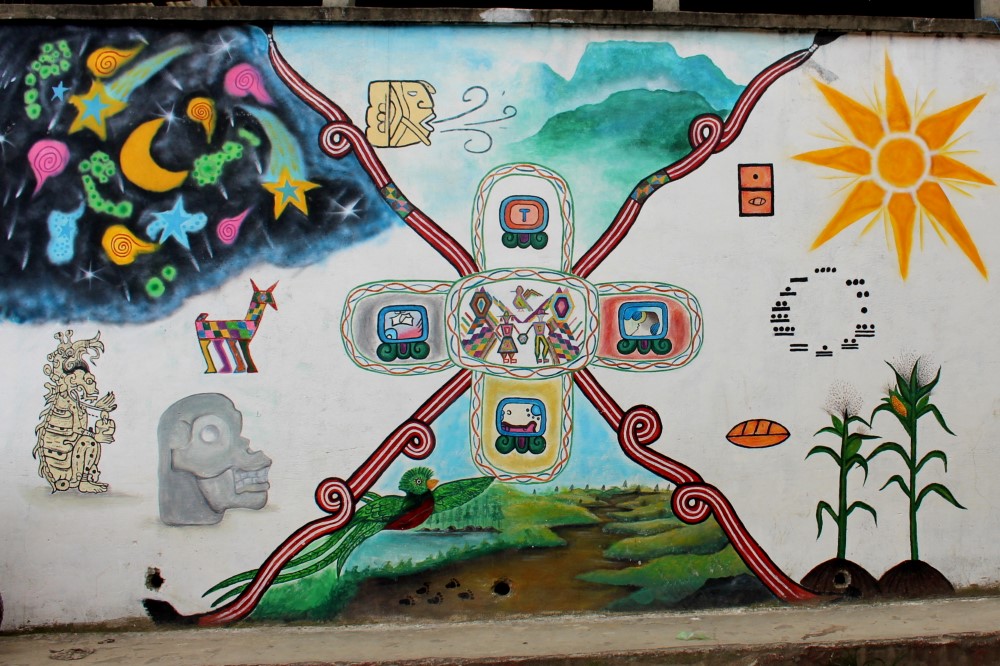
The four bearers of the Ixil Mayan calender:
KUB’A AL NO’J – East: Represents knowledge and the sunrise; the Mayans were the first to discover zero.
KUB’A AL IQ’ – North: Represents the wind and the importance of the Sumal mountain, the tallest in the Ixil region.
KUB’A AL CHEE – West: Represents the night and the importance of our ancestors.
KUB’A AL EE – South: Represents the path of life that we set out on as humans.
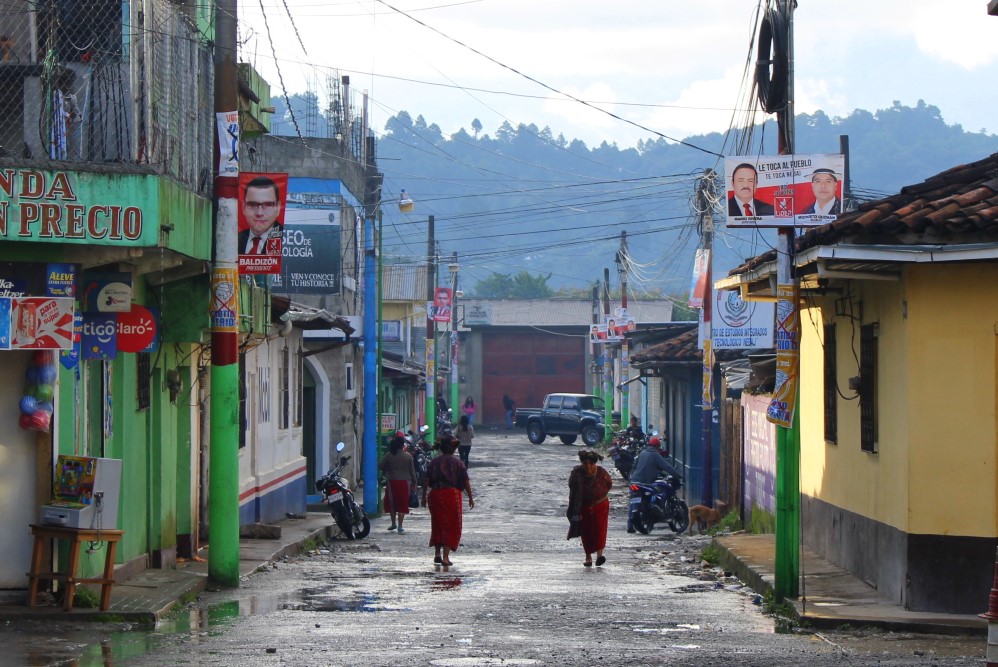 Sun after the rain

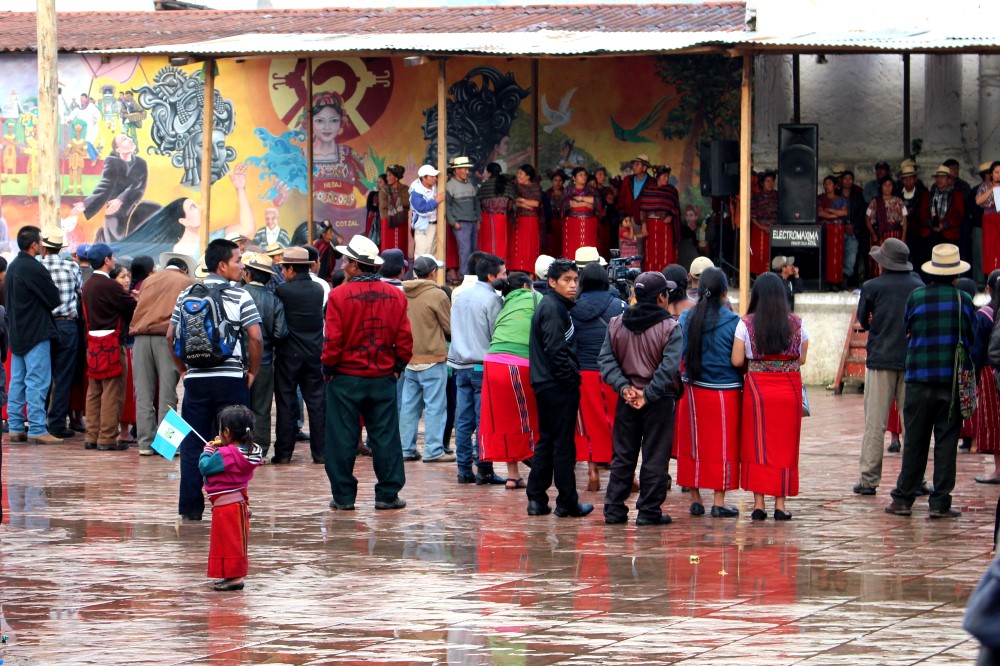 A gathering in the Central Plaza at which the speaker congratulated all who had protested successfully over the previous 19 weeks for the eventual ousting of the president. The speaker spoke Ixil, the local Mayan language, and a woman translated into Spanish.
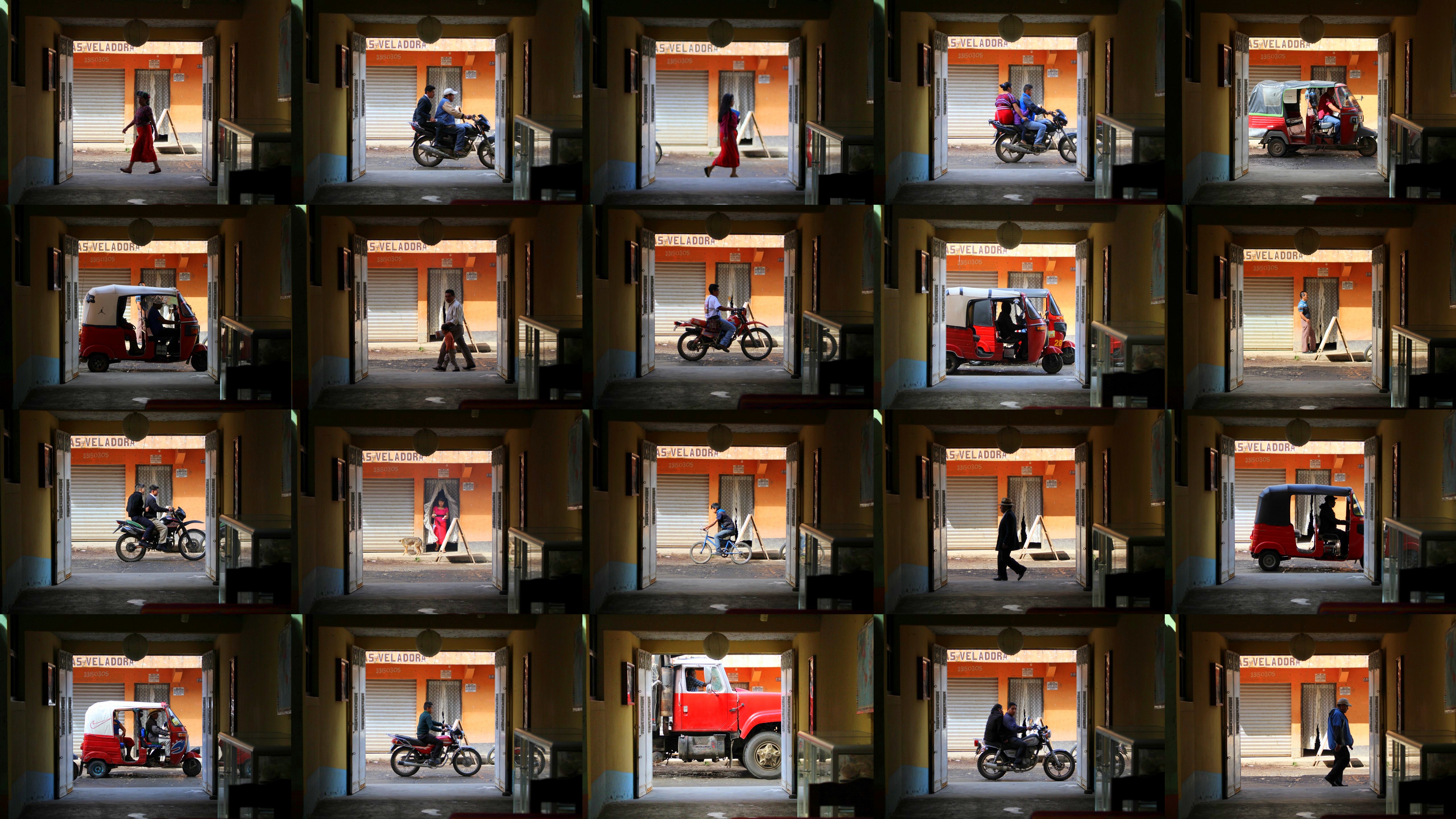 (Click on the image once to make larger; click again to zoom into the photo) The morning we left, I got the idea of taking snap-shots of the traffic passing in front of the hotel, a vision Julien carried out; we have similar video footage that is quite amusing.
Click here to see the video.
 This Framerican Life
Les enfants sont superbes et ont l’air très coquins ! Par contre, ce qui ressort, c’est la pauvreté, mais en même temps, les gens ont l’air très dignes.
Toujours les fils électriques qui gâchent un peu le paysage.
Est-ce que la jupe rouge est un costume traditionnel du Guatemala ?
Bisous.
LikeLike
C’est un constat qui peut être fait partout où l’on est passé, le moins les gens ont le plus ils sont dignes et généreux.
Au Guatemala les habits typiques arborent des couleurs différentes en fonction de la région. La jupe rouge est effectivement propre au Triangle Ixil.
Bisous !
LikeLike
Cuando pensamos en toda la región de Quiché, y sobre todo Nebaj y Chajul, la primera palabra que me viene al alma es : genocidio .
Que historias tan duras deben de tener en la memoria esas personas!
Pero la reconstrucción está allí. Hay que pensar que los mañanas serán mejores.
Tout autre chose, (…en pasant du coq à l’âne) : todo el reportaje es una secuancia de fotos que bien podría ser obra de Almodovar con todos esos rojos que se mezclan. Le montage des photos de la fin est extra!
LikeLiked by 1 person
Si uno visita las ciudades con un conocimiento de la historia, ve una gente bien fuerte! Gracias por la comparación con Almodovar, es muy generosa 😀
LikeLike
very good ! I am glad you met ex-guerilla people … always helpful to connect the dots (destruction of the Mayan culture, anti -corruption campaigns…)
ps: Interesting I thought ‘0’ was first used by the arabs (sefr)
LikeLike