Distances long and time short, we decided to overnight-bus eight hours to Lima and catch an hour-long flight to Cusco. Christmas was quickly approaching, and we had wanted to have a few relaxing days before our friend Erin’s imminent arrival, a visit sure to be packed with sightseeing, touring, good eating, a trip to Machu Picchu to boot.
 Catching our reflections at the Lima airport
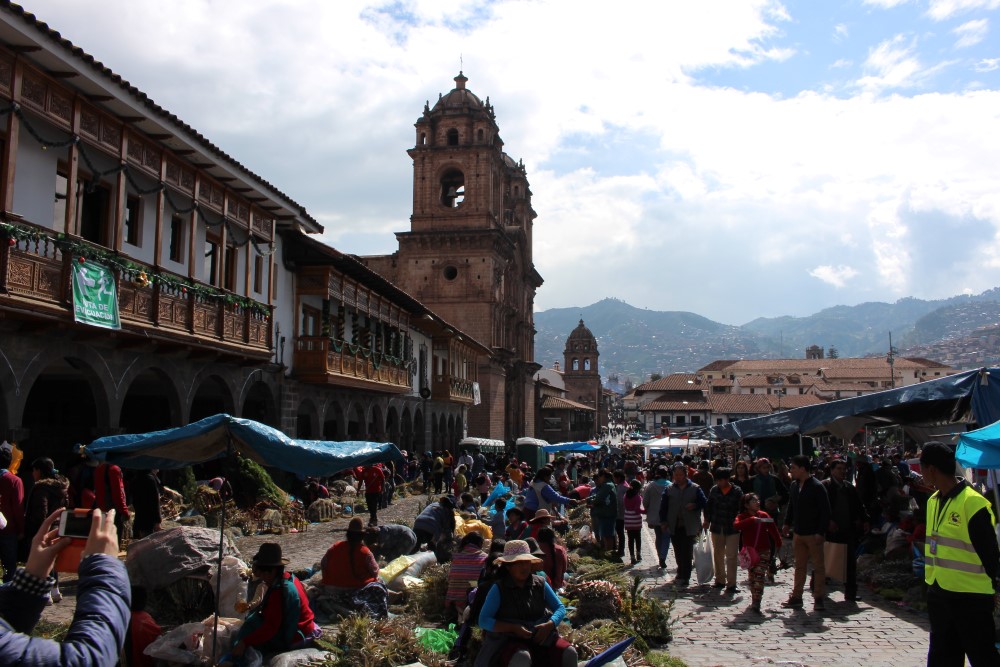 The Christmas market was in full-swing, filling the entire Plaza de Armas
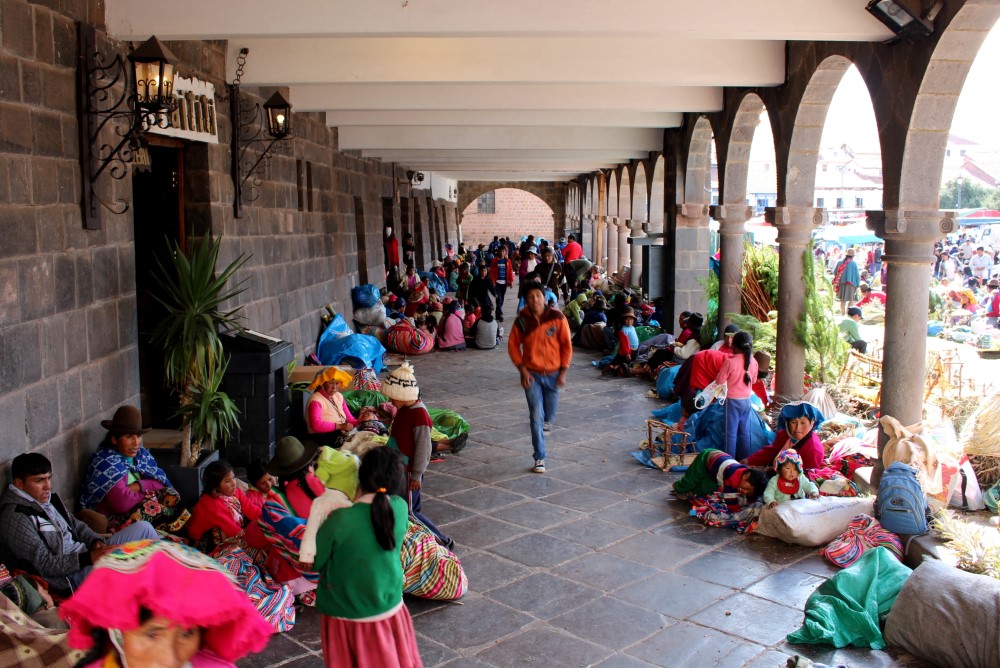
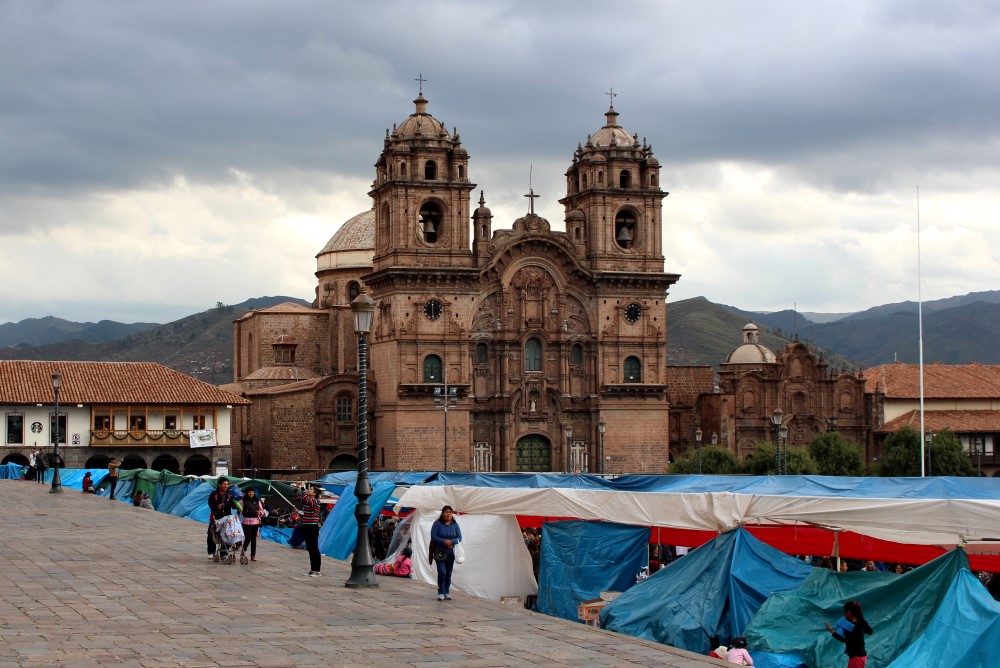 La Compañía de Jesús and Christmas stalls
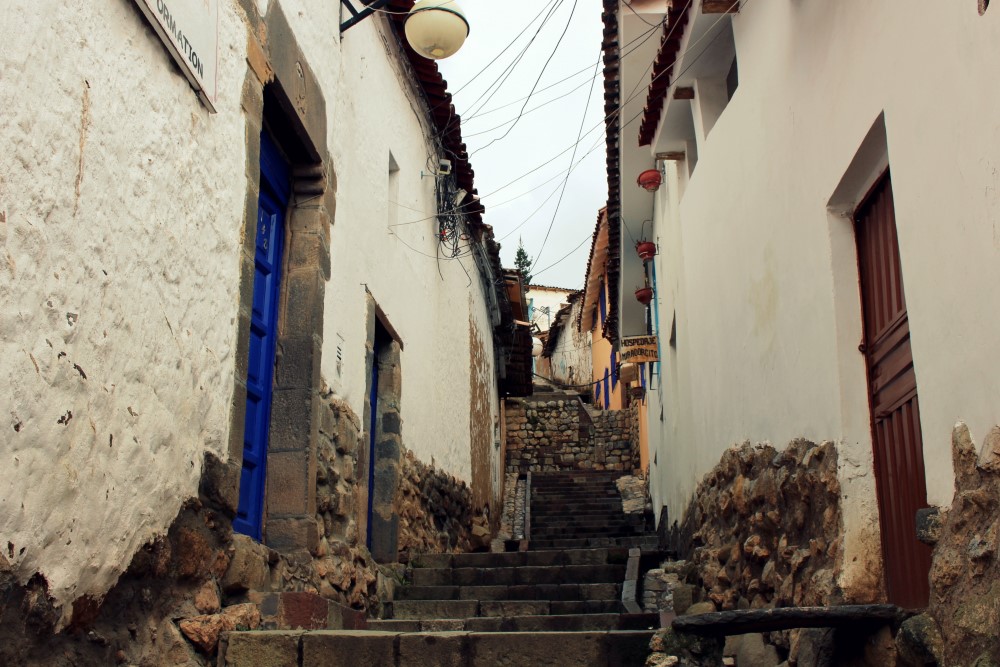
 Cusco streets: steep, narrow, picturesque, even in the rain
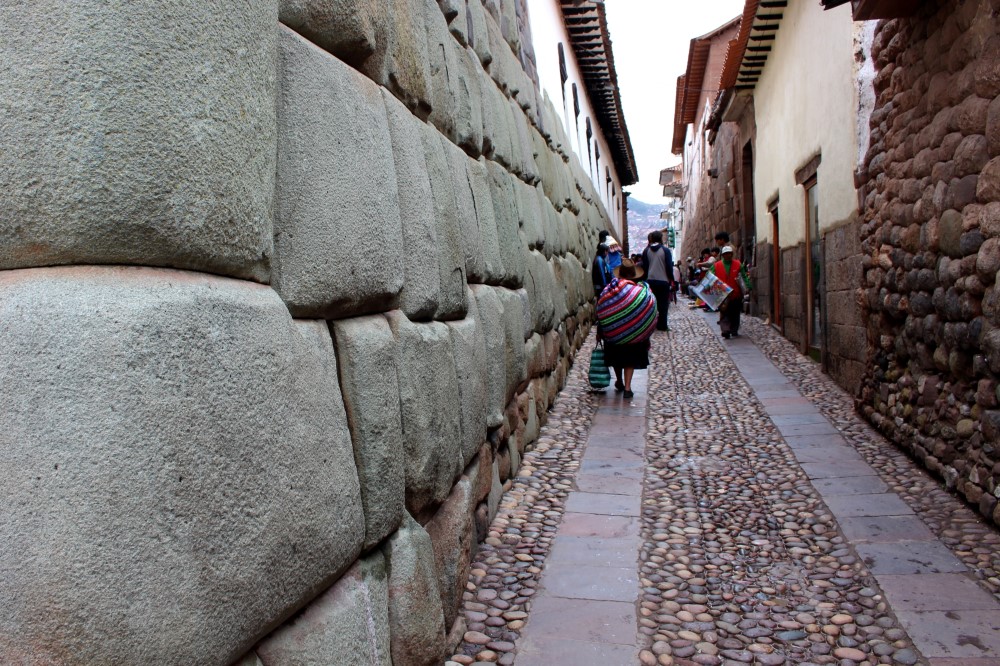
Real Incan walls in the middle of town. The size of the stones is impressive leaving the viewer wondering (much like with the Egyptian Pyramids), “how did they transport such huge rocks?” Mystery still unsolved. (Though maybe the elderly woman carrying her huge pack provides a clue?)
 Cusqueña ladies
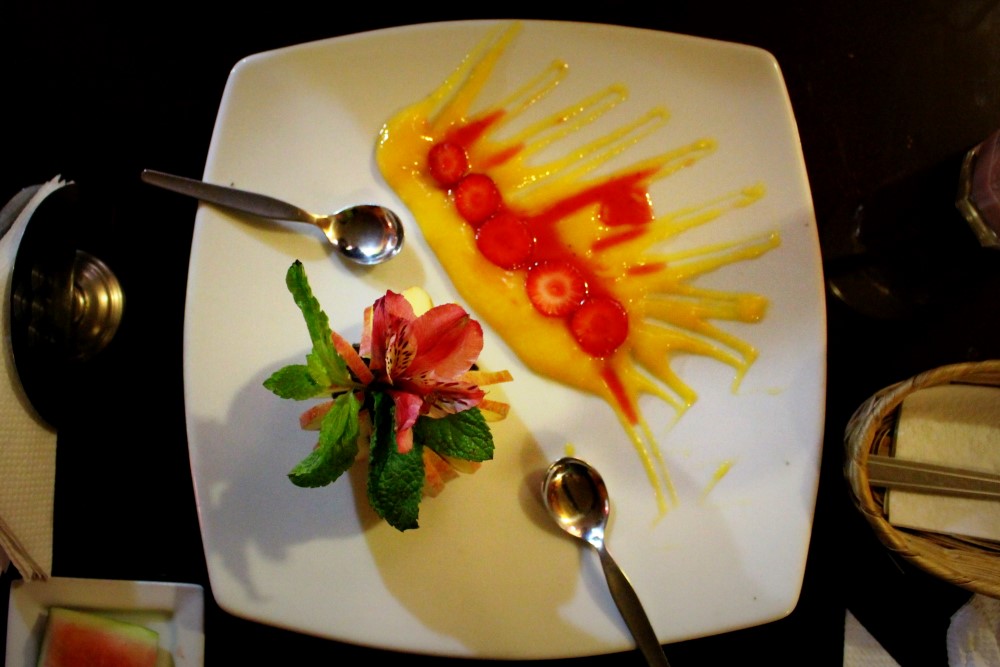 A vegan mousse au chococat; we didn’t see it at first, as it was surrounded by sliced apples, but the effort to reach the core was well-rewarded.
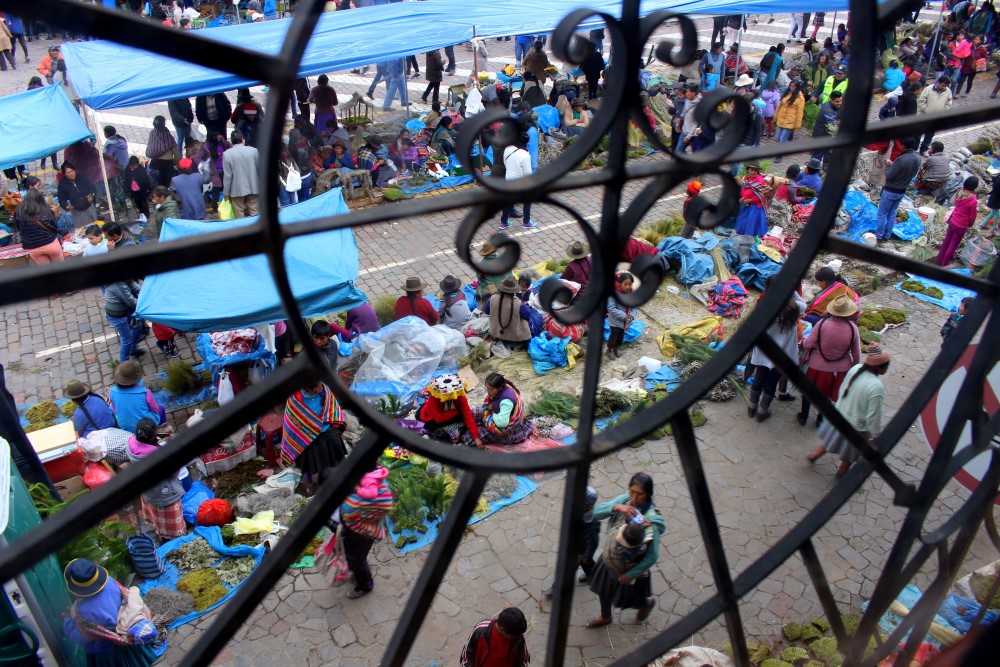
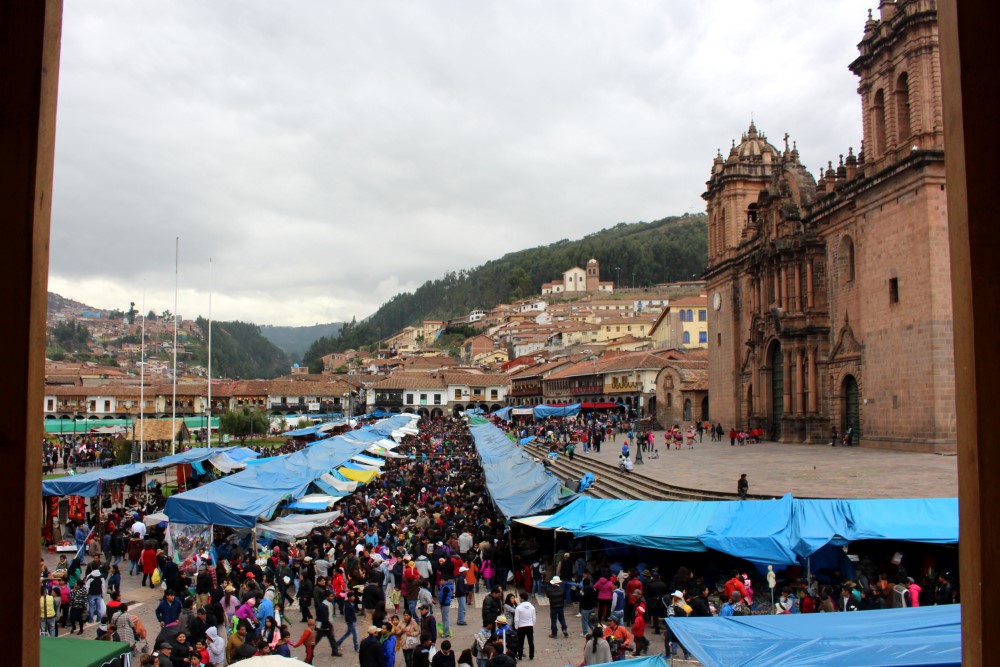 The eStarbucks on the main square provided a bird’s eye view of the bustling market below.
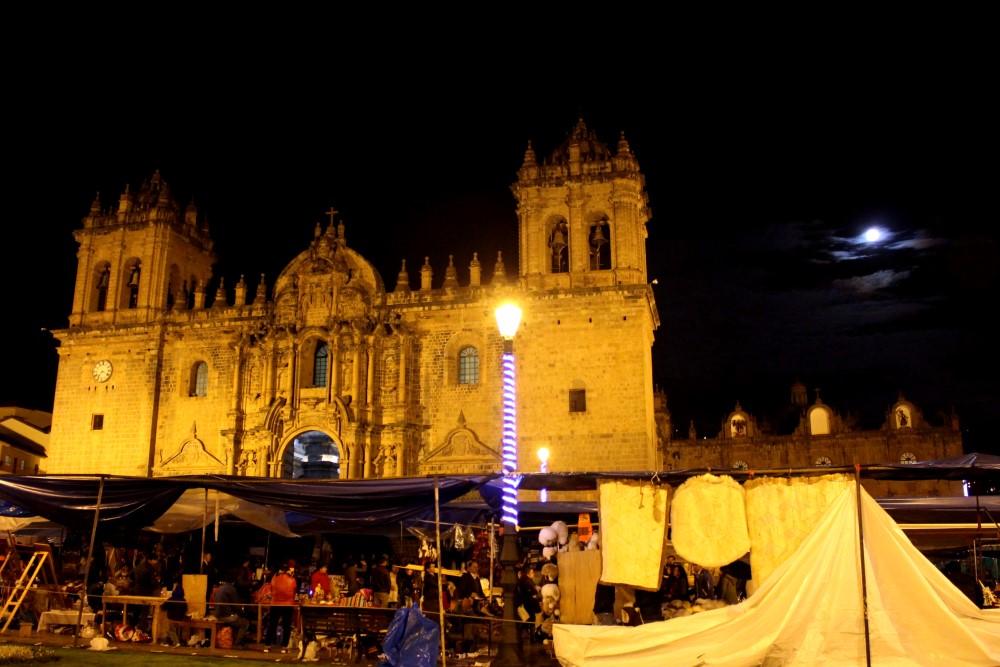 The Cathedral with the Christmas Eve almost full-moon.
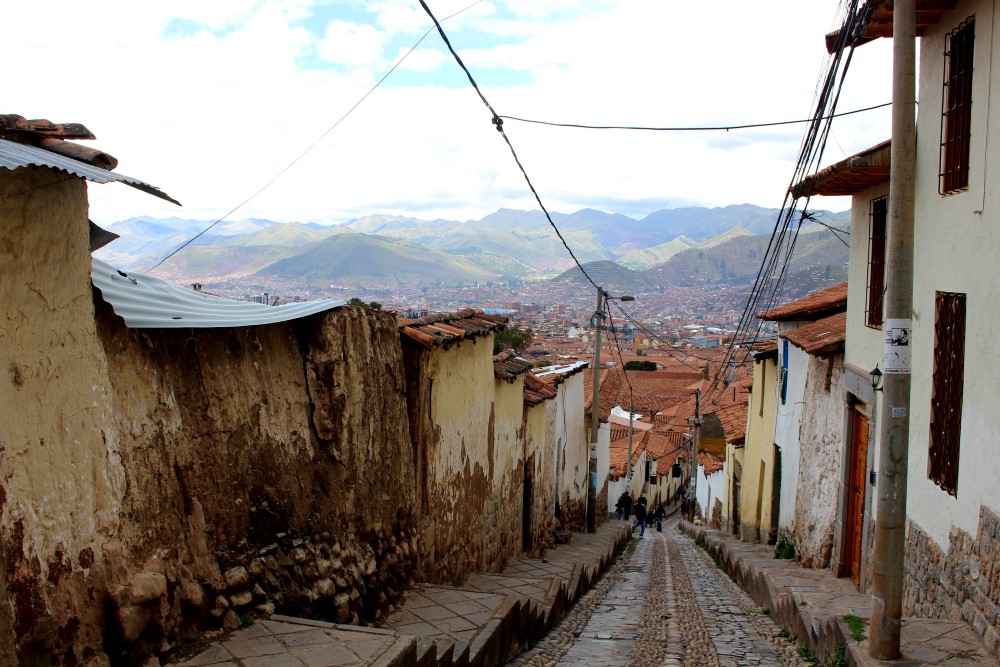
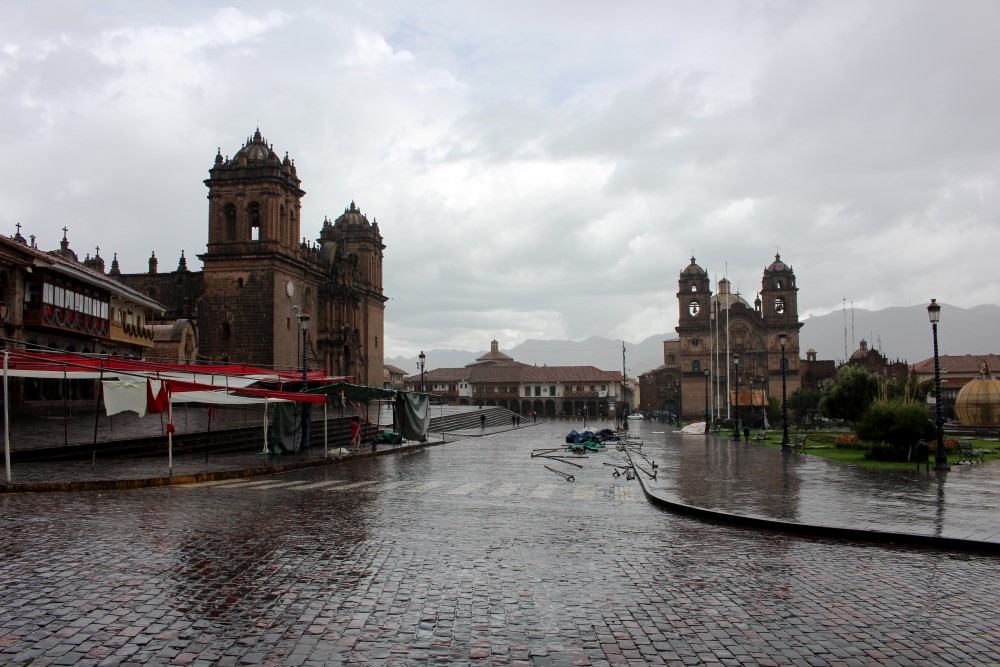 Christmas Day was a roller coaster of weather with heavy rain, bright sun, and finally an even-keel overcast.
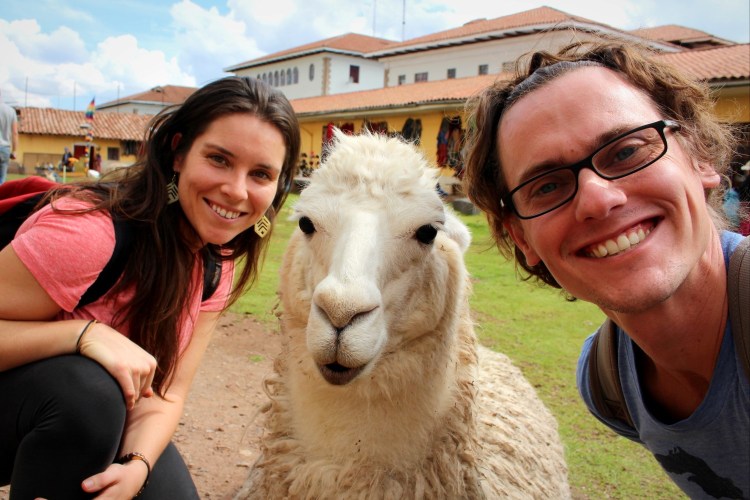
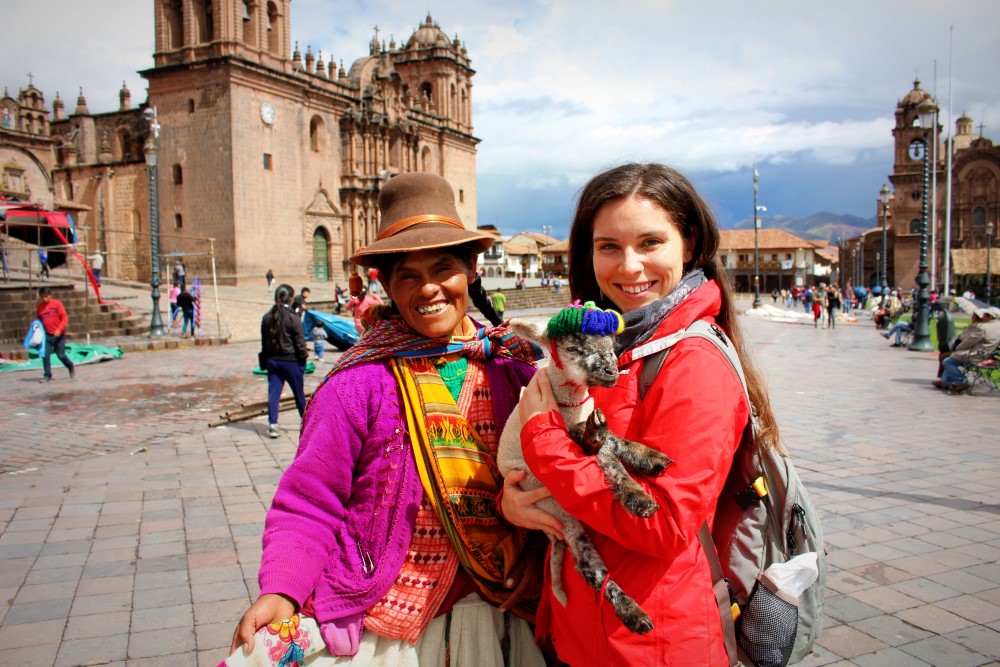 Dubbed my “Christmas lamb”, Paulo’s owner said he was just four days old.
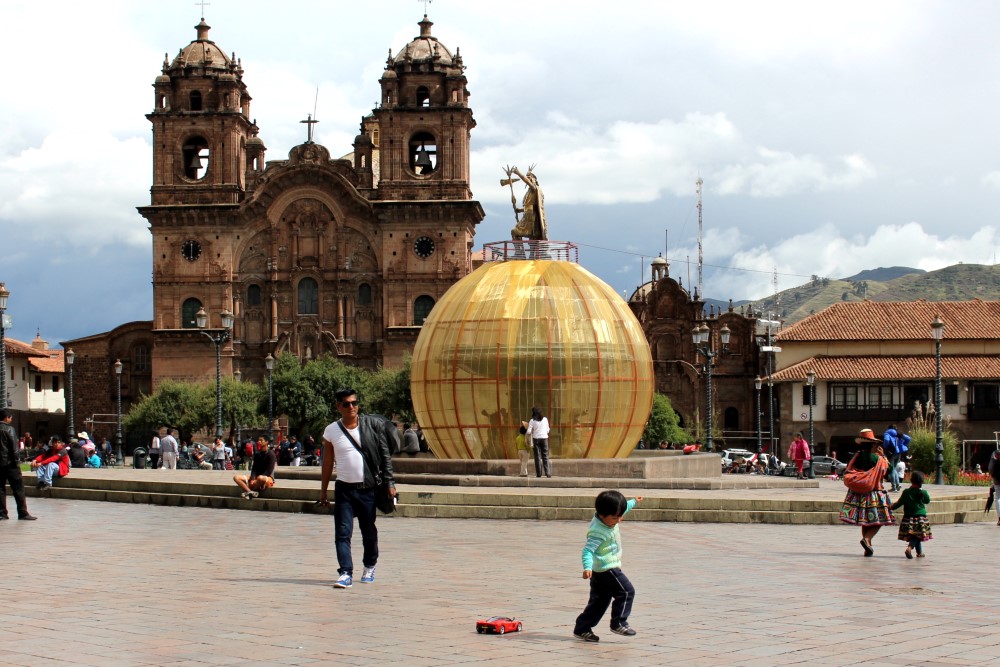 It was hard to tell if the remote-control car was the little boy’s Christmas gift or his father’s, who clearly was enjoying chasing the boy with the car from the comfort of his bench.
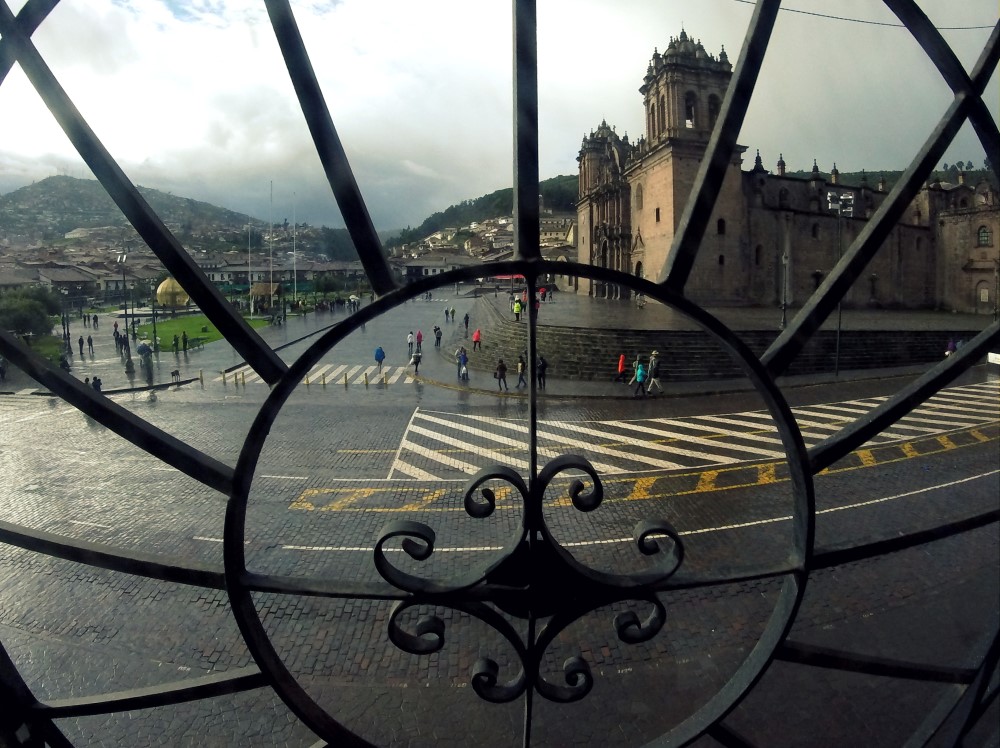
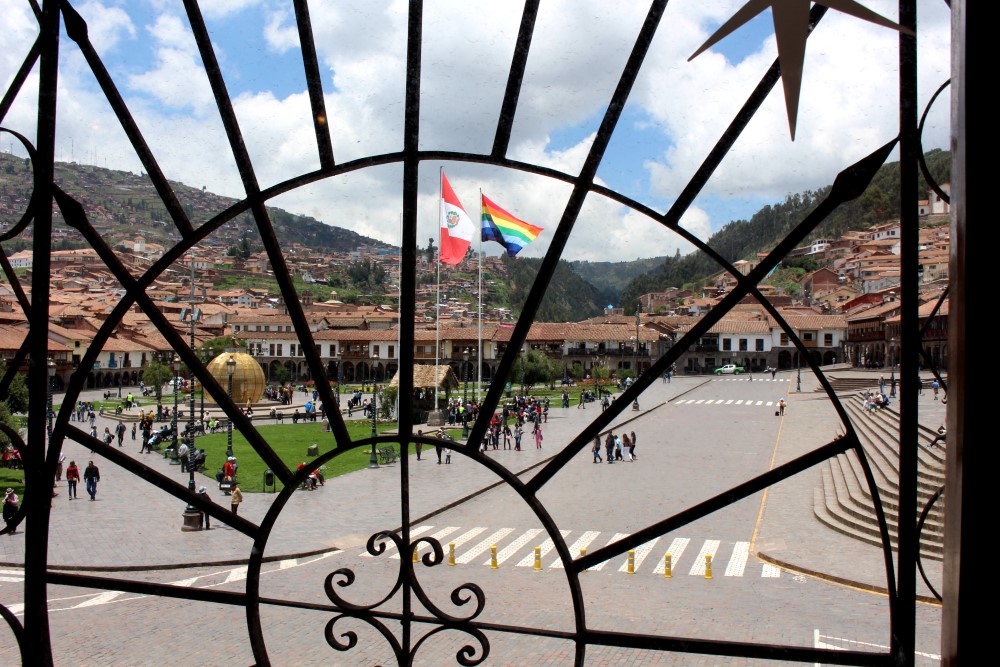 Peru’s flag, Cusco’s flag
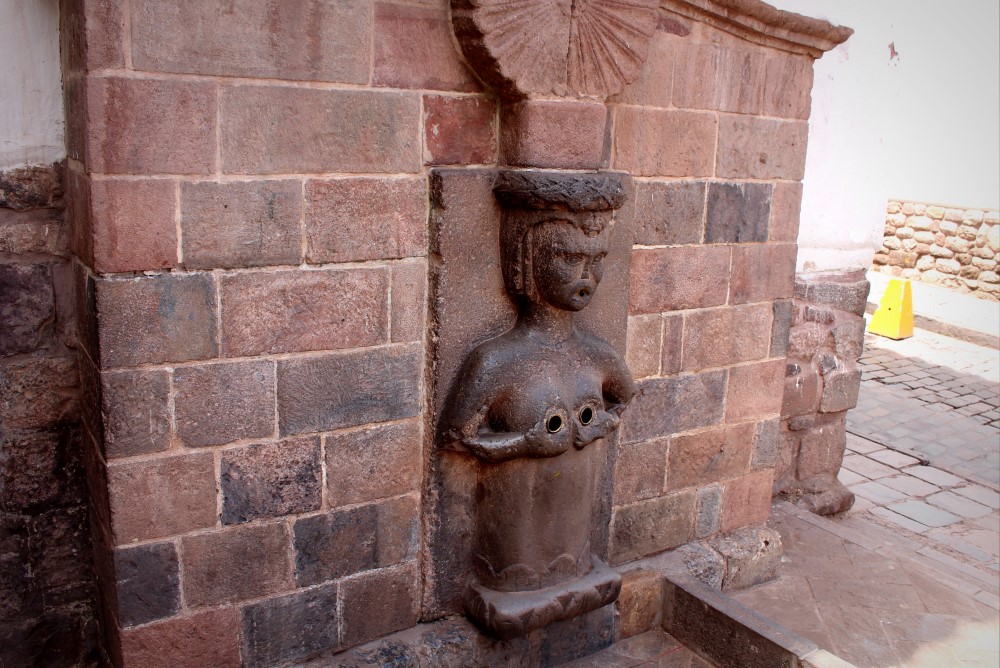
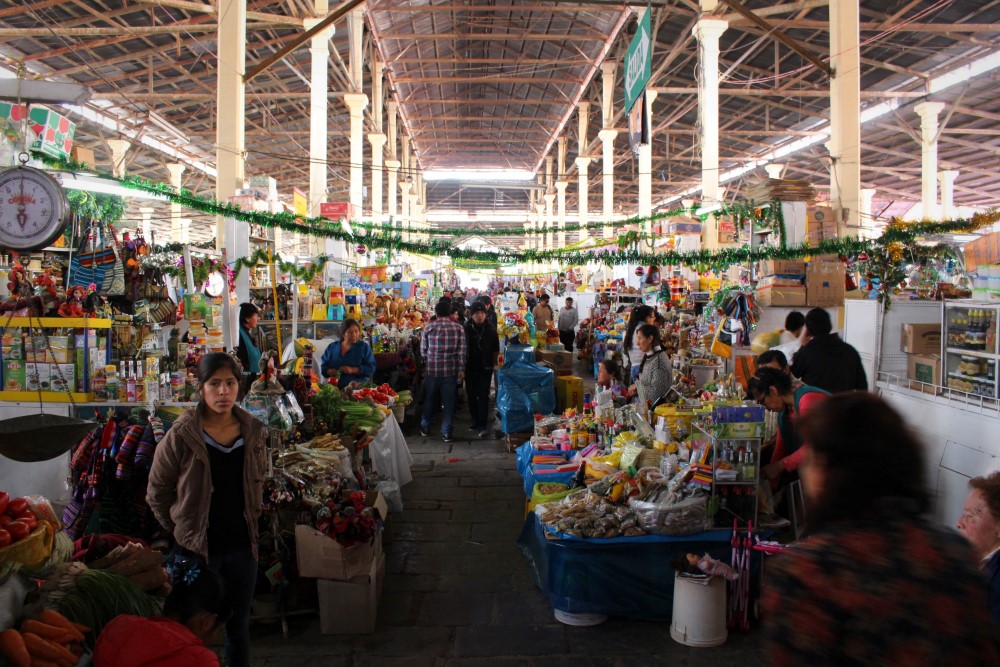 San Pedro market, Cusco’s oldest market
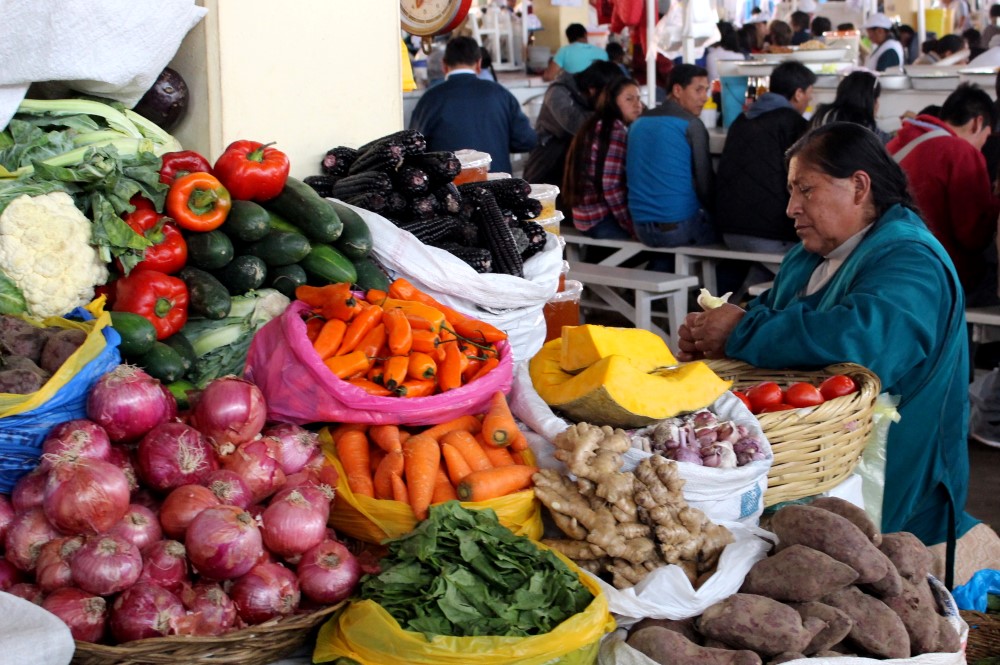
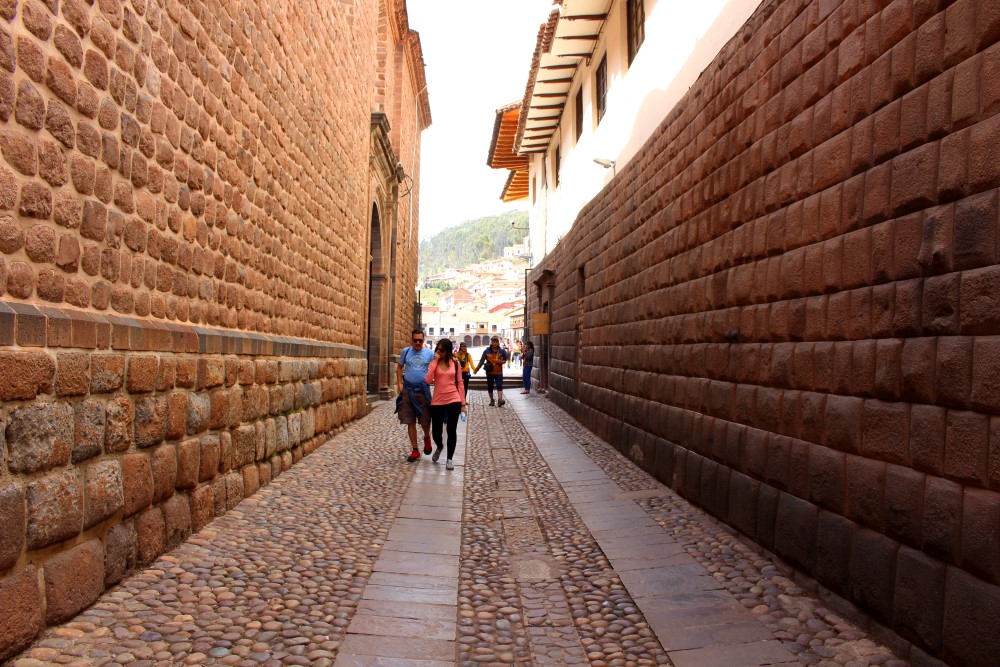 Calle Loreto with a Spanish wall to the left, an Incan wall to the right. The Spanish wall has mortar and is built perpendicular to the street, whereas the Incan one has no mortar and is built at an incline, making it seismic-proof.
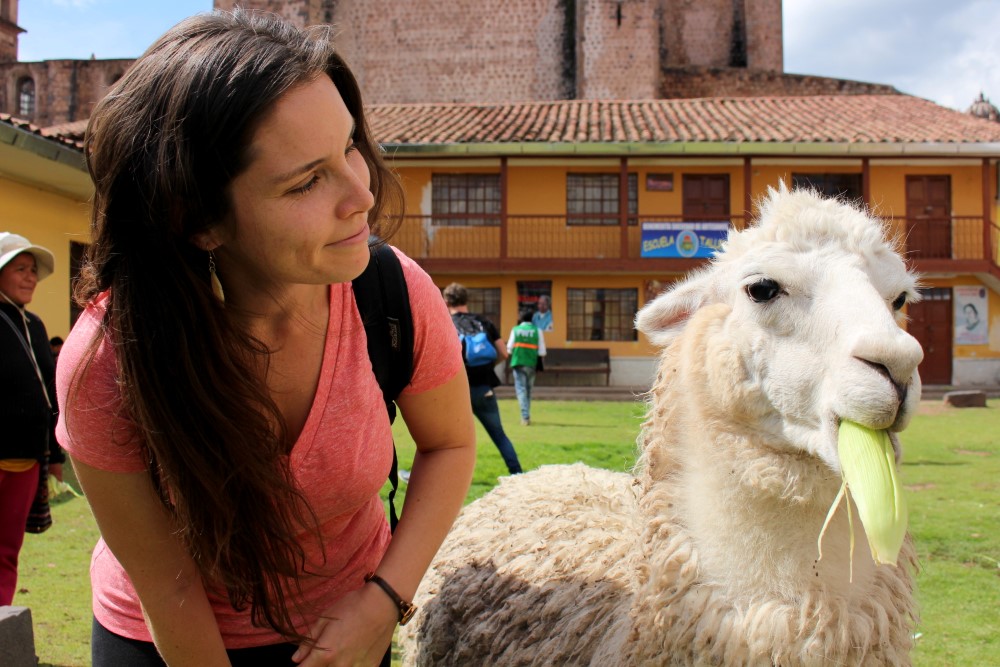 Alpaca clown /// Clown alpaca
Click here to hang out with llamas and alpacas!
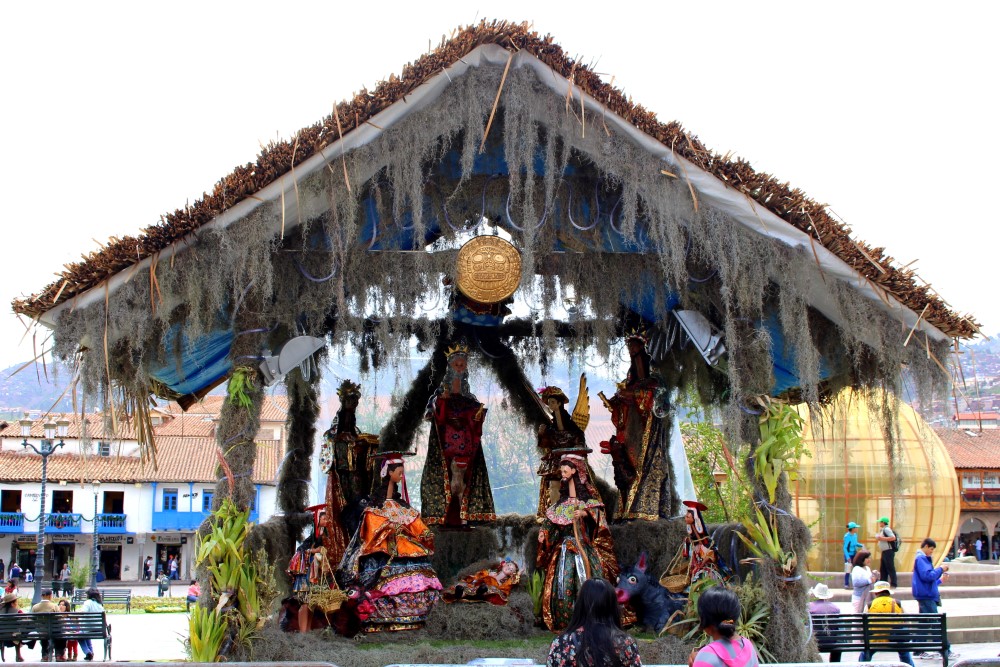 A nativity scene, a perfect example of the mix of Christianity and indigenous Peruvians beliefs. The scene is certainly Christian, but all the characters don traditional wear, and their necks are elongated which was, according to our tour guide, to reflect the beloved llama.
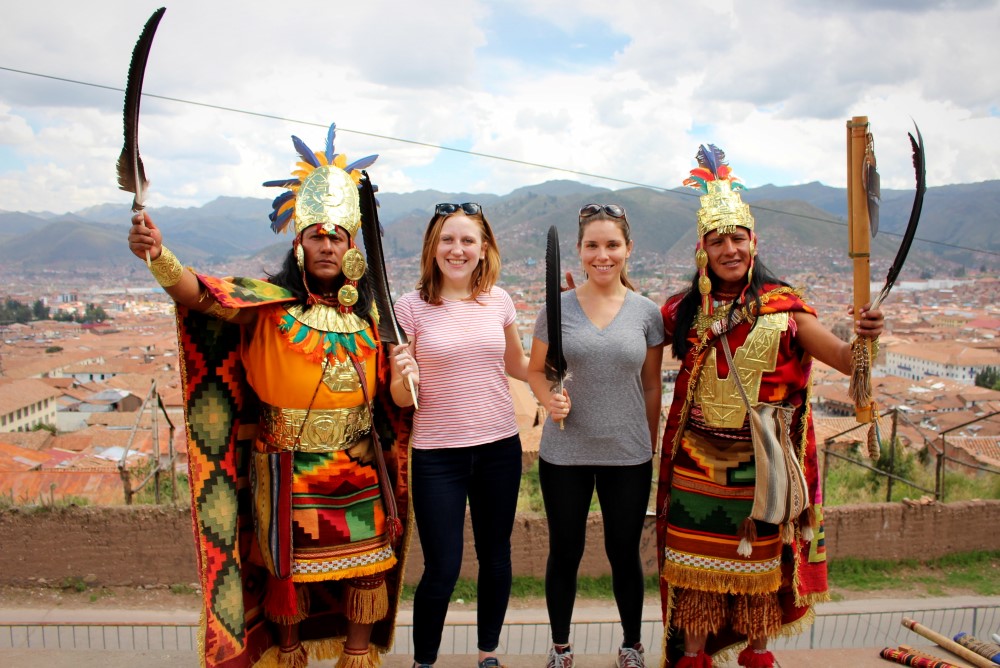 Tourists touring
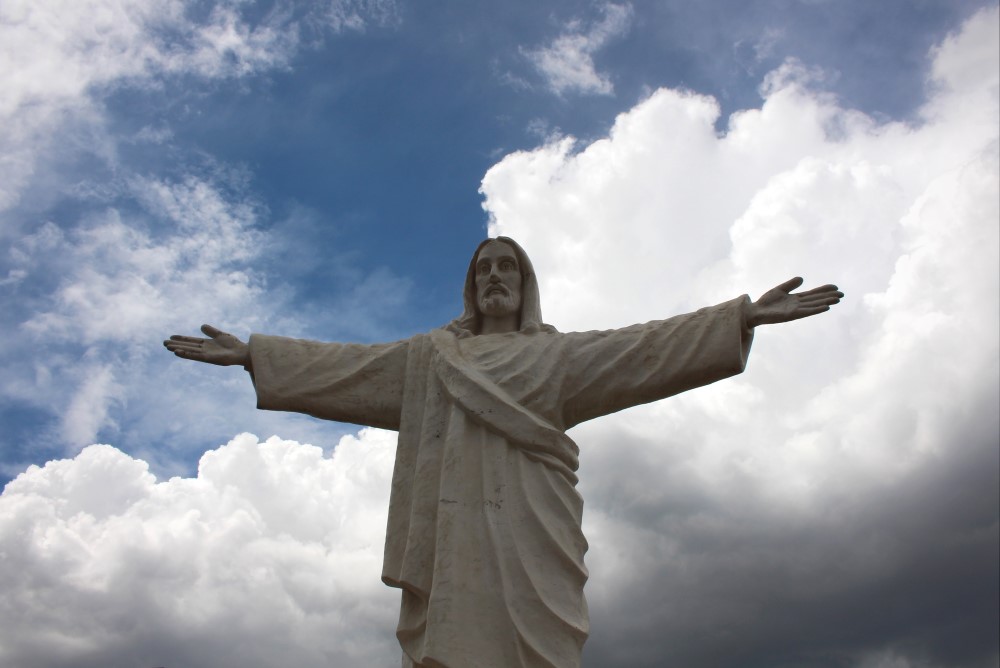 Cristo Blanco, a gift from Christian Palestinians who sought refuge in Cusco after WWII
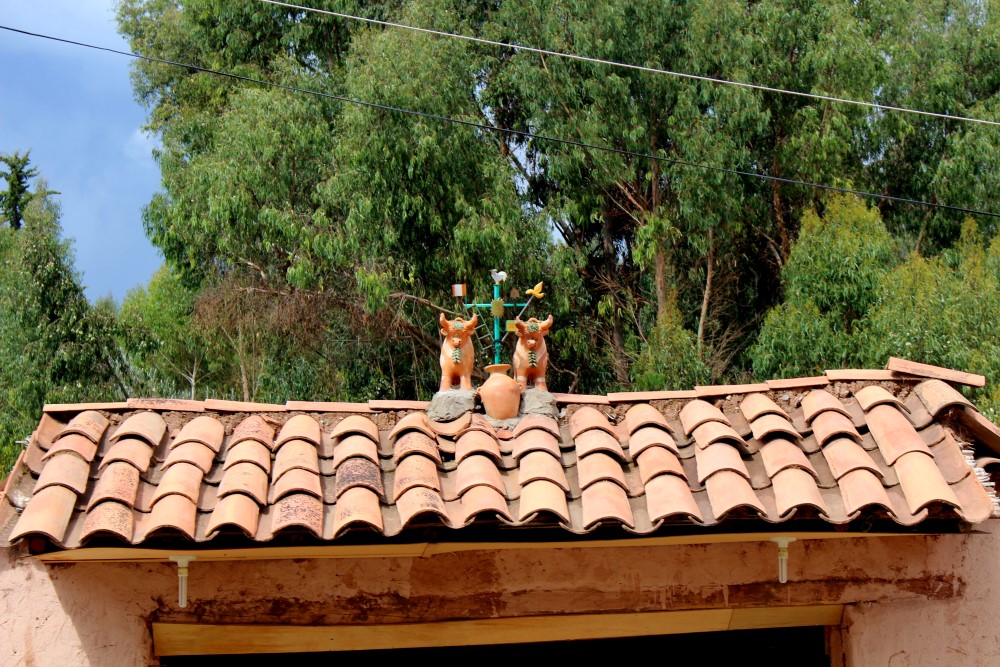 Pairs of bulls could be seen adorning the rooftops all across the city, believed to bring good fortune and to protect the house as well as the families within.
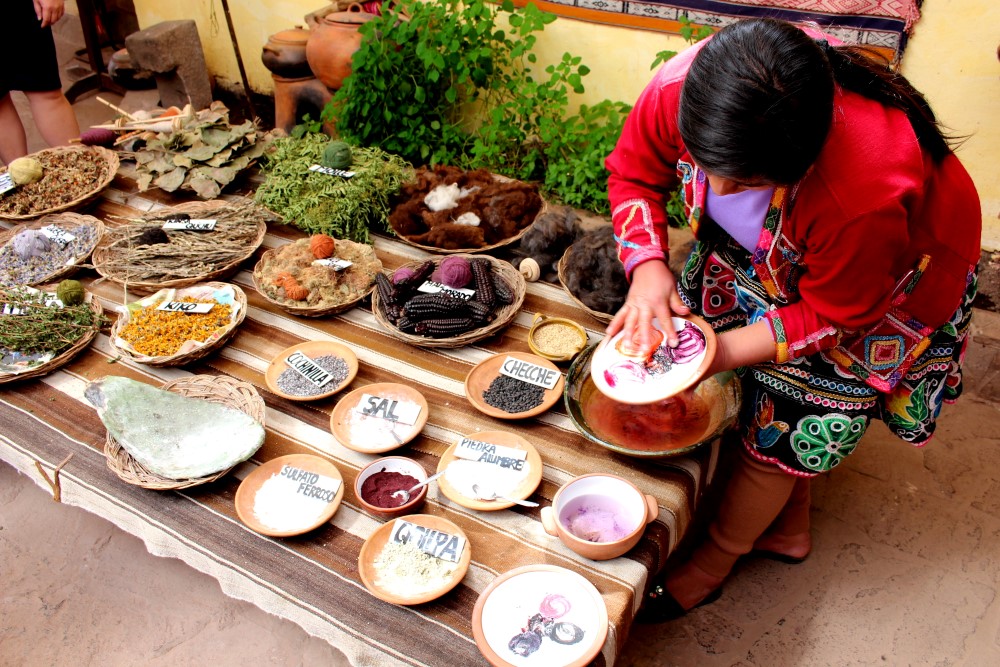 A demonstration of how different natural dyes are made
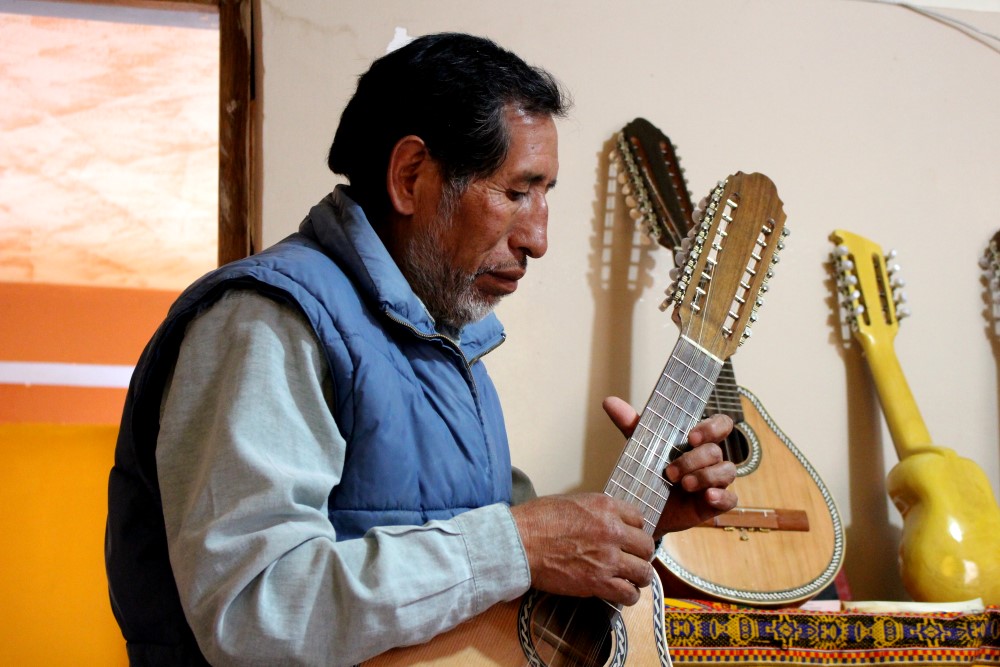 A man and his craft
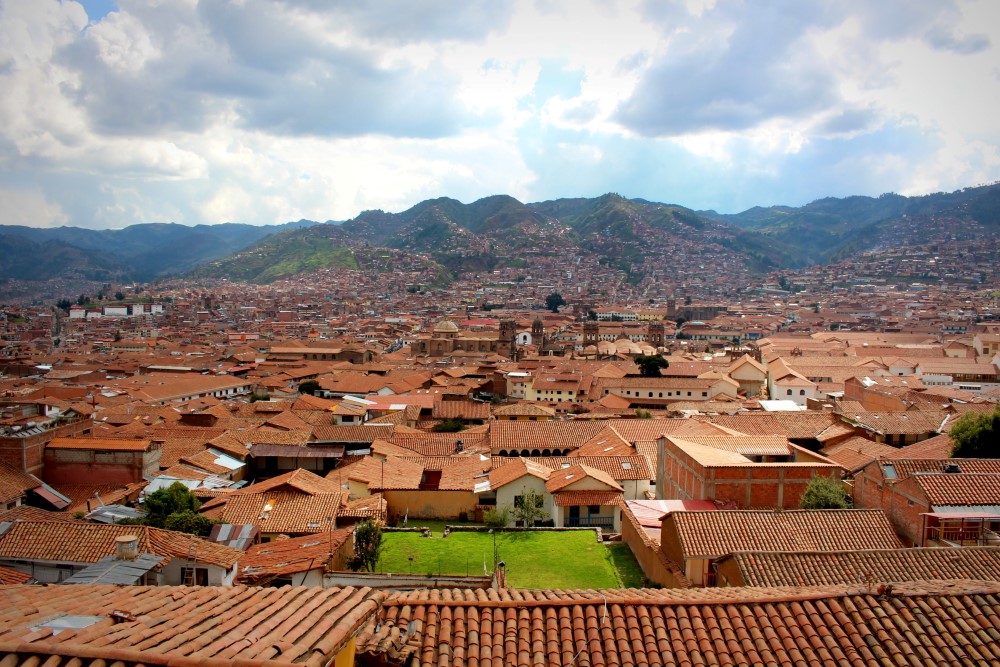 Cusco from above. This is, perhaps, a good time to explain the title of the blog, Bellybutton of the Incas. When the empire was at its strongest, it was divided into four distinct regions, in Quechua “suyus,” geographically extending out from Cusco in the four cardinal directions. The empire was called Tawatin Suyu, Quechua for “The Four United Regions”; the corners of the four regions met at the capital Qosqo, in Spanish, Cusco. Much as the bellybutton is the center of the human body, Qosqo was the center of the Incan Empire, lending it the nickname Bellybutton of the Incan Empire.


C’est une nouvelle coiffure ? Attention, tu vas faire concurrence avec le Christ !
Que c’est beau les toits de tuiles de Cuzco !
Bisous.
LikeLike